VHP chief calls Faizabad Bar's vow to shun Ram Mandir theft accused 'political'
Synopsis
VHP chief Alok Kumar has broken ranks with the Faizabad Bar Association's emotionally charged resolution, arguing it violates Article 22(1) and contradicts a 2011 Supreme Court ruling — even as he condemns the Ram Mandir theft itself. It is a rare instance of a Hindu nationalist leader invoking constitutional due-process protections for accused in a case involving a temple he champions.
Key Takeaways
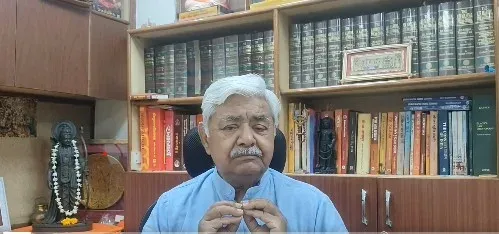
VHP chief Alok Kumar on Tuesday called the Faizabad Bar Association 's refusal to represent Ram Mandir theft accused 'political'.
Faizabad Bar Association President Kalika Mishra announced on Monday that no association advocate would defend the accused.
Kumar cited Article 22(1) of the Constitution, which guarantees every arrested person the right to a lawyer of their choice.
He referenced a 2011 Supreme Court ruling that struck down a similar Coimbatore Bar Association resolution.
The Bar Council of India 's professional ethics rules prohibit advocates from refusing cases in courts where they practise.
Kumar called the donation theft 'deeply unfortunate' and demanded day-to-day trial proceedings and swift punishment for the guilty.
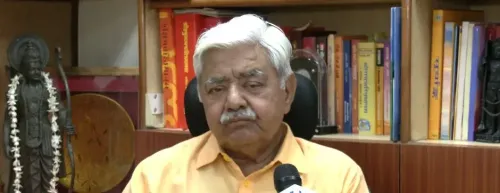
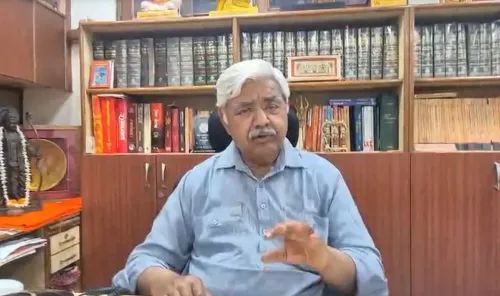
Vishwa Hindu Parishad (VHP) chief Alok Kumar on Tuesday pushed back against the Faizabad Bar Association's resolution to deny legal representation to the accused in the Ram Mandir donation theft case, describing the move as politically motivated and constitutionally untenable. Kumar's remarks came a day after the association's president announced the blanket ban on representation.
What the Bar Association Decided
Faizabad Bar Association President Kalika Mishra on Monday declared that no advocate from the association would take up the defence of any accused in the Ram Mandir donation theft case. The announcement drew immediate attention given the high-profile and sensitive nature of the embezzlement allegations linked to one of India's most prominent religious sites.
VHP's Objection: Constitution and Professional Ethics
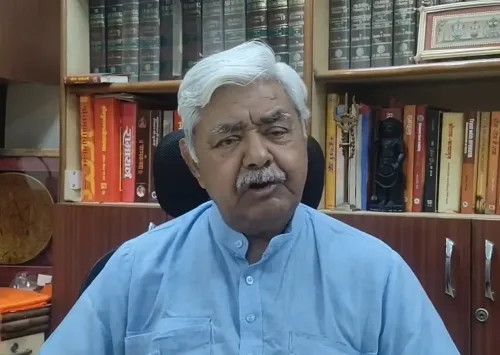
Kumar was unequivocal that while he holds no sympathy for those accused of stealing temple offerings, the Bar Association's resolution crosses a constitutional line. 'It is certain that there has been theft of offerings, and I have no sympathy for those accused. They should go to jail, face punishment, and bear the consequences of their actions. However, this proposal appears to be more political to me,' he said.
He invoked Article 22(1) of the Constitution of India, which guarantees every arrested person the fundamental right to be defended by a legal practitioner of their choice. Kumar also cited the Bar Council of India's rules of professional ethics, noting that an advocate practising in the court where a case is being heard cannot refuse to represent a client who approaches them. 'Such a proposal that no advocate will represent a particular case is against the Constitution, the law and even against professional ethics,' he added.
Supreme Court Precedent Cited
To bolster his argument, Kumar recalled a 2011 Supreme Court ruling involving a case before the Coimbatore Bar Association, which had resolved not to represent police officers accused of assaulting lawyers in a matter concerning Mohammad Rafi. The Supreme Court had struck down that resolution, reaffirming the constitutional right to counsel. Kumar urged the Faizabad Bar Association to take note of that precedent and reconsider its stand.
On the Embezzlement Row Itself
Addressing the underlying donation theft controversy, the VHP chief called it 'deeply unfortunate,' stressing that the incident should never have occurred at a site of such national and religious significance. 'Now, every possible effort should be made from all sides to ensure that those responsible are caught quickly. A case should be registered, the trial should proceed on a day-to-day basis, and the guilty should be punished. That alone will serve as atonement for this,' Kumar said.
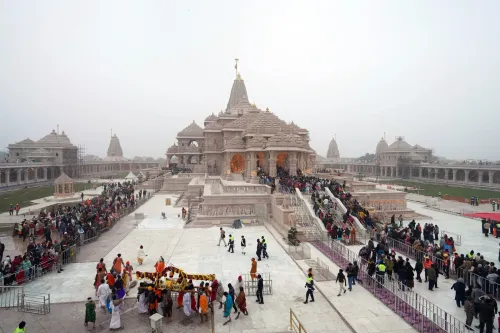
The case is being closely watched given its implications for the administration of the Ram Mandir in Ayodhya, whose trust and management have been under public scrutiny since the temple's consecration. How quickly authorities act on the theft allegations — and whether the accused receive fair trial — will test both institutional accountability and the rule of law.
Point of View
A key stakeholder in the Ram Mandir project, is the one invoking constitutional due process rather than cheering the boycott signals an internal tension: the organisation cannot afford for the theft case to look like a cover-up or a denial of fair trial. What mainstream coverage misses is that the Bar Association's move, however well-intentioned, risks undermining the very prosecution it seeks to support — a compromised trial process hands the accused a ready-made appellate argument.
NationPress
30 Jun 2026
Frequently Asked Questions
Why did the Faizabad Bar Association refuse to represent the Ram Mandir theft accused?
The Faizabad Bar Association, led by President Kalika Mishra, resolved on Monday that none of its advocates would defend the accused in the Ram Mandir donation theft case, citing the gravity of the alleged offence against a sacred institution. The decision was framed as a moral stance but has drawn legal criticism.
What is VHP chief Alok Kumar's objection to the Bar Association's decision?
Alok Kumar argued that the resolution violates Article 22(1) of the Constitution, which guarantees every arrested person the right to be represented by a lawyer of their choice. He also cited Bar Council of India ethics rules that prohibit advocates from refusing to take up cases in courts where they practise.
Which Supreme Court precedent did Alok Kumar cite?
Kumar referenced a 2011 Supreme Court ruling in a case involving the Coimbatore Bar Association, which had similarly resolved not to represent police officers accused of assaulting lawyers. The Supreme Court struck down that resolution, reaffirming the constitutional right to counsel.
What is the Ram Mandir donation theft case?
The case involves the alleged embezzlement of offerings and donations made to the Ram Mandir in Ayodhya. The theft, described by Kumar as 'deeply unfortunate,' has raised questions about the financial oversight of the temple trust and prompted calls for a fast-tracked daily trial.
What action has the VHP demanded in the donation theft case?
The VHP has called for swift registration of a case, day-to-day trial proceedings, and exemplary punishment for those found guilty. Kumar stated that only rigorous legal action would serve as adequate atonement for the theft.