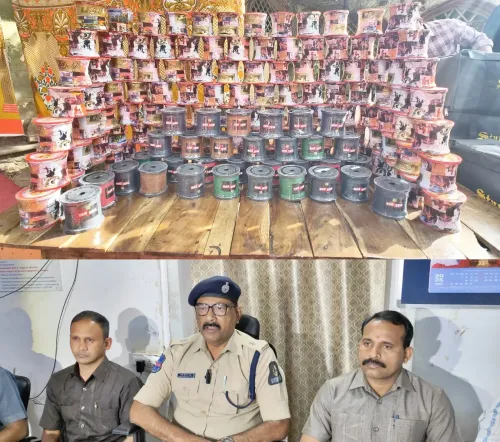
Delhi Police bust Chinese manjha racket, 3 arrested with 34 rolls

Synopsis
A People for Animals activist posed as a decoy buyer, lured three Chinese manjha suppliers to Yamuna Vihar Metro Station, and tipped off Delhi Police — leading to the arrest of all three and the seizure of 34 rolls of the banned synthetic kite string. The case exposes how banned manjha supply chains are adapting to use metro handoff points to evade detection.
Key Takeaways
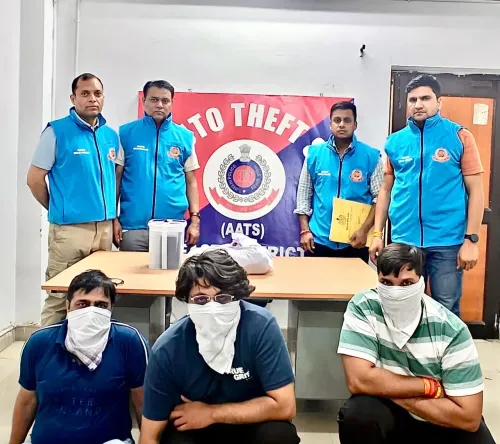
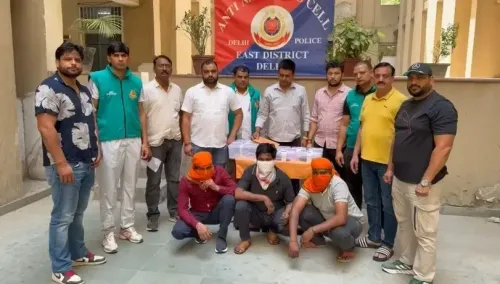
Delhi Police arrested three men — Vinit (21) , Himanshu (26) , and Deepanshu (18) — on 23 July for illegally supplying banned Chinese manjha.
34 rolls of prohibited Chinese manjha were recovered from a plastic sack at Yamuna Vihar Metro Station .
The sting was executed by Gaurav Gupta , Animal Welfare Officer for People for Animals (PFA) , who posed as a decoy customer.
Accused were booked under Sections 223(B)/351/3(5) of the Bharatiya Nyaya Sanhita and Sections 5/15 of the Environment (Protection) Act, 1986.
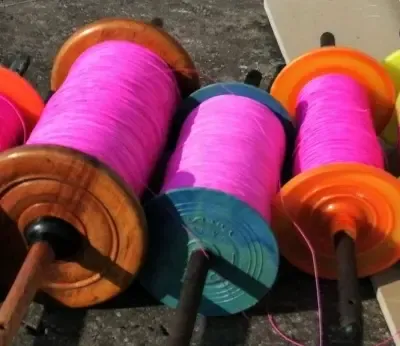
Chinese manjha — synthetic fibre coated with metallic or glass powder — is banned due to fatal risks to humans, motorists, and birds.
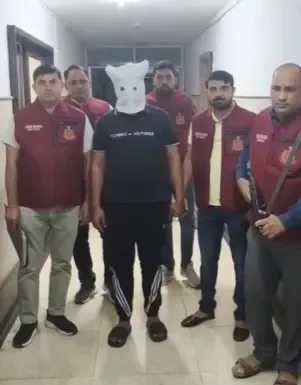
Delhi Police on Thursday, 23 July dismantled an illegal supply network distributing banned Chinese manjha in the capital, arresting three accused and seizing 34 rolls of the prohibited synthetic kite string from their possession. The operation, conducted by the Bhajanpura police unit, was triggered by a sting involving an animal rights activist who posed as a decoy customer.
How the Sting Unfolded
The breakthrough came after Gaurav Gupta, Animal Welfare Officer for People for Animals (PFA), received specific intelligence about an active Chinese manjha supply chain operating in northeast Delhi. Gupta posed as a prospective buyer and placed an order for the banned material. On 2 July, the accused contacted him and directed him to collect the consignment near Yamuna Vihar Metro Station.
When the accused arrived at the designated spot carrying a plastic sack loaded with 34 rolls of banned Chinese manjha, Gupta alerted the police through the '112' emergency helpline. Police Control Room personnel moved in swiftly and apprehended the three suspects on the spot.
Who Was Arrested
The three individuals taken into custody have been identified as Vinit (aged 21), Himanshu (aged 26), and Deepanshu (aged 18), all residents of Kartar Nagar in Delhi. All three were booked under Sections 223(B)/351/3(5) of the Bharatiya Nyaya Sanhita and Sections 5/15 of the Environment (Protection) Act, 1986.
Why Chinese Manjha Is Banned
Chinese manjha is manufactured from synthetic fibres coated with metallic or glass powder, giving it razor-sharp cutting ability. Authorities have banned it due to the severe risk it poses to pedestrians, motorcyclists, and birds — with incidents of sudden fatalities reported across Indian cities. Unlike traditional cotton thread, the synthetic coating does not degrade and can remain lethally sharp long after a kite string falls to the ground.
Notably, enforcement drives against Chinese manjha are intensified ahead of the kite-flying season, yet supply networks continue to operate through informal channels, including metro station handoffs — as this case illustrates.
Significance of the Operation
The use of a People for Animals activist as a decoy underscores the role civil society is increasingly playing in supporting law enforcement against wildlife and environmental violations. The Bhajanpura police team acted on human intelligence and coordinated with the Police Control Room for the arrest, reflecting a multi-unit response. Authorities have not disclosed whether the supply chain extends beyond the three arrested individuals, and investigations are ongoing.
Point of View
Yet supply networks have simply moved off street corners and onto metro station handoffs. The involvement of a civil society activist as a decoy to make the case stick reveals that police alone lack the on-ground intelligence to crack these micro-networks. What is missing is upstream action — tracing where these 34 rolls originated, who manufactured or imported them, and whether the three arrested are end-delivery agents for a larger distribution chain. Without prosecuting the supply chain at source, periodic seizures will remain optics rather than deterrence.
NationPress
23 Jul 2026
Frequently Asked Questions
What is Chinese manjha and why is it banned in India?
Chinese manjha is a synthetic kite string made from nylon or other artificial fibres coated with metallic or glass powder, giving it an extremely sharp edge. It is banned in India because it poses serious risks of injury and death to pedestrians, motorcyclists, and birds — with multiple fatalities recorded across Indian cities.
How did Delhi Police bust the Chinese manjha supply network?
The Bhajanpura police unit worked with Gaurav Gupta, Animal Welfare Officer for People for Animals (PFA), who posed as a decoy customer and placed an order for banned Chinese manjha. When the accused arrived at Yamuna Vihar Metro Station with 34 rolls of the prohibited string, Gupta alerted police via the '112' helpline and officers arrested all three suspects on the spot.
Who were the three people arrested in the Delhi Chinese manjha case?
The three arrested individuals are Vinit (21), Himanshu (26), and Deepanshu (18), all residents of Kartar Nagar in Delhi. They were apprehended on 23 July at Yamuna Vihar Metro Station and subsequently booked under criminal and environmental protection laws.
What charges have been filed against the accused?
All three accused have been booked under Sections 223(B)/351/3(5) of the Bharatiya Nyaya Sanhita and Sections 5/15 of the Environment (Protection) Act, 1986, which relate to illegal trade and environmental violations.
Why are enforcement drives against Chinese manjha intensified before the kite-flying season?
Kite-flying festivals, particularly around Makar Sankranti and Independence Day, see a sharp spike in demand for manjha. Authorities ramp up enforcement before these periods because the risk of accidents involving sharp synthetic strings rises significantly when large numbers of kites are flown in urban areas.