Delhi Assembly Launches Youth Outreach: 75 Students in First Batch
Synopsis
The Delhi Legislative Assembly launched a historic weekly Youth Outreach Programme on April 25, welcoming 75 college students as its first batch. Initiated by Speaker Vijender Gupta, the Saturday programme offers students direct exposure to legislative history, law-making, and democratic governance — a potential model for civic re-engagement across India.
Key Takeaways
The Delhi Legislative Assembly launched its weekly Youth Outreach Programme on Saturday, April 25, 2025 , under the initiative of Speaker Vijender Gupta .
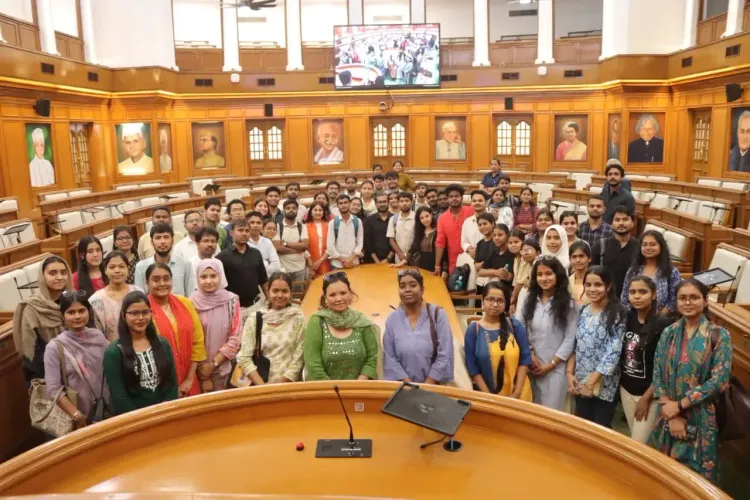
The first batch comprised 75 students from Maharishi Valmiki College of Education, Geeta Colony , New Delhi.
Students will visit the Assembly every Saturday , with batches drawn from universities and colleges across Delhi.
A commemorative publication, 'Ek Shatabdi Yatra' , was presented, and a documentary with voice-over by Padma Bhushan awardee Anupam Kher was screened.
The Delhi Legislative Assembly building , constructed in 1912 , once housed the Central Legislative Assembly and was re-established as the Delhi Assembly in 1993 .
The programme is a formal initiative of the Delhi Legislative Assembly Secretariat to promote awareness of parliamentary practices among the youth.
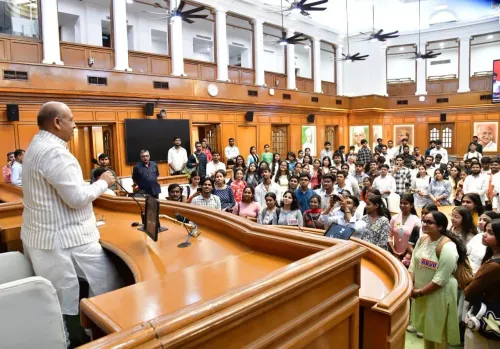
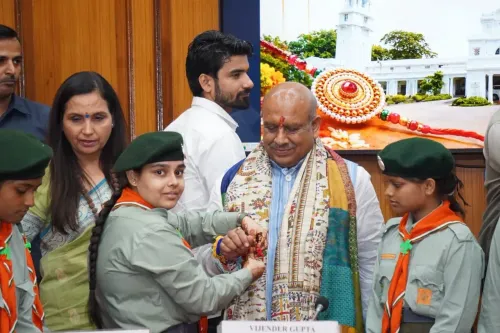
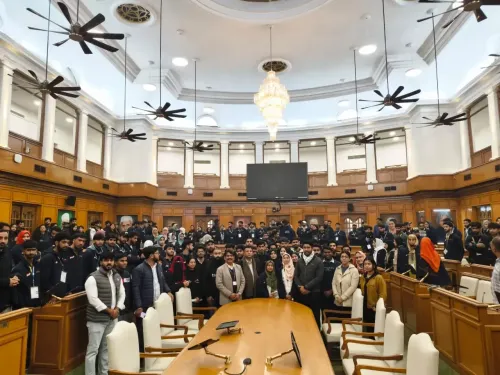
New Delhi, April 25: The Delhi Legislative Assembly on Saturday, April 25, formally launched its weekly Youth Outreach Programme — an initiative spearheaded by Speaker Vijender Gupta — welcoming the first batch of 75 college students to experience the functioning of one of India's oldest democratic institutions firsthand. The programme aims to bridge the long-standing gap between India's youth and its legislative bodies, fostering civic awareness and democratic participation at the grassroots level.
First Batch and Programme Structure
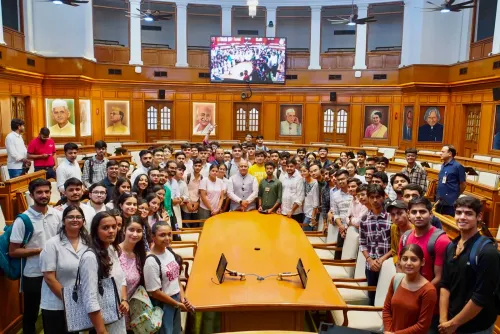
The inaugural group of students was drawn from Maharishi Valmiki College of Education, Geeta Colony, marking the beginning of what is envisioned as a sustained, structured engagement between educational institutions and the legislature. Under the programme's framework, students from universities and colleges across Delhi will visit the Assembly every Saturday, gaining direct exposure to legislative procedures and institutional governance.
The visit was not a mere ceremonial tour. Students received a structured orientation on legislative procedures, the law-making process, and the institutional history of the Assembly — making it an educational experience grounded in democratic values.
Historical Context Shared With Students
During the session, students were introduced to the rich historical evolution of the Delhi Legislative Assembly, including the significance of its present building, constructed in 1912, which once housed the Central Legislative Assembly during the colonial era. The legacy of Vitthalbhai Patel, one of India's pioneering parliamentary figures, was also highlighted as part of the historical narrative.
The Assembly's re-establishment in 1993 following the restoration of statehood to Delhi was also discussed, contextualising the institution's continued role as a cornerstone of democratic governance in the national capital.
Commemorative Publication and Documentary Screening
As part of the programme, students were presented with a commemorative coffee table publication titled 'Ek Shatabdi Yatra', chronicling the Assembly's century-long journey. A documentary on the Assembly's institutional history — featuring a voice-over by Padma Bhushan awardee Anupam Kher — was also screened, adding a cultural and cinematic dimension to the civic education experience.
The students were then taken on a guided tour of the Assembly House, allowing them to observe the physical spaces where Delhi's laws are debated and passed.
Speaker Vijender Gupta's Vision
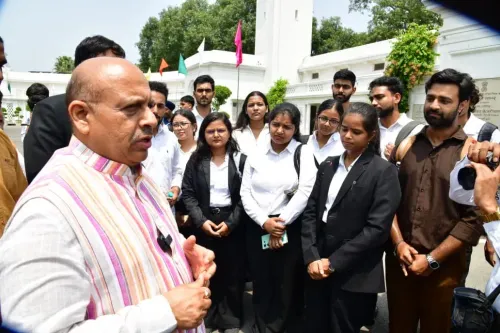
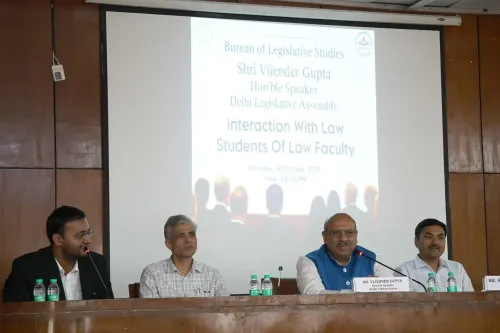
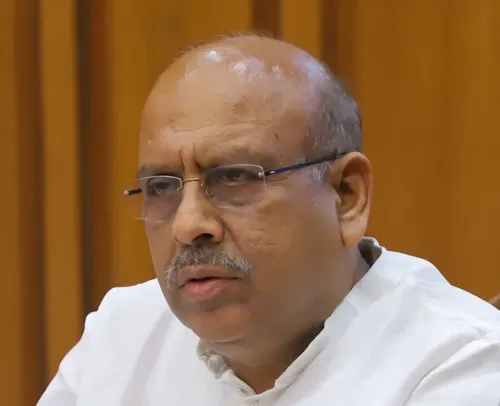
Speaker Vijender Gupta, while formally announcing the programme, stated that the initiative is designed to enable youth to engage directly with legislative processes, understand how laws are made, and appreciate the principles that sustain democratic governance and public life. He underscored that the vitality of democracy rests on informed, aware, and responsible citizens.
Gupta further emphasised that sustained engagement with institutions is essential to fostering a culture of participation, accountability, and respect for democratic processes — values that must be cultivated early among the younger generation.
Broader Significance and What Comes Next
This initiative comes at a time when voter apathy among urban youth and declining interest in civic affairs have been widely documented across Indian cities. The Delhi Assembly's structured outreach model could serve as a replicable template for other state legislatures seeking to re-engage younger demographics with democratic institutions.
The programme is a formal initiative of the Delhi Legislative Assembly Secretariat and is designed to encourage sustained student engagement with public affairs, parliamentary practices, and the broader democratic ecosystem. With every Saturday earmarked for a new student batch, the programme is expected to reach thousands of Delhi's college students over the course of the academic year.
Going forward, the Assembly Secretariat is expected to expand the programme to include students from a wider range of institutions, potentially incorporating interactive sessions with sitting legislators and mock parliament exercises to deepen civic engagement.
Point of View
If long-overdue, intervention. What makes this noteworthy is not the gesture itself, but the regularity: a weekly, institutionalised framework rather than a one-off photo opportunity. Speaker Vijender Gupta's initiative deserves credit for grounding civic education in the physical and historical reality of the legislature rather than a classroom abstraction. The real test, however, will be whether the programme evolves beyond guided tours into genuine participatory experiences — mock debates, lawmaker interactions, and policy simulations — that produce not just aware citizens, but engaged ones.
NationPress
21 Sept 2026
Frequently Asked Questions
What is the Delhi Assembly Youth Outreach Programme?
The Delhi Assembly Youth Outreach Programme is a weekly initiative launched by Speaker Vijender Gupta on April 25, 2025, that invites college students to visit the Delhi Legislative Assembly every Saturday. The programme aims to give students direct exposure to legislative procedures, democratic governance, and the Assembly's institutional history.
Which college participated in the first batch of the Delhi Assembly Youth Outreach Programme?
The first batch of 75 students came from Maharishi Valmiki College of Education, Geeta Colony, New Delhi. They received an orientation on legislative functioning, watched a documentary on the Assembly's history, and were presented with the commemorative publication 'Ek Shatabdi Yatra'.
Who initiated the Youth Outreach Programme at Delhi Legislative Assembly?
The programme was initiated by Delhi Assembly Speaker Vijender Gupta. He stated the initiative is intended to bridge the gap between citizens and institutions by enabling youth to engage directly with legislative processes.
What is the historical significance of the Delhi Legislative Assembly building?
The Delhi Legislative Assembly building was constructed in 1912 and previously housed the Central Legislative Assembly during the colonial era. The Assembly was re-established in its current democratic form in 1993 following the restoration of statehood to Delhi.
What activities are included in the Delhi Assembly student visit programme?
The programme includes a structured orientation on legislative procedures, screening of a documentary narrated by Padma Bhushan awardee Anupam Kher, presentation of the commemorative book 'Ek Shatabdi Yatra', and a guided tour of the Assembly House. Students also learn about the historical evolution of the Assembly and the legacy of figures like Vitthalbhai Patel.