Mann Ki Baat 133rd Episode: Delhi BJP Holds Massive 4,562-Location Listening Drive
Synopsis
Delhi BJP turned PM Modi's 133rd Mann Ki Baat into a city-wide civic event, mobilising listeners at 4,562 locations across all 254 mandals. From airport lounges to village gatherings, senior leaders joined 400 women at Atal Adarsh School — revealing how the BJP uses a radio show as a grassroots political engine.
Key Takeaways
Delhi BJP President Virendra Sachdeva led Mann Ki Baat listening sessions at 4,562 locations across all 254 mandals in Delhi on April 26, 2025 .
The 133rd episode of Mann Ki Baat highlighted India's addition of 6 gigawatts of wind energy capacity in the past year and the importance of solar energy.
BJP National Vice President Baijayant Jay Panda attended a session with 400 prominent Delhi women at Atal Adarsh School, Tilak Marg , alongside MP Bansuri Swaraj and NDMC Vice Chairman Kuljeet Singh Chahal .
MP Manoj Tiwari listened to the programme from Delhi airport while returning from election campaigning in West Bengal .
PM Modi referenced the teachings of Gautama Buddha , emphasising that inner peace and self-conquest are the greatest forms of victory.
The programme, launched in October 2014 , has now completed 133 consecutive monthly episodes with sustained public and party engagement.
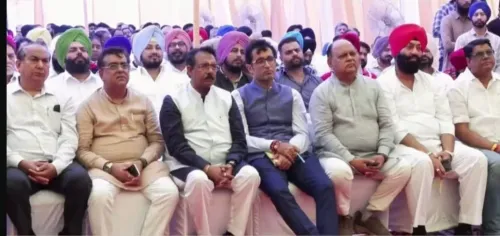
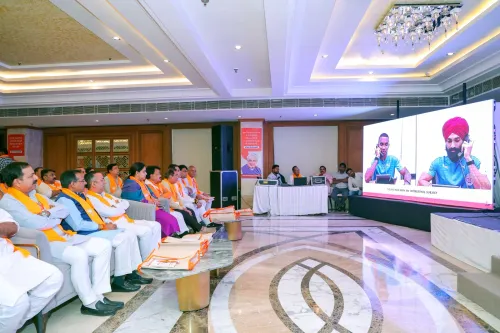
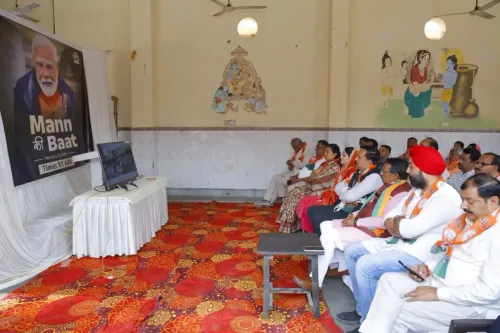
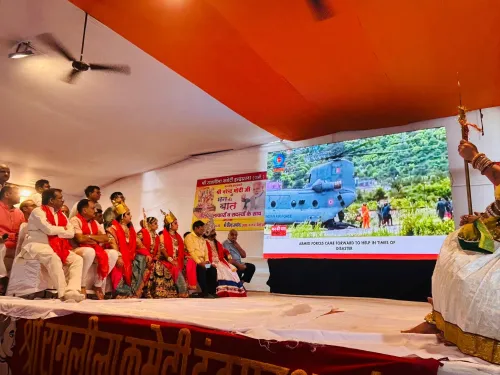
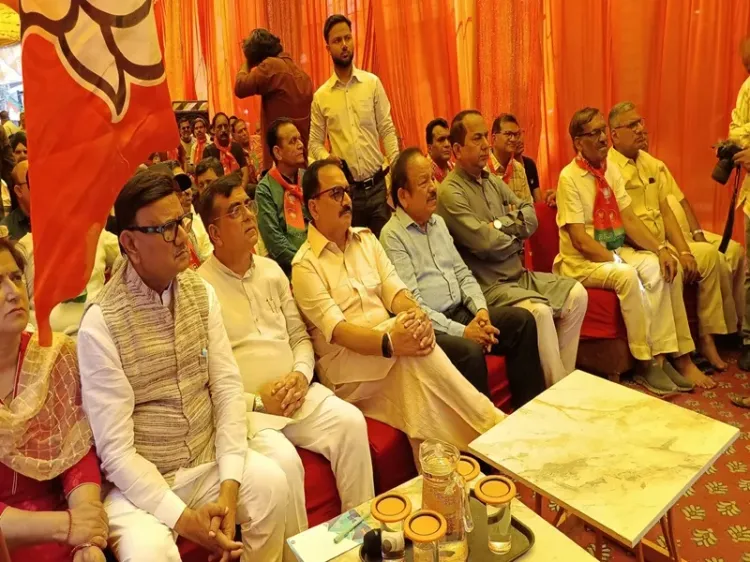
New Delhi, April 26, 2025 — Delhi BJP President Virendra Sachdeva on Sunday spearheaded a massive, coordinated listening drive for Prime Minister Narendra Modi's 133rd edition of the monthly radio programme Mann Ki Baat, with party members and citizens gathering at 4,562 locations spanning all 254 mandals across the national capital. The large-scale mobilisation underscored the BJP's continued emphasis on using the programme as both a civic outreach tool and a platform for ideological reinforcement.
Key Highlights of the 133rd Mann Ki Baat Episode
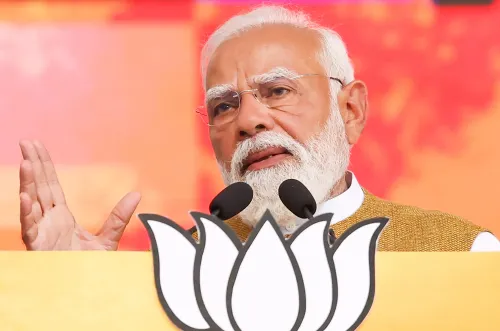
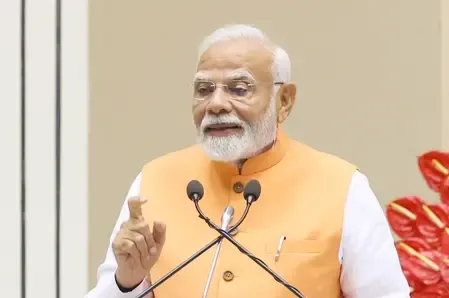
The 133rd edition of Mann Ki Baat, which aired on Sunday, April 26, covered a wide range of topics that the BJP described as both educational and inspirational. Sachdeva noted that the Prime Minister spotlighted India's renewable energy progress, specifically the addition of 6 gigawatts of wind energy capacity in the past year alone, while also emphasising the importance of solar and wind energy in India's clean energy transition.
PM Modi also drew on the teachings of Gautama Buddha, stressing that peace originates from within and that the greatest victory any individual can achieve is self-conquest — a message that resonated strongly with the large audiences gathered across Delhi.
Senior Leaders Join Listening Events Across Delhi
Sachdeva listened to the programme alongside former Union Minister Harsh Vardhan, MLA Anil Goyal, and Shahdara District President Deepak Gaba. The presence of senior figures at multiple locations simultaneously reflected a well-coordinated party strategy to maximise public engagement with the broadcast.
BJP National Vice President Baijayant Jay Panda attended a special listening session at Atal Adarsh School on Tilak Marg, joined by MP Bansuri Swaraj and NDMC Vice Chairman Kuljeet Singh Chahal. Approximately 400 prominent women of Delhi were present at the event, which Panda described as a powerful demonstration of women's empowerment.
Panda further stated that even after 133 consecutive episodes, public enthusiasm for the programme remains undiminished, calling it a historic achievement in political communication in India.
Widespread Participation Across Delhi's Constituencies
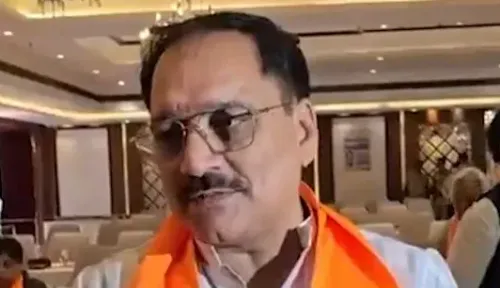
BJP National General Secretary Dushyant Gautam listened to the programme with party workers of Rajgarh Samiti 90 in Gandhi Nagar, East Delhi. MP Manoj Tiwari, returning from election campaigning in West Bengal, tuned in from the lounge at Delhi airport alongside senior colleagues and airport staff — a moment that highlighted the programme's reach even beyond formal party venues.
Delhi MP Kamaljeet Sehrawat joined local citizens in Amberhai village, Dwarka; MP Ramvir Singh Bidhuri listened with Municipal Councillor Rajpal Singh and residents of Srinivaspuri ward; and MP Praveen Khandelwal tuned in from the Delhi–Jaipur Highway. BJP General Secretary Vishnu Mittal attended a Vaishyakul gathering, while Public Accounts Committee Chairman and MLA Ajay Mahawar organised a session in Ghonda.
Broader Significance: Mann Ki Baat as a Political and Civic Tool
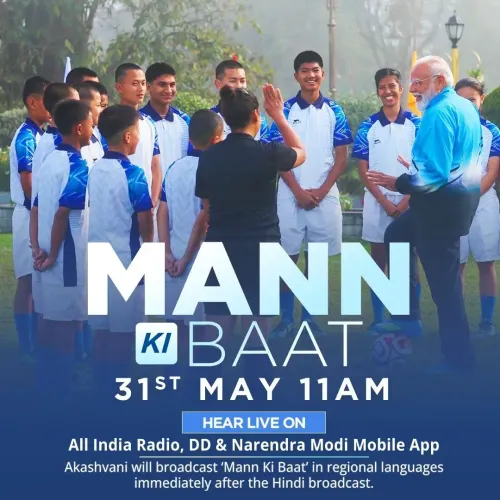
Launched in October 2014, Mann Ki Baat has evolved into one of the most widely distributed radio programmes in India, broadcast across All India Radio's network and translated into multiple regional languages. The programme has consistently served as a direct communication channel between PM Modi and citizens, bypassing traditional media intermediaries.
The BJP's organised listening drives — particularly in a politically sensitive city like Delhi, which recently witnessed high-stakes assembly elections — signal the party's intent to maintain grassroots connectivity and reinforce its narrative on governance, development, and cultural values. This comes amid India's accelerating push toward renewable energy targets, with the government aiming for 500 gigawatts of non-fossil fuel capacity by 2030.
With the 134th edition of Mann Ki Baat expected next month, the BJP is likely to sustain this mobilisation model as part of its broader outreach strategy ahead of upcoming electoral cycles.
Point of View
562 simultaneous listening venues for a single radio episode is not spontaneous civic enthusiasm — it is a meticulously organised political operation designed to project scale, discipline, and mass connect in a city the party recently fought hard to reclaim. What's notable is the deliberate inclusion of women-centric events and grassroots mandal-level coverage, signalling that the BJP is rebuilding its Delhi cadre from the bottom up after its assembly setbacks. Mann Ki Baat, now in its 11th year, has become a uniquely Indian model of direct political communication — one that critics argue blurs the line between public broadcasting and party messaging, yet one that demonstrably sustains public interest across 133 uninterrupted episodes.
NationPress
23 Sept 2026
Frequently Asked Questions
What was discussed in Mann Ki Baat 133rd episode on April 26, 2025?
The 133rd edition of Mann Ki Baat covered India's renewable energy progress, including the addition of 6 gigawatts of wind energy capacity in the past year, and the teachings of Gautama Buddha on inner peace and self-conquest. PM Modi also highlighted the significance of solar and wind energy for India's clean energy future.
How many locations did Delhi BJP organise Mann Ki Baat listening events at?
Delhi BJP organised Mann Ki Baat listening events at 4,562 locations across all 254 mandals in Delhi on April 26, 2025. The drive was led by Delhi BJP President Virendra Sachdeva.
Who attended the Mann Ki Baat event at Atal Adarsh School in Delhi?
BJP National Vice President Baijayant Jay Panda, MP Bansuri Swaraj, and NDMC Vice Chairman Kuljeet Singh Chahal attended the listening event at Atal Adarsh School on Tilak Marg, along with approximately 400 prominent women of Delhi.
When did Mann Ki Baat start and how many episodes have aired?
Mann Ki Baat was launched by Prime Minister Narendra Modi in October 2014 and its 133rd episode aired on April 26, 2025. The programme is broadcast monthly on All India Radio and is translated into multiple regional languages.
Why does BJP organise mass listening events for Mann Ki Baat?
The BJP organises coordinated listening events to maximise public engagement with PM Modi's direct communication channel and to reinforce grassroots party connectivity. These events also serve as visible demonstrations of organisational strength, particularly in politically significant regions like Delhi.