Delhi CEO clarifies electoral roll process after AAP's Raghav Chadha allegations

Synopsis
The Delhi CEO's office has pushed back against AAP's allegations over Rajya Sabha MP Raghav Chadha's name appearing in the Rajinder Nagar draft electoral roll, issuing a point-by-point clarification of the legal process. With 2.14 lakh Form-6 applications received during SIR and 25,011 more in the first eight days of the objections window, the scale of Delhi's voter roll revision underscores just how contested the exercise has become.
Key Takeaways
The CEO Delhi issued a press note on 8 September 2026 clarifying electoral roll procedures amid AAP allegations over Raghav Chadha's name in the Rajinder Nagar draft roll.
The draft electoral roll was published on 31 August 2026 , based on the Special Intensive Revision (SIR) conducted from 30 June to 17 August 2026 .
Approximately 2.14 lakh Form-6 applications were received during the SIR period; another 25,011 came in the first eight days of the claims window.
The claims and objections period runs from 31 August to 30 September 2026 ; electors can apply online via voters.eci.gov.in or the ECINET app .
Approved additions will be published in the supplementary electoral roll on 4 November 2026 .
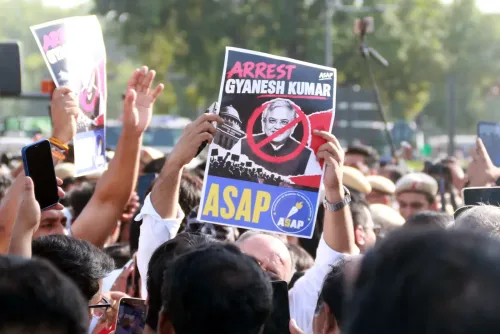
The Office of the Chief Electoral Officer (CEO), Delhi, on Monday, 8 September 2026, issued a detailed press note clarifying the legal process governing inclusion, deletion, and modification of names in electoral rolls. The clarification came in direct response to allegations raised by the Aam Aadmi Party (AAP) concerning the appearance of Rajya Sabha MP Raghav Chadha's name in the draft electoral roll of Assembly Constituency-39 (Rajinder Nagar).
How the Electoral Roll Process Works
According to the CEO's office, names are added, deleted, or modified in the electoral roll exclusively on the basis of Form-6, Form-7, and Form-8 respectively. These forms are processed by Electoral Registration Officers strictly in accordance with the Representation of the People Act, 1950, the Registration of Electors Rules, 1960, and instructions issued by the Election Commission of India (ECI). Any eligible citizen may submit these forms at any point during the year.
Timeline of the Special Intensive Revision
The CEO's office clarified that the draft electoral roll for Delhi was published on 31 August 2026, based on Enumeration Forms submitted by electors to Booth Level Officers during the Special Intensive Revision (SIR) period, which ran from 30 June to 17 August 2026. The draft list is available for viewing and download on the CEO Delhi website. A claims and objections period is currently underway from 31 August to 30 September 2026, during which electors may seek inclusion, deletion, or correction by filing the relevant forms.
Volume of Applications Received
During the SIR freeze period — which ran from 16 June to 31 August 2026 — approximately 2.14 lakh Form-6 applications were received, apart from Forms 7 and 8. In just the first eight days of the claims and objections window (up to 7 September 2026), an additional 25,011 Form-6 applications were submitted. As of 8 September 2026, around 700 forms across various Assembly constituencies had already been approved by Electoral Registration Officers for inclusion of names.
How to Submit Forms
Applications can be submitted physically to the Electoral Registration Officer, Assistant Electoral Registration Officer, Booth Level Officers, or at designated polling stations. They can also be filed online through the voters.eci.gov.in portal or the ECINET mobile app. Notably, Form-6 is for enrolment of new electors, Form-7 for objecting to inclusion or seeking deletion, and Form-8 for correction of particulars, shifting of residence, or other modifications.
What Happens Next
The CEO's office confirmed that all approved additions will be published in the supplementary electoral roll on 4 November 2026, while modifications and deletions will be reflected against existing serial numbers in the updated roll. The Election Commission reiterated its commitment to a 'transparent, participative and inclusive revision process,' ensuring that 'no eligible citizen is left out while no ineligible person is included in the Electoral Roll.' This comes amid heightened political scrutiny of Delhi's voter rolls ahead of the next electoral cycle, making the ECI's procedural transparency especially consequential.
Point of View
The office is signalling that Chadha's name appearing in the Rajinder Nagar draft roll followed standard process, not political manipulation. What the clarification does not address, however, is why the specific case attracted AAP's attention in the first place — whether it reflects a genuine anomaly in how Enumeration Forms were processed or is simply political point-scoring ahead of Delhi's next electoral contest. With the claims and objections window open until 30 September, the real test of the ECI's 'no ineligible person included' pledge will be in how swiftly and transparently individual objections — including any filed against Chadha's entry — are adjudicated and made public.
NationPress
24 Oct 2026
Frequently Asked Questions
Why did the Delhi CEO issue a clarification about Raghav Chadha's electoral roll entry?
The CEO Delhi issued the clarification on 8 September 2026 in response to allegations by the Aam Aadmi Party (AAP) regarding Rajya Sabha MP Raghav Chadha's name appearing in the draft electoral roll of Assembly Constituency-39 (Rajinder Nagar). The office outlined the legal process governing inclusions to counter the allegations.
What is the Special Intensive Revision (SIR) of Delhi's electoral roll?
The Special Intensive Revision (SIR) was a structured enumeration exercise conducted from 30 June to 17 August 2026, during which Booth Level Officers collected Enumeration Forms from electors. The resulting data formed the basis of the draft electoral roll published on 31 August 2026.
How can Delhi voters correct or object to entries in the electoral roll?
Voters can file Form-6 for new enrolment, Form-7 to object to or seek deletion of an entry, and Form-8 for corrections or change of address. Forms can be submitted physically to Electoral Registration Officers or online via the voters.eci.gov.in portal and the ECINET mobile app. The claims and objections window is open until 30 September 2026.
When will the final updated electoral roll for Delhi be published?
Approved additions will be published in the supplementary electoral roll on 4 November 2026, while modifications and deletions will be reflected against existing serial numbers in the updated roll.
How many applications has the Delhi CEO received during the current revision cycle?
Approximately 2.14 lakh Form-6 applications were received during the SIR period (30 June to 17 August 2026). In the first eight days of the claims and objections period alone (up to 7 September 2026), an additional 25,011 Form-6 applications were submitted, with around 700 forms already approved as of 8 September 2026.