Delhi CEO clarifies SIR rules on minister enrolment after AAP raises questions
Synopsis
Delhi's Chief Electoral Officer has cited a 1960 Presidential Notification and the Representation of the People Act to defend the enrolment of cabinet ministers outside their ordinary residences — a direct rebuttal to AAP's challenge after former Chief Minister Arvind Kejriwal was found missing from the city's draft electoral rolls.
Key Takeaways
The Delhi CEO on 21 September 2026 clarified SIR rules, citing Section 20(1B) and Section 20(4) of the Representation of the People Act, 1950 .
AAP National Convenor Arvind Kejriwal was found missing from Delhi's draft electoral rolls, triggering the party's challenge to the SIR process.
A 1960 Presidential Notification (S.O.
959) covers Cabinet Ministers, Governors, Speakers, and other officeholders, deeming them ordinarily resident in their original constituency.
Delhi BJP President Harsh Malhotra directed party BLAs to assist voters with notices and Form 6 registration.
The draft voter list is not final; names can be added until October 2026 , with the final list due in November 2026 .
The Delhi Chief Electoral Officer (CEO) on Monday, 21 September 2026 issued a detailed clarification countering questions raised by the Aam Aadmi Party (AAP) over the enrolment of Government of NCT of Delhi (GNCTD) cabinet ministers at locations other than their ordinary residence, amid the ongoing Special Intensive Revision (SIR) of electoral rolls.
What the Law Says on Minister Residency
The CEO cited Section 20(1B) of the Representation of the People Act, 1950, which provides that a member of Parliament or a state legislature shall not cease to be ordinarily resident in their registered constituency merely because of absence on official duties. This provision effectively protects elected representatives from being de-enrolled from constituencies where they were registered at the time of election.
Further, the CEO invoked Section 20(4) of the same Act, under which any person holding a declared office in India — as notified by the President — is deemed to be ordinarily resident in the constituency where they would have resided but for holding that office. The Presidential Notification referenced is S.O. 959, dated 18 April 1960.
Which Officeholders Are Covered
The declared offices under the 1960 Presidential Notification include a wide range of constitutional and executive posts: the President of India, Vice-President of India, Governors of States, Cabinet Ministers of the Union or any State, Ministers of State, Deputy Ministers, Speakers of the Lok Sabha and state assemblies, Lieutenant Governors of Union Territories, and Parliamentary Secretaries, among others. The CEO also stated that names of members of the judiciary, public representatives, and prominent personalities from arts, culture, journalism, sports, and public services — flagged earlier in the electoral database — have been included in the draft electoral rolls so that necessary documents can be collected during the Claims and Objections period.
The AAP's Objections and Kejriwal's Missing Entry
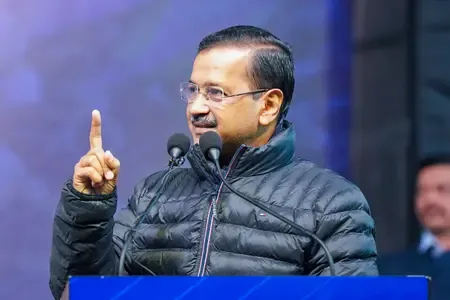
The AAP's challenge to the SIR process escalated after AAP National Convenor and former Delhi Chief Minister Arvind Kejriwal was found missing from the Delhi electoral rolls. Delhi AAP Unit President Saurabh Bharadwaj questioned how a former three-time Chief Minister and his family members could fail to be mapped by the Election Commission. Bharadwaj argued that the notice issued to Kejriwal had raised serious questions about the voter-mapping exercise and the Election Commission of India's (ECI) role in providing legal cover to the SIR process.
BJP's Response and Guidance to Voters
Delhi Bharatiya Janata Party (BJP) President Harsh Malhotra on Monday directed the party's teams overseeing the SIR exercise and all Booth Level Agents (BLAs) to provide legal assistance to those who have received notices from the Election Office, including helping them fill Form 6 for new or renewed voter registration.
Malhotra welcomed the CEO's clarification, emphasising that the recently published voter list is not final and that residents can get their names registered until October 2026, with the final voter list due in November 2026. He added that Delhi residents without voter registration elsewhere in the country can submit details of prior registration from 2002 onwards and enrol in Delhi via Form 6, subject to the requirement that each citizen's name appear on only one voter list in the country.
What Happens Next
With the Claims and Objections window still open, eligible voters have time to rectify enrolment discrepancies before the final rolls are published in November. The SIR controversy — now entangling a former Chief Minister and sitting ministers — signals that the exercise will remain politically charged in the weeks ahead.
Point of View
But the real credibility test lies with the Election Commission: how it handles the Claims and Objections window — especially for high-profile omissions — will determine whether the final November rolls are seen as legitimate.
NationPress
21 Sept 2026
Frequently Asked Questions
What is the SIR of electoral rolls in Delhi?
The Special Intensive Revision (SIR) is an exercise conducted by the Election Commission of India to update and clean up Delhi's voter rolls. It involves verifying existing entries, removing duplicates, and enrolling eligible new voters, with a draft list published for public claims and objections before a final list is released.
Why was Arvind Kejriwal missing from Delhi's electoral rolls?
AAP National Convenor and former Delhi Chief Minister Arvind Kejriwal was found absent from the draft electoral rolls published during the SIR process. The reason has not been officially explained; AAP's Delhi unit president Saurabh Bharadwaj has questioned how a three-time former Chief Minister and his family could be omitted, calling it a serious lapse in the voter-mapping exercise.
Why are Delhi cabinet ministers enrolled outside their ordinary residence?
Under Section 20(4) of the Representation of the People Act, 1950, and a 1960 Presidential Notification, holders of declared offices — including Union and state cabinet ministers — are deemed ordinarily resident in the constituency where they were registered before assuming office. This means their enrolment at a location other than their current address is legally permissible and protected.
How can Delhi voters correct their voter registration during the SIR?
Voters who have received notices or find their names missing can fill Form 6 to register or renew their enrolment. Registration remains open until October 2026, and correctly submitted names will be included in the final voter list to be published in November 2026.
What role is Delhi BJP playing in the SIR process?
Delhi BJP President Harsh Malhotra has directed the party's SIR oversight teams and Booth Level Agents to provide legal assistance to voters who have received Election Office notices, including helping them complete Form 6. He also clarified that voters can use prior registration records dating back to 2002 to establish eligibility for Delhi enrolment, provided they are not registered elsewhere in the country.