Delhi BJP chief Harsh Malhotra accuses AAP of misleading voters over ECI SIR notice to Kejriwal
Synopsis
Delhi BJP chief Harsh Malhotra has accused AAP of deliberately misrepresenting the ECI's SIR notice sent to Arvind Kejriwal's family, arguing that the mapping rule applies uniformly to all voters registered outside Delhi before 2002 — not just former Chief Ministers. The Election Commission itself stepped in the same day to deny that any voter names face automatic deletion.
Key Takeaways
Delhi BJP President Harsh Malhotra on 20 September 2026 accused AAP leader Saurabh Bharadwaj of misleading voters over the ECI SIR notice issued to Arvind Kejriwal 's family.
Under the SIR process, voters must be mappable against the 2002 Delhi electoral roll ; Malhotra says Kejriwal's family was registered in Ghaziabad before 2013 , making Delhi mapping impossible.
Fresh voter registration in Delhi is open, but applicants must first get their name deleted from their existing constituency.
The Election Commission of India clarified that receiving an SIR notice does not mean automatic deletion; voters can submit documents to the ERO or BLO.
The ECI is issuing notices only to voters with data linkage gaps or discrepancies from the last Intensive Revision.
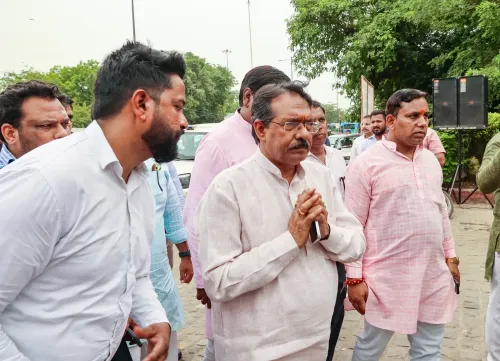
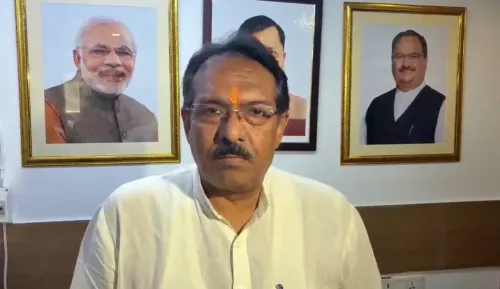
Delhi Bharatiya Janata Party (BJP) President Harsh Malhotra on Sunday, 20 September 2026, accused Aam Aadmi Party (AAP) leader Saurabh Bharadwaj of spreading misinformation about the Election Commission of India (ECI)'s Special Intensive Revision (SIR) notice issued to the family of former Delhi Chief Minister Arvind Kejriwal. Malhotra said Bharadwaj's press conference had deliberately distorted how the SIR mapping process works, misleading ordinary Delhi voters about their own electoral status.
What the SIR Notice Actually Means
According to Malhotra, the SIR process in its first phase requires that voters' names be mapped against the 2002 Delhi electoral roll to remain on the city's voters' list. He argued that since Kejriwal's family was registered as a voter in Ghaziabad district before 2013, mapping their names against Delhi's 2002 roll is not possible under the current system.
'Whether it is Arvind Kejriwal or any ordinary citizen, mapping under Delhi SIR will be possible only if that person was a voter in Delhi in 2002,' Malhotra stated. He added that fresh voter registration in Delhi remains open, provided the applicant first gets their name removed from the constituency where they are already enrolled — a rule that applies uniformly to every citizen.
BJP's Rebuttal of Bharadwaj's Press Conference
Malhotra directly targeted Bharadwaj's earlier press conference, in which the AAP leader questioned why a 'highly educated three-time Chief Minister' was receiving a notice, asking rhetorically what would happen to ordinary voters in the same situation. The BJP chief called this framing 'dramatic' and misleading, insisting the SIR rules apply uniformly regardless of a person's political stature or educational background.
This comes amid a broader controversy over SIR notices that have reportedly sparked anxieties among Delhi voters, with misinformation circulating on social media suggesting that receiving a notice automatically means deletion from the electoral rolls.
Election Commission Clarifies: No Automatic Deletions
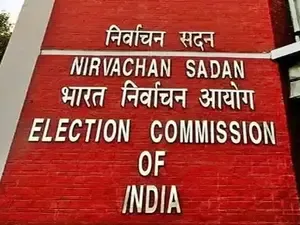
The Election Commission of India separately issued a clarification on the same day, pushing back against what it described as misinformation in both social and print media. The Commission stated that system-generated notices are being sent only to two categories of voters: those who could not be linked with the electoral roll of the last Intensive Revision, and those with logical discrepancies in their linking.
'No name can be deleted without giving an opportunity of being heard and a proper speaking and appealable order. Therefore, there is no existential crisis as is being brought out in Social and Print Media,' the ECI said in its official statement. Voters who receive notices may submit a reply or requisite documents to the concerned Electoral Registration Officer (ERO) or Booth Level Officer (BLO).
Political Context and What Comes Next
The row reflects the charged political atmosphere in Delhi, where the BJP and AAP have been engaged in sustained rivalry since the latter's rise to power in 2015. Disputes over voter rolls and electoral processes have historically been flashpoints in the capital, given the high stakes of Assembly elections. Critics argue that both parties are using the SIR process as a political battleground rather than allowing it to unfold as an administrative exercise.
With fresh voter registration now open in Delhi, the ECI is expected to clarify timelines and grievance redressal mechanisms further. How the SIR controversy plays out could influence voter sentiment ahead of the next Delhi Assembly election.
Point of View
But it also risks eroding genuine public understanding of how voter rolls work. BJP's counter-narrative is technically accurate on the mapping rule, but the party has its own interest in depicting AAP as perpetually crying wolf. What gets lost in the crossfire is the legitimate concern of thousands of Delhi residents who may not know how to respond to a notice. The ECI's own clarification, while factually sound, arrived too late to prevent the story from becoming a political football — a pattern the Commission has struggled to break in recent election cycles.
NationPress
20 Sept 2026
Frequently Asked Questions
What is the ECI SIR notice issued to Arvind Kejriwal's family?
The Election Commission of India issued a Special Intensive Revision (SIR) notice to the family of former Delhi Chief Minister Arvind Kejriwal because their voter data could not be mapped to the 2002 Delhi electoral roll. The notice does not mean their names will be deleted; it asks them to submit documents to correct their data in the ECI's ECINET system.
Why does the 2002 Delhi electoral roll matter for SIR mapping?
Under the SIR process in its first phase, voters must have their names linked to the 2002 Delhi electoral roll to remain on the current Delhi voters' list. Delhi BJP President Harsh Malhotra says Kejriwal's family was registered in Ghaziabad district before 2013, making such a Delhi mapping impossible.
Does receiving an SIR notice mean a voter's name will be deleted?
No. The Election Commission of India explicitly clarified on 20 September that no name can be deleted without a hearing and a proper, appealable order. Voters who receive a notice can submit a reply or documents to the Electoral Registration Officer or Booth Level Officer.
What did AAP's Saurabh Bharadwaj say at his press conference?
Saurabh Bharadwaj questioned why a 'highly educated three-time Chief Minister' was receiving an SIR notice, arguing that if such a figure's vote could be challenged, ordinary voters would face far greater uncertainty. Delhi BJP President Harsh Malhotra called this framing misleading and said the SIR rules apply equally to all voters regardless of status.
How can Delhi voters respond to an SIR notice?
Voters who receive an SIR notice may submit a reply along with requisite documents to the concerned Electoral Registration Officer (ERO) or Booth Level Officer (BLO). Those seeking fresh registration in Delhi must first get their name removed from the constituency where they are already enrolled, as every citizen can be registered at only one place in India.