Delhi CM Rekha Gupta backs Modi's fuel conservation push, limits govt vehicles
Synopsis
Delhi CM Rekha Gupta has moved to restrict government vehicle use and push carpooling across all BJP MLAs and state departments — a swift institutional response to PM Modi's seven-point conservation appeal made in Vadodara amid the West Asia conflict. The move signals an attempt to translate a national appeal into measurable state-level action.
Key Takeaways
Delhi CM Rekha Gupta announced on Tuesday that departmental vehicle usage will be restricted across the Delhi government .
All BJP MLAs , Cabinet ministers, and government officers are directed to use minimum vehicles and prioritise carpooling and public transport .
The decision is a direct response to PM Narendra Modi's seven-point appeal made in Vadodara amid the West Asia conflict .
Modi's appeal covered fuel reduction, lower gold purchases, restraint on imported goods, domestic tourism, and natural farming.
India's heavy dependence on imported crude oil makes fuel conservation a strategic as well as economic priority.
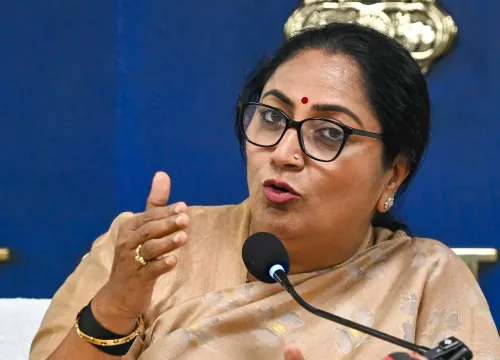
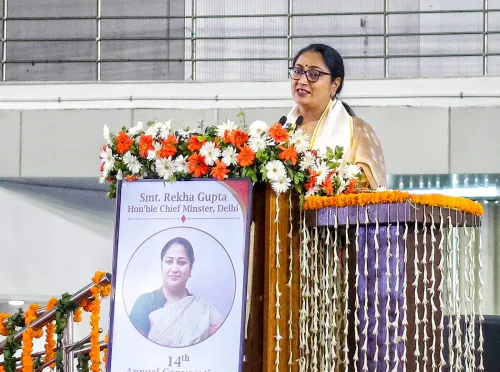
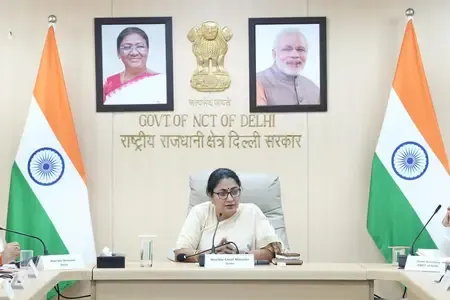
Delhi Chief Minister Rekha Gupta on Tuesday, 13 May 2025, declared that energy conservation is a national responsibility, announcing that the Delhi government will restrict departmental vehicle usage and prioritise carpooling and public transport — a direct response to Prime Minister Narendra Modi's seven-point appeal to citizens amid the ongoing West Asia conflict.
What Delhi Government Has Decided
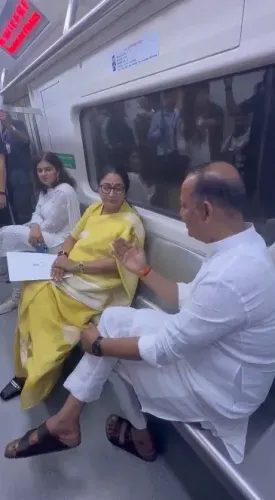
Chief Minister Gupta announced that the number of vehicles used for departmental operations will be limited with immediate effect. She stated that she, along with all Cabinet colleagues, Bharatiya Janata Party (BJP) MLAs, public representatives, and officers across Delhi government departments, will use the minimum number of vehicles as per requirement. Carpooling and public transport have been designated as the preferred modes of official travel.
Gupta also urged Delhi residents to join what she described as a national effort for energy conservation, echoing the Prime Minister's call. "I urge all Delhi residents to also join this national effort for energy conservation by following this call from the Honorable Prime Minister ji," she said.
PM Modi's Seven-Point Appeal
The Delhi government's announcement follows Prime Minister Narendra Modi's address in Vadodara on Monday, in which he made a wide-ranging appeal for greater self-reliance and financial discipline among citizens. His appeal covered reduced dependence on imported goods, restraint on gold purchases, moderation in edible oil consumption, and lower fuel usage.
Modi urged citizens to use public transport, electric vehicles (EVs), and shared mobility options, and suggested carpooling as a practical step for households with multiple vehicles. "Today's need is to make 'Vocal for Local' a mass movement," he said.
On gold imports, he noted that a large amount of national resources is spent on the metal, stating, "Gold is not necessary at this time," and suggested postponing such expenditure until global conditions stabilise.
Foreign Exchange and Tourism
The Prime Minister also addressed overseas travel and destination weddings, arguing that such practices lead to significant foreign exchange outflow. "People must consider India for weddings and holidays," he said, pointing to India's culturally significant and scenic locations as world-class alternatives.
Referring to the Statue of Unity, Modi encouraged citizens to celebrate major life events domestically. He also urged farmers to adopt natural farming practices and reduce chemical fertiliser use, stating that soil protection and sustainability are essential for long-term agricultural health.
Broader Context
The appeals come against the backdrop of the West Asia conflict, which has added pressure on global oil markets and India's import bill. India is heavily dependent on imported crude oil, making fuel conservation a matter of both economic and strategic significance. This is not the first time a conflict-driven spike in energy costs has prompted the Centre to encourage domestic behavioural change — similar appeals were made during the 2022 Russia-Ukraine war, when crude prices surged past $100 per barrel.
With Delhi being one of India's most vehicle-dense cities, the state government's commitment to lead by example on vehicle reduction could carry symbolic weight, even as the practical impact of such measures will depend on sustained enforcement and public uptake.
Point of View
Delhi's air quality and traffic congestion crises already demand structural public transport investment — framing vehicle reduction purely as a wartime conservation measure risks missing a much larger, longer-term urban mobility reform opportunity. The test will be whether this remains a headline gesture or translates into verifiable changes in official travel patterns.
NationPress
9 Oct 2026
Frequently Asked Questions
What has Delhi CM Rekha Gupta announced on fuel conservation?
Delhi CM Rekha Gupta announced that the Delhi government will limit the number of vehicles used for departmental operations, with all BJP MLAs, Cabinet ministers, and government officers directed to prioritise carpooling and public transport. The decision is a direct response to PM Modi's appeal for fuel conservation amid the West Asia conflict.
What was PM Modi's seven-point appeal about?
PM Modi made a seven-point appeal in Vadodara urging citizens to reduce dependence on imported goods, cut fuel consumption, restrain gold purchases, moderate edible oil use, choose domestic tourism over overseas travel, avoid destination weddings abroad, and adopt natural farming. He framed it as a call for self-reliance amid the ongoing West Asia conflict.
Why is fuel conservation being emphasised now?
The West Asia conflict has added pressure to global oil markets, raising concerns about India's import bill and foreign exchange reserves. India is heavily dependent on imported crude oil, making reduced fuel consumption a matter of both economic and national strategic interest.
Who is affected by Delhi government's vehicle restriction order?
The restriction applies to CM Rekha Gupta herself, all Cabinet colleagues, BJP MLAs, public representatives, officers, and all departments of the Delhi government. Citizens of Delhi have also been urged to join the conservation effort voluntarily.
Has India made similar conservation appeals before?
Yes, comparable appeals were made during the 2022 Russia-Ukraine war when global crude prices surged past $100 per barrel. The current appeal follows a similar pattern of linking domestic behavioural change to external geopolitical and economic pressures.