Kishan Reddy carpools to Cabinet meeting with Chouhan, Patil
Synopsis
Union Coal and Mines Minister G. Kishan Reddy said he carpooled to the Union Cabinet meeting in New Delhi with ministers Shivraj Singh Chouhan and C.R. Patil, framing it as a personal endorsement of Prime Minister Narendra Modi's Mission LiFE call to reduce fuel use and adopt sustainable daily habits for a greener, energy-secure Bharat.
Key Takeaways
Union Coal and Mines Minister G.
Kishan Reddy carpooled to the Union Cabinet meeting in New Delhi.
He was joined by Union Agriculture Minister Shivraj Singh Chouhan and Union Jal Shakti Minister C.R.
The gesture echoes Prime Minister Narendra Modi's call to reduce fuel consumption and adopt sustainable practices.
It aligns with Mission LiFE, launched in 2022 to promote pro-planet lifestyle choices.
The act ties to India's COP26 Panchamrit pledges, including net-zero by 2070.
Reddy urged citizens to make 'simple, responsible choices' that bolster national energy security.
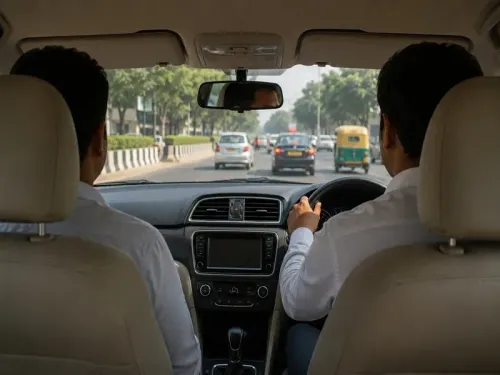
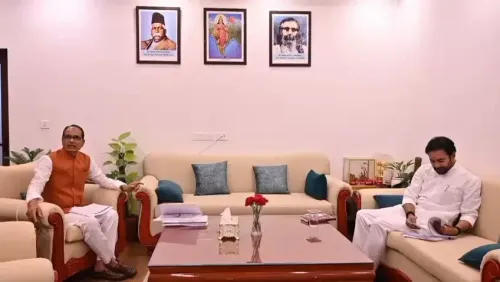
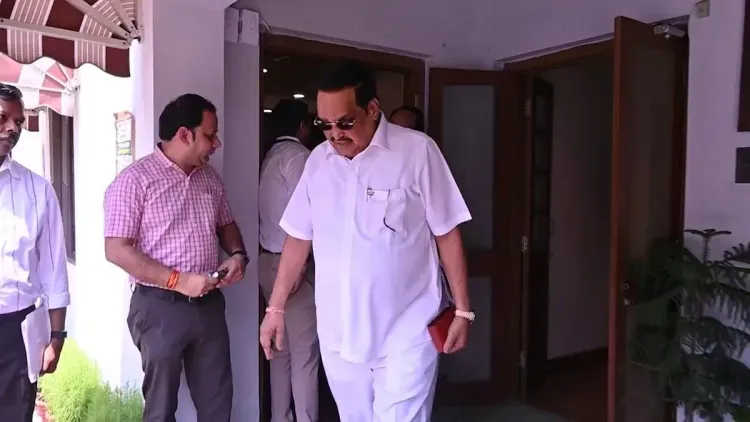
Union Coal and Mines Minister G. Kishan Reddy on Wednesday said he carpooled to the Union Cabinet meeting in New Delhi along with Union Agriculture and Farmers Welfare Minister Shivraj Singh Chouhan and Union Jal Shakti Minister C.R. Patil, framing the act as a personal endorsement of Prime Minister Narendra Modi's call for reduced fuel use and sustainable daily habits. Reddy posted a video of the shared ride on X, urging citizens to adopt 'simple, responsible choices' that strengthen India's energy security.
'Carpooling is a small step with a large impact, helping conserve energy, reduce carbon emissions, and contribute to a cleaner and greener Bharat,' Reddy wrote, describing the joint commute as an extension of the Prime Minister's 'clarion call to reduce fuel consumption and adopt sustainable practices in our daily lives.'
Context
The symbolic gesture comes from three senior ministers whose portfolios sit at the heart of India's resource economy — coal and mines, agriculture, and water. By being photographed together in a single vehicle on the way to Raisina Hill, the trio offered a high-visibility nudge aimed at urban commuters who account for a significant share of fuel consumption in metropolitan India.
Reddy, who also serves as BJP Telangana state president, has previously linked his coal and mines portfolio to the broader energy-transition narrative, emphasising both production security and demand-side moderation.
Policy backdrop
The post draws directly from Mission LiFE (Lifestyle for Environment), the behavioural-change movement launched by Prime Minister Modi in 2022 to encourage individual and collective pro-planet actions ranging from energy and water conservation to reduced single-use plastics. The mission positions everyday choices — switching off appliances, cycling, carpooling — as scalable climate interventions.
It also feeds into India's broader climate architecture announced at COP26 in 2021, where the country committed to the Panchamrit (five nectar elements) targets, including a net-zero emissions goal by 2070 and a sharp reduction in the carbon intensity of GDP. Curbing dependence on imported crude oil — a recurring fiscal and strategic concern — sits at the intersection of these climate pledges and India's energy-security calculus.
Stakeholders and impact
The intended audience extends beyond the Cabinet itself. By modelling carpooling, the ministers are signalling to central and state government employees, public-sector undertakings and urban professionals that shared mobility is compatible with senior office. Such ministerial demonstrations have historically preceded administrative advisories on official travel, fleet electrification, and fuel-saving protocols in government departments.
For the coal and mines ministry specifically, the messaging dovetails with parallel pushes on cleaner coal technologies, captive renewable use at mine sites, and exploration of critical minerals required for the electric-vehicle and battery ecosystem.
What's next
Follow-up communication from the government is likely to amplify Mission LiFE through targeted campaigns on sustainable commuting, particularly as agencies prepare for the next round of parliamentary engagement on energy conservation rules and updated fuel-efficiency norms. Ministerial social-media activity around World Environment Day, observed on June 5, is also expected to reinforce the theme.
Whether the carpool remains a one-off photo opportunity or hardens into a routine practice across the council of ministers will shape its credibility. For now, Reddy's post adds a personal data point to a long-running policy arc that pairs India's renewable build-out with behavioural nudges aimed at the demand side of the energy equation.
Point of View
Image-friendly, and aimed squarely at normalising behavioural change among India's aspirational middle class. By pairing a coal minister with the agriculture and water portfolios, the messaging frames sustainability as a whole-of-government posture rather than a niche environment-ministry concern. The political subtext is equally relevant: it reinforces the BJP's narrative of personal responsibility complementing state-led infrastructure on the path to the 2070 net-zero goal. The real test is whether such gestures translate into durable procurement and travel reforms inside the government itself.
NationPress
15 Sept 2026
Frequently Asked Questions
Who carpooled to the Cabinet meeting with Kishan Reddy?
Union Agriculture and Farmers Welfare Minister Shivraj Singh Chouhan and Union Jal Shakti Minister C.R. Patil shared the ride with Union Coal and Mines Minister G. Kishan Reddy to the Cabinet meeting in New Delhi.
What is Mission LiFE?
Mission LiFE, or Lifestyle for Environment, is a movement launched by Prime Minister Narendra Modi in 2022 to encourage individuals and communities to adopt sustainable daily practices such as energy and water conservation, reduced plastic use, and shared mobility.
Why did Kishan Reddy carpool to the Cabinet meeting?
He said he carpooled to demonstrate support for Prime Minister Modi's call to reduce fuel consumption and adopt sustainable daily habits, calling carpooling a small step with a large impact on energy conservation and emissions.
How does carpooling support India's energy security?
Carpooling reduces per-capita fuel demand, which in turn lowers India's crude oil import bill and tailpipe emissions, both of which are central to the country's energy-security and climate commitments.
What are India's Panchamrit climate commitments?
Announced at COP26 in 2021, the Panchamrit pledges include scaling up non-fossil energy capacity, sourcing half of energy needs from renewables by 2030, cutting projected emissions and carbon intensity, and achieving net-zero emissions by 2070.