Why Did a Delhi Court Deny Alka Lamba's Plea on Criminal Charges?
Synopsis
In a significant ruling, a Delhi court has dismissed Alka Lamba's plea against the criminal charges stemming from a protest at Jantar Mantar. The decision underscores the legal complexities surrounding political demonstrations and women's rights advocacy, highlighting the ongoing struggle for representation in Parliament.
Key Takeaways
Delhi court rejects revision plea from Alka Lamba.
Charges relate to women's reservation protest.
Evidence suggests protest exceeded allowed area.
Significant implications for political demonstrations.
Trial for Lamba to proceed as ordered.
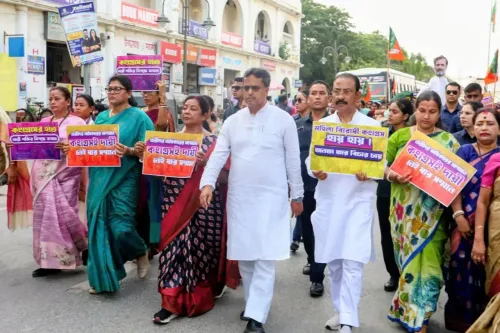
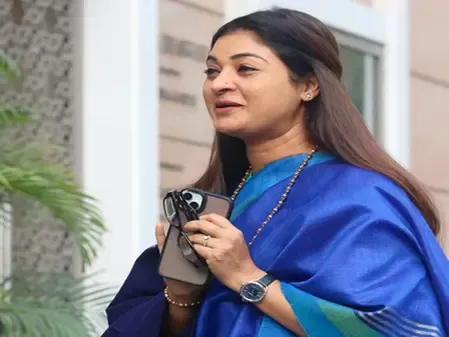
New Delhi, Feb 6 (NationPress) A Delhi court dismissed the revision plea from Congress leader Alka Lamba on Friday, which contested the framing of criminal charges against her related to a protest at Jantar Mantar last year. This protest was aimed at advocating for the implementation of women’s reservation in Parliament prior to the 2024 Lok Sabha elections.
Additional Sessions Judge Dig Vinay Singh of the Rouse Avenue Courts ruled against the revision petition, indicating there was no evidence of “patent illegality, perversity or jurisdictional error” in the magistrate’s order from December 19, 2025, which mandated the framing of charges against Lamba.
The court stated, “As there is no patent illegality, perversity, or jurisdictional error in the impugned order, the present revision petition fails and is dismissed,” as conveyed in its ruling.
Lamba, who serves as the Mahila Congress President, contested the directive from the Additional Chief Metropolitan Magistrate (ACMM) that established charges against her under Sections 132, 221, 223(a), and 285 of the Bharatiya Nyaya Sanhita (BNS), 2023.
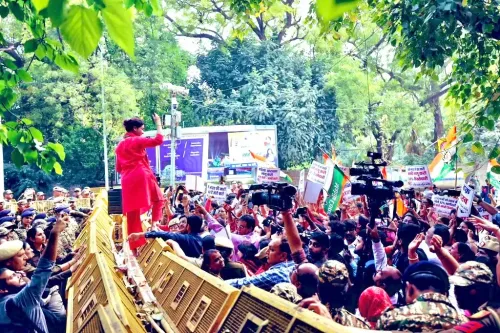
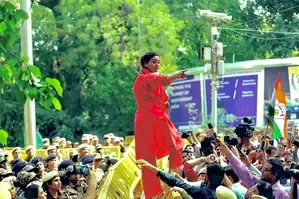
This criminal case arises from a protest that took place at Jantar Mantar on July 29, 2024, where Lamba was a prominent speaker advocating for women’s reservation.
As per the prosecution, prohibitory orders under Section 163 of the Bharatiya Nagarik Suraksha Sanhita (BNSS), 2023, were enforced in the Parliament Street area, although Jantar Mantar was designated as an exempted space.
The court acknowledged that the prosecution alleged Lamba and fellow protesters moved beyond the authorized protest area towards Tolstoy Road, chanting slogans and attempting to “gherao” the Parliament, despite multiple warnings from police officials via loud hailers.
Disregarding Lamba’s claim that the protest was peaceful and limited to the exempted zone, the Sessions Court noted that evidence, including video recordings and police witness statements, suggested that the demonstration exceeded the allowed area.
“The videos indicate that the revisionist not only jumped the first barricade but also instigated other protesters to jump the barricades through her gestures,” the court remarked, adding that protesters later breached the second line of barricades and obstructed public movement on the road near Sansad Marg.
The court also dismissed the argument of an “evidentiary vacuum” due to the lack of a medico-legal certificate or injury report, asserting that actual physical injury is not a requisite for crimes involving the use of criminal force.
“The standard for framing charges is not proof beyond a reasonable doubt but 'sufficient ground for proceeding',” stated the judge, noting that matters like the absence of independent witnesses or the nature of the alleged force should be evaluated during the trial.
Finding Lamba’s revision plea without merit, the Sessions Court upheld the magistrate’s decision to advance with the trial, asserting that a prima facie case existed against her for obstructing public servants, defying a lawful order, and causing obstruction on a public thoroughfare.
Point of View
I believe that the legal proceedings surrounding Alka Lamba's case illuminate the challenges faced by political figures advocating for crucial social reforms. Such cases serve as a reminder of the intersection between law and activism, particularly in the ever-evolving landscape of women's rights in India.
NationPress
19 Sept 2026
Frequently Asked Questions
What were the charges against Alka Lamba?
Alka Lamba faced charges under Sections 132, 221, 223(a), and 285 of the Bharatiya Nyaya Sanhita, 2023, relating to her involvement in a protest at Jantar Mantar.
What was the protest about?
The protest aimed to demand the implementation of women's reservation in Parliament ahead of the 2024 Lok Sabha elections.
What did the court rule regarding the charges?
The Delhi court upheld the framing of charges against Lamba, deeming there was sufficient ground for proceeding with the trial.
Was the protest considered peaceful?
The court found evidence suggesting that the protest exceeded the permitted area, and was not confined to the exempted zone.
What is the significance of this ruling?
This ruling highlights the legal implications of political protests and the ongoing struggle for women's representation in India.