Delhi HC grants bail to Salim Malik in 2020 riots conspiracy case

Synopsis
The Delhi High Court has drawn a clear legal line in the 2020 riots conspiracy case — separating 'core ideological drivers' from 'local-level facilitators.' Salim Malik's bail, after over five years in custody, signals that the Supreme Court's tiered-role framework from the Gulfisha Fatima ruling is now reshaping outcomes for multiple accused still awaiting trial.
Key Takeaways
The Delhi High Court granted bail to Salim Malik alias Munna on 21 May in the 2020 Delhi riots larger conspiracy case.
The bench classified Malik as a 'local-level facilitator' , not a core conspirator, citing the Supreme Court's Gulfisha Fatima judgment.
Malik had been in custody for more than five years and ten months ; trial proceedings are still at the charge-framing stage.
Bail conditions include a personal bond of ₹2 lakh , passport surrender, twice-weekly reporting to the Crime Branch SHO , and a ban on public gatherings.
The Supreme Court had earlier denied bail to Umar Khalid and Sharjeel Imam while granting it to five other co-accused in the same case.
The Delhi High Court on Thursday, 21 May granted bail to Salim Malik alias Munna in the larger conspiracy case linked to the 2020 Delhi riots, ruling that his role was comparable to that of co-accused who had already been released on bail by the Supreme Court. The decision marks a significant development in one of the most closely watched UAPA prosecutions arising from the communal violence that swept North-East Delhi in February 2020.
What the Court Found
A division bench of Justice Prathiba M. Singh and Justice Madhu Jain observed that the allegations against Malik placed him in the category of a 'local-level facilitator' rather than a key conspirator involved in conceptualising the alleged larger conspiracy. The bench found 'no major distinction' between Malik's attributed role and that of Mohd. Saleem Khan and Shadab Ahmad, whose bail was allowed by the apex court earlier this year in the case of Gulfisha Fatima v. State (Govt. of NCT of Delhi).
'After having considered the role of the appellant, this court is of the view that the same is similar to the role which is attributed to Mohd. Saleem Khan and Shadab Ahmad, who had also participated in the meetings, protests, and chakka jams,' the order stated.
Prolonged Custody and Trial Delay
The bench also noted that Malik had remained in custody for more than five years and ten months and that arguments on framing of charges were still being heard before the trial court. 'Accordingly, the trial is going to take some time,' the court observed, citing the prolonged pre-trial detention as a material factor in granting relief.
Prosecution's Case Against Malik
According to the Delhi Police, Malik attended meetings in mid-February 2020 and was allegedly involved in planning protests, delivering inflammatory speeches, and participating in rioting activities, including carrying stones and inciting clashes with police. Additional Solicitor General S.V. Raju, appearing for the Delhi Police, opposed the bail plea, arguing that Malik had actively participated in the conspiracy and that the statutory embargo on bail under Section 43D(5) of the Unlawful Activities (Prevention) Act (UAPA) continued to apply.
How the Supreme Court Precedent Applied
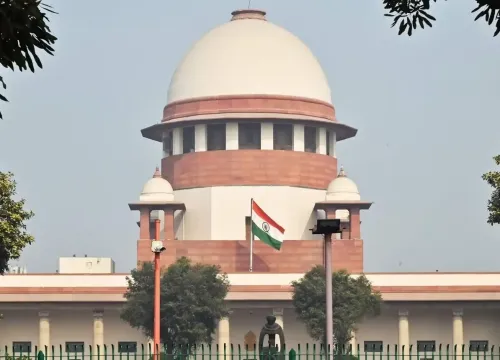
The high court relied on the Supreme Court's findings in the Gulfisha Fatima judgment, which drew a distinction between 'core ideological drivers' of the alleged conspiracy and 'local-level facilitators' or 'field operators.' Reproducing portions of the apex court judgment, the bench held that Malik's alleged role was 'operational' and 'execution-centred' — not that of someone who conceptualised or directed the larger conspiracy.
Notably, the Supreme Court had earlier this year declined bail to Umar Khalid and Sharjeel Imam, holding that prosecution material disclosed prima facie grounds attracting the UAPA embargo, while simultaneously granting bail to five others — Gulfisha Fatima, Meeran Haider, Shifa Ur Rehman, Mohd. Saleem Khan, and Shadab Ahmad.
Bail Conditions Imposed
The Delhi High Court imposed stringent conditions on Malik's release, including furnishing a personal bond of ₹2 lakh with two sureties, surrendering his passport, and appearing before the SHO of the Crime Branch twice a week. He has been barred from leaving Delhi without prior permission, contacting witnesses, participating in rallies or public gatherings, publishing any material concerning the case, or associating with any group linked to the subject matter of the FIR until the conclusion of the trial.
The case continues to wind through the trial court, with the bail order likely to inform arguments in other pending relief applications in the larger conspiracy proceedings.
Point of View
What does that say about the evidentiary architecture holding the larger case together? With Umar Khalid and Sharjeel Imam still in custody and trial not yet at full hearing stage, the asymmetry of outcomes is becoming harder to explain on purely legal grounds alone.
NationPress
19 Sept 2026
Frequently Asked Questions
Why did the Delhi High Court grant bail to Salim Malik?
The Delhi High Court granted bail because it found Malik's role to be that of a 'local-level facilitator' rather than a core conspirator, comparable to co-accused Mohd. Saleem Khan and Shadab Ahmad who had already been granted bail by the Supreme Court. The court also noted he had spent over five years and ten months in custody with the trial still at the charge-framing stage.
What is the 2020 Delhi riots larger conspiracy case?
The case relates to allegations by Delhi Police that student activists involved in protests against the Citizenship Amendment Act (CAA) in 2019-2020 conspired to engineer the communal riots that broke out in North-East Delhi in February 2020. The accused face charges under the Unlawful Activities (Prevention) Act (UAPA), among other provisions.
How does the Gulfisha Fatima Supreme Court judgment affect this case?
The Supreme Court's ruling in Gulfisha Fatima v. State drew a distinction between 'core ideological drivers' and 'local-level facilitators' of the alleged conspiracy. The Delhi High Court applied this framework to Malik, finding his role 'operational' and 'execution-centred' rather than that of a planner, which brought him within the category eligible for bail.
What conditions has Salim Malik been given on bail?
Malik must furnish a personal bond of ₹2 lakh with two sureties, surrender his passport, appear before the Crime Branch SHO twice a week, and seek prior permission before leaving Delhi. He is also barred from contacting witnesses, attending public gatherings or rallies, and publishing any material related to the case until the trial concludes.
What is the current status of other accused in the 2020 riots conspiracy case?
Umar Khalid and Sharjeel Imam remain in custody after the Supreme Court declined their bail pleas, holding that prosecution material disclosed prima facie grounds under UAPA's Section 43D(5). Five other accused — Gulfisha Fatima, Meeran Haider, Shifa Ur Rehman, Mohd. Saleem Khan, and Shadab Ahmad — were granted bail by the Supreme Court earlier this year.