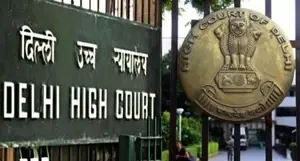
Delhi HC: Yamuna Zone O colonies 'completely impermissible', 91 unauthorised settlements face uncertain future

Synopsis
The Delhi High Court has declared residential colonies in Yamuna's Zone 'O' 'completely impermissible' — yet nearly 1 lakh houses and 5-6 lakh residents occupy those very floodplains. With 91 colonies excluded from regularisation and demolition orders ignored under engineers' watch, the Centre now faces a hard deadline to produce a plan that courts, ecology, and millions of vulnerable residents can all live with.
Key Takeaways
The Delhi High Court on 26 May 2025 declared residential colonies in Yamuna Zone 'O' 'completely impermissible'.
91 unauthorised colonies housing an estimated 5 to 6 lakh people and nearly 1 lakh houses are located in the zone.
The Centre notified 1,511 colonies for regularisation on 8 April 2026 , but Zone 'O' colonies were explicitly excluded.
Temporary protection from punitive action under the Special Provisions Act continues until 31 December 2026 ; no ownership rights are being granted.
The MCD Commissioner must file a status report on action against engineers overseeing areas where fresh illegal construction was photographed.
A MoHUA -convened meeting of DDA and MCD officials is scheduled for 8 June ; next court hearing is on 25 July .
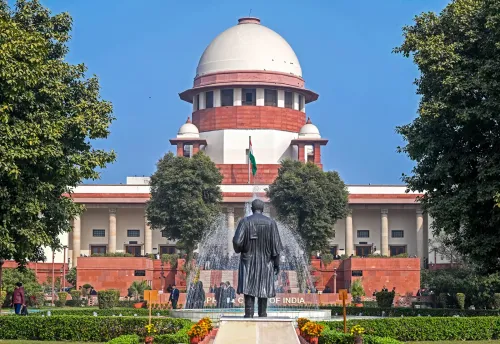
The Delhi High Court on 26 May 2025 declared that residential colonies in Zone 'O' of the Yamuna floodplains are 'completely impermissible', directing the Centre to urgently decide the fate of 91 unauthorised colonies sheltering an estimated 5 to 6 lakh residents in one of Delhi's most ecologically sensitive zones.
A Division Bench of Justice Prathiba M. Singh and Justice Manmeet Pritam Singh Arora issued the ruling while hearing a petition concerning rampant illegal construction and encroachments in Zone 'O', ordering the Union Ministry of Housing and Urban Affairs (MoHUA) to place its decision on the colonies' future before the court at the next hearing.
What the Court Said
'Insofar as Zone 'O' is concerned, the same is part of the Yamuna Flood Plains. This Court thinks that the existence of any residential colonies in Zone 'O' would be completely impermissible and would also not be conducive to the environment, as also to the river bed area,' the Justice Singh-led Bench observed.
The court also directed the Delhi Development Authority (DDA) to ensure that no new construction is permitted in the zone, 'even under the garb of repair or renovation' — a phrase that signals the bench's awareness of how demolition orders are routinely circumvented on the ground.
Centre's Position on Regularisation
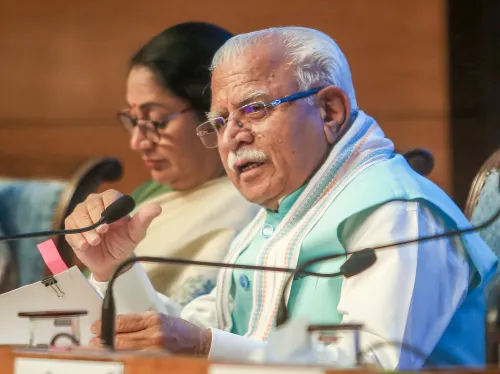
D. Thara, Additional Secretary in the MoHUA, joined proceedings virtually and clarified that while 1,511 unauthorised colonies across the national capital were notified for regularisation on an 'as-is, where-is' basis on 8 April 2026, colonies falling within Zone 'O' were explicitly excluded from that process.
The Centre confirmed, however, that temporary protection from punitive action under the National Capital Territory of Delhi Laws (Special Provisions) Second (Amendment) Act, 2011 would remain in force for Zone 'O' colonies until 31 December 2026. Crucially, the MoHUA affidavit stated that no ownership rights are being conferred on residents in Zone 'O' or the broader Yamuna floodplain areas.
Scale of the Problem
The court was informed that nearly 1 lakh houses exist across the 91 colonies in question, underscoring the sheer scale of the rehabilitation challenge. Discussions between the Centre, the Delhi government, and other departments on the future of these settlements are reportedly underway, though no concrete plan has been placed before the court yet.
This comes amid a broader pattern: the Yamuna floodplains have faced repeated judicial intervention over the past decade, yet illegal construction has persisted — a contradiction that the bench addressed directly by pointing to photographs showing fresh construction 'right under the supervision of Engineers of the MCD.'
Action Against Officials
The Delhi High Court took serious note of continuing unauthorised construction in Jagatpur Village, Wazirabad Village, Ram Ghat, and New Aruna Nagar (Majnu Ka Tila), despite earlier directions to halt such activity. It directed the Municipal Corporation of Delhi (MCD) to submit the names of the Executive Engineers responsible for the affected areas and ordered them to remain present at the next hearing.
The MCD Commissioner was further directed to file a status report on action taken against Executive Engineers, Junior Engineers, and Assistant Engineers, as well as demolition measures initiated against illegal structures.
Next Steps
The court directed that a meeting be convened on 8 June by the MoHUA, involving officials of the DDA and MCD, to chalk out measures for halting further unauthorised construction and conducting demolition drives in Zone 'O'. The matter has been listed for the next hearing on 25 July.
With lakhs of residents in legal limbo and the Yamuna's ecological health at stake, the outcome of the Centre's deliberations — and the credibility of enforcement on the ground — will determine whether this judicial intervention marks a turning point or adds to a long list of unimplemented orders.
Point of View
But the enforcement record is not. Fresh construction was photographed proceeding under MCD engineers' noses despite prior orders, which means the judicial direction is only as strong as the accountability mechanism behind it. The exclusion of Zone 'O' from the April 2026 regularisation drive is legally consistent but politically fraught: 5-6 lakh residents cannot simply be wished away, and the absence of a credible rehabilitation plan after years of litigation is itself a governance failure. The real test is whether the 8 June inter-agency meeting produces a time-bound resettlement roadmap — or another round of procedural deferrals that leave the Yamuna's floodplains neither ecologically restored nor humanely managed.
NationPress
12 Oct 2026
Frequently Asked Questions
What is Yamuna Zone 'O' and why is construction there illegal?
Zone 'O' refers to the Yamuna floodplains in Delhi, a designated ecological zone where residential construction is prohibited to protect the river's natural flood-absorption capacity and biodiversity. The Delhi High Court has now explicitly stated that the existence of any residential colonies in Zone 'O' is 'completely impermissible' and harmful to both the environment and the river bed.
How many people are affected by the Delhi HC order on Zone 'O' colonies?
An estimated 5 to 6 lakh residents living across 91 unauthorised colonies — comprising nearly 1 lakh houses — are directly affected. Their colonies have been excluded from the Centre's regularisation drive and have no ownership rights, though temporary protection from demolition continues until 31 December 2026.
Were any Zone 'O' colonies included in the Centre's regularisation of 1,511 colonies?
No. While the Centre notified 1,511 unauthorised colonies across Delhi for regularisation on an 'as-is, where-is' basis on 8 April 2026, colonies falling within Zone 'O' were explicitly excluded from that process. The MoHUA also confirmed that no ownership rights are being granted to Zone 'O' residents.
What action has the court ordered against officials overseeing illegal construction?
The Delhi High Court directed the MCD to submit the names of Executive Engineers responsible for areas — including Jagatpur Village, Wazirabad Village, Ram Ghat, and New Aruna Nagar — where fresh illegal construction was documented. The MCD Commissioner must file a status report on disciplinary action against Executive, Junior, and Assistant Engineers, and the concerned officers must appear at the next hearing.
What happens next in the Delhi HC case on Yamuna Zone 'O'?
The MoHUA has been directed to convene a meeting with DDA and MCD officials on 8 June to formulate measures for stopping further unauthorised construction and conducting demolition drives. The Centre must also place its decision on the future of the 91 colonies before the court. The next hearing is scheduled for 25 July.