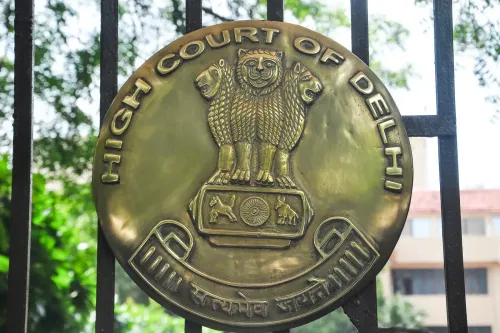
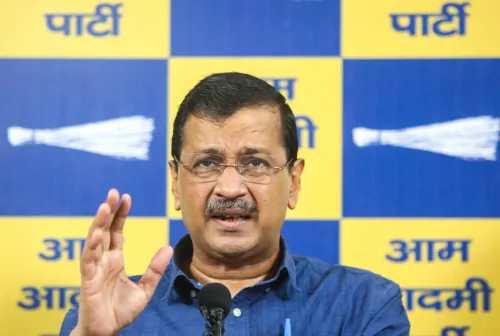
Delhi HC dismisses PIL to de-register AAP, disqualify Kejriwal and Sisodia
Synopsis
The Delhi High Court called a PIL seeking AAP's de-registration and the electoral disqualification of Kejriwal and Sisodia 'highly misconceived' — and the petitioner ultimately admitted no legal provision existed to support the relief sought. The ruling is a pointed reminder that contempt proceedings and party de-registration occupy entirely separate legal universes.
Key Takeaways
The Delhi High Court dismissed a PIL seeking de-registration of AAP and disqualification of Arvind Kejriwal , Manish Sisodia , and Durgesh Pathak on 20 May .
A Division Bench of Chief Justice D.K.
Upadhyaya and Justice Tejas Karia termed the plea 'highly misconceived'.
The court found no statutory provision empowering the ECI to de-register a party on the grounds alleged.
The bench held that even a contempt conviction does not bar a person from contesting elections under existing law.
The petitioner, Satish Kumar Aggarwal , conceded that no specific legal provision supported the relief sought.
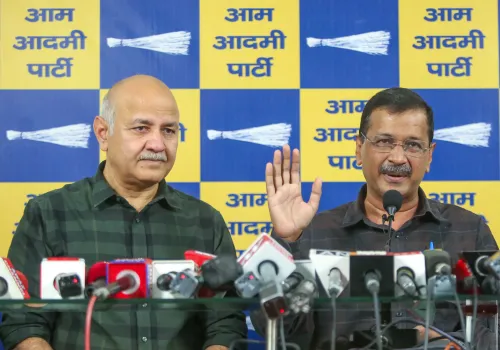
The Delhi High Court on Wednesday, 20 May dismissed a Public Interest Litigation (PIL) seeking the de-registration of the Aam Aadmi Party (AAP) and the disqualification of its leaders Arvind Kejriwal, Manish Sisodia, and Durgesh Pathak from contesting elections. The plea, filed by Satish Kumar Aggarwal, was rooted in the AAP leaders' alleged refusal to participate in proceedings before Justice Swarana Kanta Sharma in the Delhi excise policy case.
Court Calls Plea 'Highly Misconceived'
A Division Bench comprising Chief Justice D.K. Upadhyaya and Justice Tejas Karia declined to entertain the petition, observing: 'Having heard the parties, we are of the view that the PIL is highly misconceived.' The bench rejected the argument that adverse observations made by Justice Sharma against AAP leaders in a separate contempt proceeding could form the legal basis for de-registering a political party.
Bench Questions Legal Foundation of the Plea
During the hearing, the bench repeatedly pressed the petitioner on the maintainability of the plea, asking him to identify any statutory provision empowering the Election Commission of India (ECI) to de-register a party under the circumstances alleged. 'You are asking us to direct ECI to deregister a party. Is there any provision for the de-registration of a political party?' the court asked.
The petitioner invoked a Supreme Court judgment that recognised three grounds for de-registration — including where a party is declared unlawful under the Unlawful Activities (Prevention) Act (UAPA). The bench, however, swiftly dismantled each argument, noting that AAP had neither obtained registration by fraud, nor amended its rules in violation of Section 29A of the Representation of the People Act, nor been declared an unlawful organisation. 'Has this political party been declared unlawful?' the court asked pointedly, to which the petitioner's counsel conceded it had not.
No Legal Bar on Contesting Elections After Contempt
The bench further observed that even if an individual were convicted for scandalising a court, the remedy would lie under the Contempt of Courts Act — not in barring them from electoral participation. 'If someone is found to have scandalised the court, the remedy lies under the Contempt of Courts Act. Even if convicted, where is the provision that bars such a person from contesting elections?' the court said.
The petitioner ultimately conceded that no specific legal provision existed to support the relief sought, effectively undermining the entire basis of the PIL.
What the PIL Had Alleged
The petition had argued that the conduct of AAP leaders in allegedly refusing to appear before Justice Sharma demonstrated an absence of 'true faith and allegiance to the Constitution' as required under Section 29A(5) of the Representation of the People Act, 1951. It further alleged that their actions undermined the authority and dignity of the Delhi High Court, warranting the party's de-registration. The court found none of these contentions legally tenable.
The dismissal closes this particular legal challenge against AAP, though the party and its leaders continue to face proceedings in the excise policy case before the Delhi courts.
Point of View
And ultimately admitted as much in open court. What the case reveals is a pattern of using PIL as a political instrument against opposition parties, a trend the higher courts have increasingly called out. The bench's clarification that contempt proceedings and electoral eligibility are governed by entirely separate legal frameworks is a useful corrective, but the broader concern is the court's time being consumed by petitions that lack elementary legal grounding.
NationPress
22 Sept 2026
Frequently Asked Questions
Why did the Delhi High Court dismiss the PIL against AAP?
The Delhi High Court dismissed the PIL because the petitioner could not identify any statutory provision empowering the Election Commission of India to de-register AAP on the grounds alleged. The bench termed the plea 'highly misconceived' and found that none of the recognised legal grounds for de-registration — fraud in obtaining registration, violation of Section 29A, or being declared unlawful under UAPA — applied to AAP.
What was the PIL seeking and who filed it?
The PIL was filed by Satish Kumar Aggarwal seeking the de-registration of AAP and the disqualification of Arvind Kejriwal, Manish Sisodia, and Durgesh Pathak from contesting elections. It was based on their alleged refusal to participate in proceedings before Justice Swarana Kanta Sharma in the Delhi excise policy case.
Can a political party be de-registered for contempt of court in India?
No. The Delhi High Court clarified that contempt of court and party de-registration are governed by entirely separate legal frameworks. Even if a person is convicted for scandalising a court, the remedy lies under the Contempt of Courts Act — there is no provision that bars such a person from contesting elections.
What are the legal grounds on which a political party can be de-registered in India?
According to arguments placed before the court, a party can be de-registered if it obtained registration by fraud, amended its rules in violation of Section 29A of the Representation of the People Act, or is declared unlawful under the UAPA or a similar law. The court found none of these conditions were met in AAP's case.
What happens next in the Delhi excise policy case?
The dismissal of this PIL closes the specific legal challenge around de-registration and disqualification. However, AAP leaders including Kejriwal and Sisodia continue to face separate proceedings in the Delhi excise policy case before the Delhi courts.