Delhi HC issues notice to UPSC on PIL to bar ex-aspirants as scribes
Synopsis
A PIL filed by Deepstambh Foundation alleges that UPSC's scribe rules allow former Civil Services aspirants and coaching institute faculty to legally assist disabled candidates — potentially tilting the exam. The Delhi High Court has issued notice to UPSC and the Centre, with the next hearing on 16 September.
Key Takeaways
The Delhi High Court issued notice to UPSC and the Centre on 15 July over a PIL challenging the scribe facility rules for the Civil Services Examination .
The PIL, filed by Deepstambh Foundation , seeks to bar former UPSC aspirants and coaching faculty from serving as scribes.
A Division Bench of Chief Justice Devendra Kumar Upadhyaya and Justice Tejas Karia posted the matter for 16 September .
Current UPSC rules allow scribes with graduation-level qualifications — the same minimum bar as the exam — potentially enabling those with exam knowledge to assist candidates.
The foundation had written to UPSC on 11 April 2026 with proposed fixes but received no response before approaching the court.
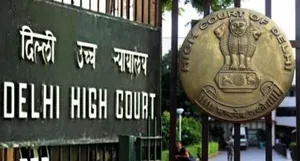
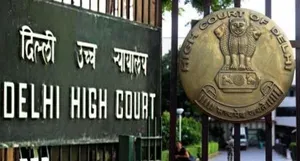
The Delhi High Court on Wednesday, 15 July issued notice to the Union Public Service Commission (UPSC) and the Centre on a public interest litigation (PIL) seeking stricter safeguards against the alleged misuse of the scribe facility in the Civil Services Examination by candidates with disabilities. The PIL contends that the current framework allows former UPSC aspirants and coaching institute faculty to legally serve as scribes, potentially distorting the examination's integrity.
What the Court Said
A Division Bench comprising Chief Justice Devendra Kumar Upadhyaya and Justice Tejas Karia issued notice to the UPSC, the Department of Personnel and Training (DoPT), and the Department of Empowerment of Persons with Disabilities under the Ministry of Social Justice and Empowerment. The matter has been posted for further hearing on 16 September.
The bench initially questioned whether the petition was maintainable as a PIL, with Chief Justice Upadhyaya observing: 'How can it be a PIL? The affected candidate can move a petition.' Advocate Rahul Bajaj, appearing for the petitioner, countered that the existing framework 'is resulting in an unequal playing field,' after which the court proceeded to issue notice.
The Core Legal Challenge
Filed by Deepstambh Foundation, the PIL challenges the UPSC's existing scribe qualification criteria on the ground that a scribe's qualification 'cannot be more than the minimum qualification of the candidate, which is graduation,' as Bajaj submitted. Since the minimum educational qualification for the Civil Services Examination is graduation, the petitioner argues this opens the door for graduates who have themselves appeared in the exam — at the Preliminary, Mains, or even Interview stage — or who are affiliated with coaching institutes, to serve as scribes.
The PIL seeks specific directions requiring the UPSC to disallow scribes who have previously appeared in the Civil Services Examination at any stage, and to bar scribes affiliated with UPSC coaching centres. It also seeks a mandatory undertaking from every scribe confirming they have neither appeared in the examination nor coached civil services aspirants.
The Alleged Loophole
According to the petition, the UPSC notification permits candidates with benchmark disabilities — including blindness, low vision, locomotor disability, and cerebral palsy — to use a scribe. The existing rule states the scribe's qualification 'will not be more than the minimum qualification criteria of the examination,' while requiring the scribe to be matriculate or above.
The PIL alleges that scribes drawn from coaching faculties or with prior examination exposure possess familiarity with the exam pattern and answer-writing techniques, and 'subtly influence content, structure, and quality of responses,' effectively turning the examination into 'a collaborative effort rather than an individual test of merit.' The petition is careful to clarify it does not seek to dilute the scribe facility for persons with disabilities, but seeks 'narrowly tailored safeguards' to prevent alleged misuse.
Background and What Prompted the PIL
Deepstambh Foundation had reportedly submitted a representation to the UPSC on 11 April 2026, highlighting the alleged loophole and proposing corrective measures. Having received no response, the foundation approached the Delhi High Court. This comes amid broader scrutiny of UPSC examination processes in recent years, with questions around transparency and equal access recurring across multiple cycles. The next hearing is scheduled for 16 September, when the UPSC and the Centre are expected to file their responses.
Point of View
It inadvertently permits individuals with deep Civil Services preparation to assist disabled candidates. That is a design flaw, not a fringe abuse. The Delhi High Court's initial scepticism about PIL maintainability is worth watching — if the bench redirects this to individual petitioners, the systemic fix gets delayed. What is missing from the current debate is data: how many scribes in recent cycles had prior UPSC exposure? Without that, the PIL risks being treated as anecdotal. UPSC's silence on Deepstambh Foundation's April 2026 representation is itself a governance signal.
NationPress
15 Jul 2026
Frequently Asked Questions
What is the Delhi High Court PIL against UPSC scribes about?
The PIL, filed by Deepstambh Foundation, challenges UPSC's scribe qualification rules for the Civil Services Examination, arguing they allow former aspirants and coaching faculty to legally serve as scribes for disabled candidates. The petitioner contends this creates an unequal playing field and seeks specific bars on such individuals acting as scribes.
Who filed the PIL and when was notice issued?
Deepstambh Foundation filed the PIL, and the Delhi High Court issued notice on 15 July to UPSC, DoPT, and the Department of Empowerment of Persons with Disabilities. The next hearing is scheduled for 16 September.
What changes does the PIL seek in UPSC scribe rules?
The PIL seeks directions barring scribes who have previously appeared in the Civil Services Examination at any stage — Preliminary, Mains, or Interview — and those affiliated with UPSC coaching institutes. It also seeks a mandatory undertaking from all scribes confirming they have no prior exam or coaching connection.
Does the PIL seek to remove the scribe facility for disabled candidates?
No. The petition explicitly states it does not seek to dilute the scribe facility available to persons with disabilities. It seeks only narrowly tailored safeguards to prevent alleged misuse while preserving accessibility for candidates with benchmark disabilities.
What is the current UPSC rule on scribe qualifications?
UPSC rules state that a scribe's qualification will not exceed the minimum qualification criteria of the examination, which for the Civil Services Examination is graduation. Scribes must be at least matriculate. The petitioner argues this standard inadvertently permits graduates with Civil Services preparation to serve as scribes.