Delhi HC refuses stay on ban of non-BS-VI vehicles from capital
Synopsis
The Delhi High Court has refused to pause the Delhi government's ban on non-BS-VI vehicles from outside the capital — a restriction covering over 10 lakh NCR vehicles that runs until 31 January 2027. The legal challenge, arguing the rule discriminates based on registration state rather than actual emissions, now heads to a 27 November hearing, with the ban operating in full force in the meantime.
Key Takeaways
Delhi High Court declined to stay the ban on non- BS-VI compliant out-of-state vehicles on 2 November 2026 .
The bench of Acting Chief Justice Nitin Wasudeo Sambre and Justice Sanjay Sharma issued notice and listed the matter for 27 November .
The restriction is in force from 1 November 2026 to 31 January 2027 as a winter pollution-control measure.
More than 10 lakh vehicles across Delhi-NCR — including in Noida, Gurugram, Faridabad and Ghaziabad — are estimated to be non-compliant.
The petition argues the ban violates Article 14 by treating identical-emission vehicles differently based on state of registration.
AI-powered ANPR cameras are being deployed at Delhi's entry points to enforce the restriction.
The Delhi High Court on Monday, 2 November 2026 declined to grant an interim stay on the Delhi government's notification barring entry of non-BS-VI compliant vehicles registered outside the national capital, even as it issued notice on a petition challenging the restriction. The ban, which came into force on 1 November, will remain in effect until 31 January 2027 as part of the city's winter pollution-control measures.
What the Court Said
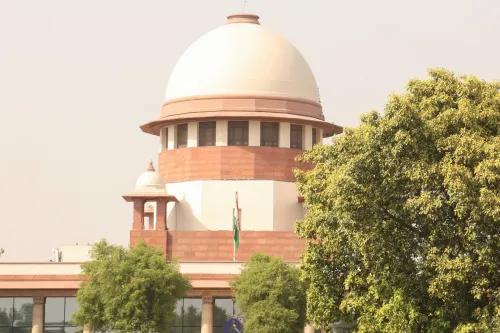
A division bench of Acting Chief Justice Nitin Wasudeo Sambre and Justice Sanjay Sharma issued notice on the plea and directed that it be tagged with another pending matter. The court has listed the case for further hearing on 27 November. By declining interim relief, the bench effectively allows the restriction to operate unimpeded while the legal challenge proceeds.
The Challenge: Article 14 and Discriminatory Treatment
The petition contends that the restriction is arbitrary and discriminatory, arguing that it violates Article 14 of the Constitution — the right to equality. The petitioner points out that vehicles registered in Delhi that do not meet BS-VI standards are still permitted to ply within the city, while vehicles with identical emission profiles registered in neighbouring states such as Uttar Pradesh and Haryana are barred from entry. The plea argues that differential treatment based solely on the place of vehicle registration, rather than actual emission characteristics, constitutes an unreasonable classification under law.
Scope and Scale of the Restriction
Under the notification, vehicles registered outside Delhi that do not comply with BS-VI emission norms are prohibited from entering the capital. Exemptions have been carved out for BS-VI compliant vehicles, those running on Compressed Natural Gas (CNG) and electricity, as well as ambulances, fire tenders, and vehicles engaged in specified essential services.
According to estimates from the Transport Department, more than 10 lakh vehicles across the Delhi-NCR region — spanning Noida, Greater Noida, Gurugram, Faridabad, and Ghaziabad — do not meet BS-VI standards. The restriction is expected to significantly affect commuters from these cities who travel to Delhi daily for work and business.
Technology-Backed Enforcement at Entry Points
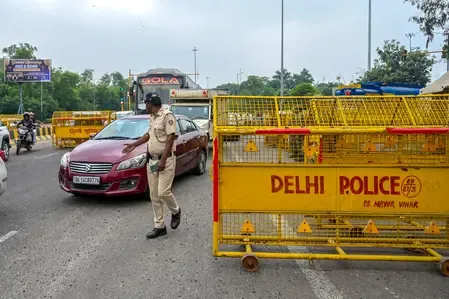
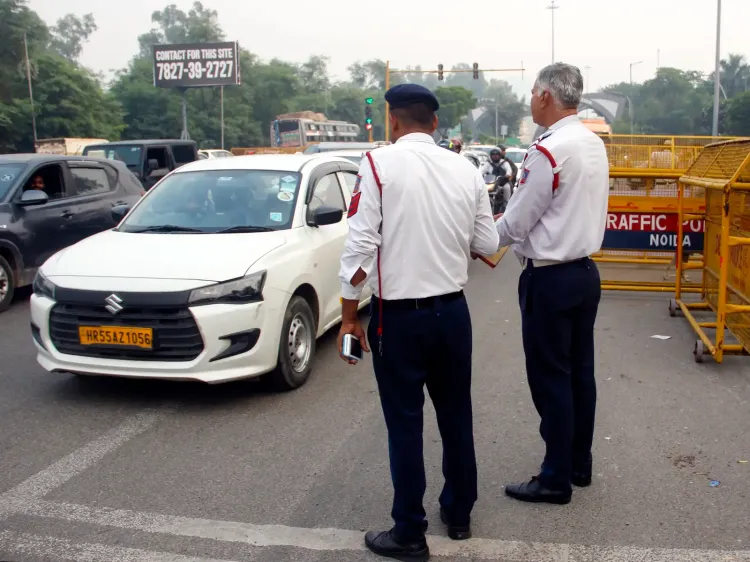
Authorities are reportedly strengthening enforcement at the capital's entry points, with plans to deploy Artificial Intelligence-powered Automatic Number Plate Recognition (ANPR) cameras to identify non-compliant vehicles. The system is designed to flag approaching vehicles along key corridors connecting Delhi with Noida, Gurugram, and Ghaziabad. This comes amid heightened scrutiny of Delhi's air quality each winter, when a combination of stubble burning, vehicular emissions, and weather patterns pushes pollution levels into hazardous territory.
What Happens Next
The High Court will take up the matter again on 27 November, when the tagged cases will be heard together. Until then, the ban continues to operate. The outcome of the constitutional challenge could have wider implications for how state governments design pollution-control measures that cut across state boundaries — a recurring tension in the NCR region's shared-airshed governance.
Point of View
And pausing enforcement mid-season would have undermined the policy before it could show results. But the constitutional question the petitioner raises is not frivolous: a rule that allows a Delhi-registered non-BS-VI vehicle to drive freely while barring an identical vehicle from Noida does look arbitrary on its face. The deeper issue is structural — Delhi's air quality is a shared-airshed problem, and the current framework places the burden of a regional failure almost entirely on commuters from neighbouring states. A legally durable solution would require NCR-wide emission standards enforced uniformly, not jurisdiction-specific bans that invite Article 14 challenges every winter.
NationPress
2 Nov 2026
Frequently Asked Questions
What is the Delhi government's non-BS-VI vehicle entry ban?
The Delhi government has prohibited vehicles registered outside Delhi that do not comply with BS-VI emission norms from entering the capital. The restriction is in force from 1 November 2026 to 31 January 2027 as part of winter pollution-control measures, with exemptions for CNG and electric vehicles, ambulances, fire tenders, and essential-service vehicles.
Why did the Delhi High Court refuse to stay the ban?
The Delhi High Court declined to grant an interim stay while issuing notice on the petition challenging the ban. The bench listed the matter for a hearing on 27 November, meaning the restriction continues to operate in full during the pendency of the legal challenge.
What is the legal argument against the ban?
The petitioner argues the ban violates Article 14 of the Constitution — the right to equality — because it allows Delhi-registered non-BS-VI vehicles to continue operating in the city while barring identically emitting vehicles registered in neighbouring states. The classification, the plea contends, is based on place of registration rather than actual emission characteristics.
How many vehicles are affected by the ban?
According to Transport Department estimates, more than 10 lakh vehicles across Delhi-NCR — including those in Noida, Greater Noida, Gurugram, Faridabad, and Ghaziabad — do not meet BS-VI standards and are therefore affected by the entry restriction.
How will the ban be enforced?
Authorities are deploying AI-powered Automatic Number Plate Recognition (ANPR) cameras at Delhi's entry points to identify non-compliant vehicles. The system will flag vehicles on key routes connecting Delhi with Noida, Gurugram, and Ghaziabad.