Delhi HC orders Aadhaar QR scan, email banks to speed up bail bond verification

Synopsis
The Delhi High Court has ordered jail authorities to scan Aadhaar QR codes and email banks directly to verify bail sureties — a technology-first fix to a systemic failure where prisoners have spent days in jail after courts already granted them bail. The suo motu case was triggered after a convict stayed locked up for over a week despite a suspended sentence.
Key Takeaways
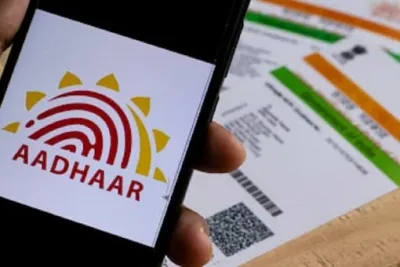
The Delhi High Court directed jail authorities to verify sureties using Aadhaar QR code scanning via apps including mAadhaar and Aadhaar QR Scanner App .
Fixed deposits and monetary instruments as surety must be verified through email communication with banks , which are required to respond promptly.
Jail Superintendents may share the court order directly with banks when seeking verification.
The suo motu case was triggered after a convict remained in jail for more than a week despite a court-suspended sentence, due to a Jail Superintendent's delay.
The Division Bench was led by Justice Prathiba M.
Singh and Justice Amit Mahajan .
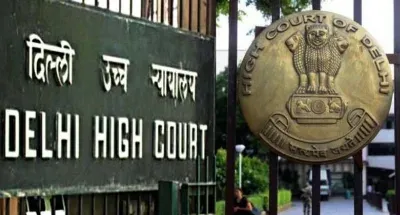
The Delhi High Court has directed jail authorities across the capital to use Aadhaar QR code-based verification for sureties and related credentials to cut delays in releasing prisoners after bail is granted. The order, issued on 27 May, marks a significant judicial push to modernise and expedite the bail bond acceptance process in Delhi's prison system.
Key Directions Issued
A Division Bench of Justice Prathiba M. Singh and Justice Amit Mahajan directed that surety credentials be verified by scanning the secure QR code embedded in Aadhaar cards using applications including the Aadhaar QR Scanner App, mAadhaar App, and Aadhaar App. The bench further directed that verification of fixed deposits or other monetary instruments furnished as surety should be carried out through email communication with banks and financial institutions, with those entities asked to respond promptly to jail authorities' requests.
'After obtaining the said details from the above Apps and any further details provided by the under-trial or convict, if further verification is needed, the same would be undertaken in an expeditious manner,' the Justice Singh-led bench stated in its order.
What Triggered the Suo Motu Case
The directions emerged from a suo motu case the court initiated after a single-judge bench noticed that a convict whose sentence had been suspended remained in jail for more than a week because the Jail Superintendent had not accepted the bail bonds. The Division Bench was dealing with the broader systemic issue of Jail Superintendents delaying acceptance of bail bonds even after courts had formally granted bail or suspended sentences.
'The object of granting bails and suspending sentences is to release the accused/convict from imprisonment,' the court had earlier observed, flagging the contradiction between judicial intent and ground-level practice.
Banks Directed to Cooperate
The court also clarified that Jail Superintendents are free to share the order directly with banks when seeking verification of financial instruments. This effectively gives jail authorities judicial backing to demand faster turnaround from financial institutions — a recurring bottleneck in the bail release process. The bench's direction to banks to respond 'promptly' adds institutional pressure to what has historically been an informal, slow-moving exchange.
Broader Context and Impact
Delays in post-bail release have long been a concern in India's overcrowded prison system, where under-trials account for a substantial share of the incarcerated population. This is not the first time Indian courts have intervened on bail delays — the Supreme Court has previously flagged systemic lapses in bail implementation across states. The Delhi High Court's technology-driven approach, anchoring verification to Aadhaar's existing digital infrastructure, is notably practical and could serve as a model for other high courts. Whether jail authorities implement the directions uniformly will determine the order's real-world impact.
The court is expected to continue monitoring compliance through the suo motu proceedings.
Point of View
Not a paperwork problem. Anchoring verification to Aadhaar's digital stack is pragmatic, but it shifts the burden of systemic reform onto technology rather than accountability. The deeper question is why suo motu proceedings were needed to enforce what is already a legal obligation. If compliance is not monitored rigorously, this order risks becoming another well-intentioned directive that dissipates in implementation.
NationPress
20 Sept 2026
Frequently Asked Questions
What has the Delhi High Court ordered regarding bail bond verification?
The Delhi High Court has directed jail authorities to verify sureties by scanning the QR code on Aadhaar cards using apps such as the Aadhaar QR Scanner App and mAadhaar App. For financial instruments like fixed deposits, verification must be done via email with banks, which are required to respond promptly.
Why did the Delhi High Court take up this issue suo motu?
The court initiated suo motu proceedings after a single-judge bench found that a convict whose sentence had been suspended was kept in jail for more than a week because the Jail Superintendent had not accepted the bail bonds. The case addresses systemic delays by jail authorities in processing bail bonds even after courts have granted bail.
Which judges issued these directions?
The directions were issued by a Division Bench comprising Justice Prathiba M. Singh and Justice Amit Mahajan of the Delhi High Court.
How does this order affect banks and financial institutions?
Banks and financial institutions are required to respond promptly to email verification requests from jail authorities regarding fixed deposits or other monetary instruments furnished as surety. Jail Superintendents are also permitted to share the court order directly with banks to expedite responses.
What is the broader significance of this order for prisoners in Delhi?
The order aims to eliminate delays in releasing prisoners after bail is granted — a problem that has kept legally entitled individuals incarcerated beyond their court-ordered release. By mandating a digital, Aadhaar-based process, the court seeks to make surety verification faster and more standardised across Delhi's jails.