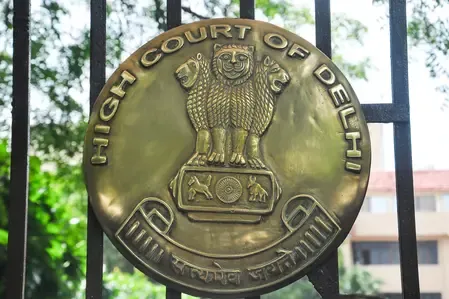
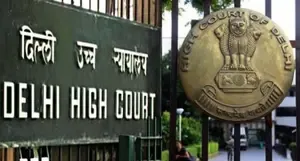
Delhi High Court Addresses Parole Delays, Mandates SOPs for Swift Compliance

Synopsis
The Delhi High Court has taken a strong stance against ongoing delays in parole and furlough cases, mandating the government to create Standard Operating Procedures for timely compliance. This decision aims to address critical bottlenecks affecting justice delivery.
Key Takeaways
Delhi High Court mandates SOPs for parole compliance.
Addressing delays is crucial for justice delivery.
Four-week parole was granted due to a family bereavement.
Conditions for parole include a personal bond and weekly check-ins.
Next hearing set for May 4 to ensure compliance.
New Delhi, April 11 (NationPress) The Delhi High Court has raised alarms about the ongoing delays in the enforcement of court decisions concerning parole and furlough applications. The court has instructed the government to develop Standard Operating Procedures (SOPs) aimed at ensuring timely adherence to these critical matters.
Justice Anup Jairam Bhambhani, presiding over a single-judge bench, was evaluating a petition submitted by Nandu, also known as Ram Kishore, which highlighted the persistent hold-ups in parole processing.
During a video-conference with the Principal Secretary (Home) and Tihar Jail's Superintendent, the court mandated that administrative officials must tackle the issues causing these delays, identify the bottlenecks, and establish SOPs to guarantee that court orders are swiftly communicated and executed within set timelines.
Justice Bhambhani emphasized the importance of strict and timely adherence to court directives, instructing that a copy of the newly created SOPs should be submitted before the next hearing.
The court noted that the Jail Superintendent had cited internal administrative processes as the reason for the delays in following previous court orders regarding parole and similar reliefs.
Expressing its distress over consistent failures to meet deadlines in urgent parole and furlough matters, the court conveyed its dissatisfaction to the Principal Secretary (Home).
Meanwhile, the Delhi High Court granted the petitioner a four-week parole due to the recent passing of his elder brother, with the final rites scheduled for April 6. A report from the prosecution confirmed his brother's death and the date of the last rites.
Although the jail authorities initially denied the parole request on April 1, referencing Rule 1212(2) of the Delhi Prison Rules, 2018—which generally prohibits simultaneous paroles for co-convicts when another is already on parole—the prosecution informed Justice Bhambhani that the co-convict had since surrendered.
Considering the updated circumstances, the Delhi High Court approved the parole, contingent upon conditions such as a personal bond of Rs 20,000 with a surety from a family member, restrictions on leaving Delhi without permission, weekly check-ins at the Sadar Bazar police station, and mandatory return upon the parole period’s conclusion.
The matter is scheduled for further review on May 4, focusing on compliance with the directives given to the Principal Secretary (Home).
Point of View
It is crucial to recognize the Delhi High Court's proactive approach in addressing delays in parole applications. This directive not only emphasizes the judiciary's commitment to timely justice but also places responsibility on administrative bodies to enhance their efficiency.
NationPress
20 Sept 2026
Frequently Asked Questions
What prompted the Delhi High Court to intervene in parole cases?
The Delhi High Court intervened due to ongoing delays in complying with court orders related to parole and furlough applications, highlighting the need for timely justice.
What are Standard Operating Procedures (SOPs)?
Standard Operating Procedures (SOPs) are established guidelines designed to ensure consistent and efficient execution of processes, in this case, for timely compliance with court orders.
How long was the parole granted to the petitioner?
The Delhi High Court granted a four-week parole to the petitioner due to the death of his elder brother.
What conditions were imposed on the granted parole?
The conditions included a personal bond, restrictions on leaving Delhi, weekly check-ins with the police, and mandatory surrender at the end of the parole period.
When is the next hearing scheduled?
The next hearing is scheduled for May 4 to review compliance with the directives given to the Principal Secretary (Home).