Delhi IFSO busts inter-state fake Aadhaar, PAN racket; two arrested
Synopsis
Delhi Police's IFSO unit cracked an inter-state cyber forgery ring that sold fake Aadhaar, PAN, and voter ID cards for as little as ₹100 via a live website. Two arrests — one in Daman & Diu, one in Patna — expose how organised document fraud has moved entirely online, with QR-code mimicry designed to fool the untrained eye.
Key Takeaways
Delhi Police IFSO arrested two men on 6 July for running an inter-state fake government document network via bkprint.in .
The site allowed users to generate forged Aadhaar cards , voter IDs , PAN-related documents , and other certificates for a nominal UPI payment .
Forged documents carried QR codes that stored only user-entered data, with no link to official government databases.
Accused Bideshi Saw of Daman & Diu operated the site and received payments; Santosh Kumar of Patna built and maintained the backend, including a second domain bkprint.xyz .
Investigators confirmed the site's illegal nature by generating forged documents themselves using a ₹100 test payment.
Police seized laptops, mobile phones, source code, customer databases, and payment records; further investigation is ongoing.
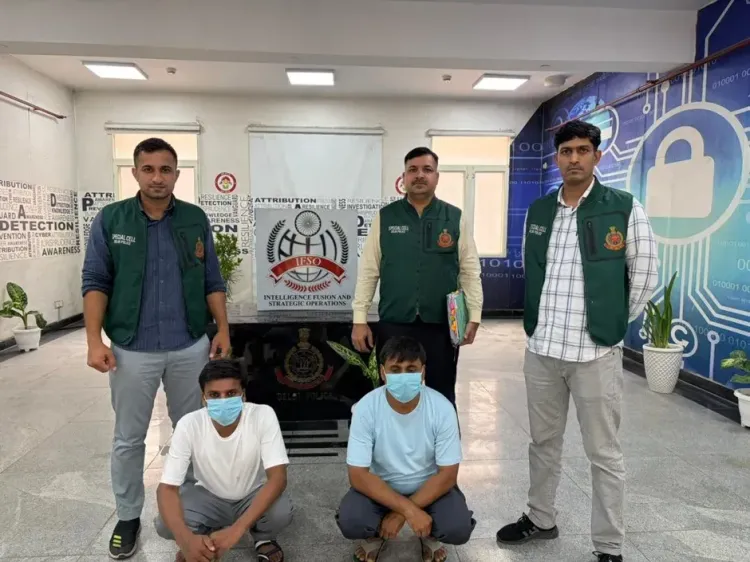
Delhi Police's Intelligence Fusion & Strategic Operations (IFSO) unit arrested two men on 6 July for allegedly running an inter-state cyber forgery network that sold fake government identity documents — including Aadhaar cards, PAN-related documents, and voter identity cards — through the website bkprint.in. The operation, carried out by the Special Cell, marks one of the more technically sophisticated document-forgery busts in recent months.
How the Racket Operated
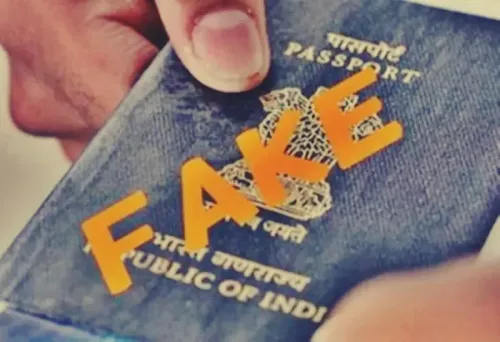
The website bkprint.in allowed users to generate forged government document-like records by entering arbitrary personal details and uploading a photograph, after recharging a digital wallet via UPI. Documents generated included fake Aadhaar cards, voter identity cards, PAN-related documents, residence certificates, caste certificates, and birth and death certificates.
Crucially, investigators found that the QR codes on the forged Aadhaar documents stored only the user-entered information and were not linked to any official government database — giving the fakes a veneer of authenticity while remaining entirely fabricated. The platform was designed so that customers could generate these documents for a nominal online payment, with no identity verification required.
How Police Cracked the Case
The operation began after IFSO officials flagged the website during routine cyber patrolling and social media monitoring. To confirm the platform's illegal nature, investigators created a dummy user account, transferred ₹100 via the UPI ID listed on the site, and successfully generated forged Aadhaar and voter identity cards using fictitious personal details.
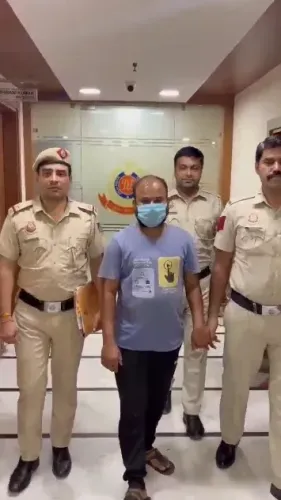
The UPI account receiving payments was traced to Bideshi Saw, son of Suresh Saw, a resident of Somnath, Daman & Diu. A team led by Inspector Satish Kumar — comprising SI Sumit Sehrawat, Head Constables Manoj Kumar and Rajesh, and Constable Ashish Rathi — operating under ACP Vivekanand Jha and DCP Vinit Kumar of IFSO, arrested Saw from the Union Territory of Daman & Diu after extensive technical and field investigation.
The Second Accused: Backend Developer in Patna
During interrogation, Saw allegedly revealed that the website's backend was managed by Santosh Kumar, son of late Saroj Kumar, a resident of Ravi Chowk, Patna. Police traced and arrested Santosh Kumar based on technical evidence.
Examination of digital devices seized from Santosh Kumar reportedly uncovered the website's source code, hosting configuration, customer database, payment records, and chats with co-accused Saw. He is also alleged to have managed a second domain, bkprint.xyz, and maintained electronic documents under the names 'BKS' and 'BKS Online Services'.
Seizures and Charges
Police recovered two mobile phones, a laptop, and a QR code sound box from Saw. From Santosh Kumar, investigators seized a laptop with source code and technical records, a mobile phone containing chats with Saw, and digital records related to both bkprint.in and bkprint.xyz.
Delhi Police described the offence as a grave, organised, and technology-driven cybercrime. Further investigation is underway to identify additional associates, trace proceeds of crime, and identify individuals who may have procured or misused documents generated through the platform. Citizens have been advised to report suspicious websites offering forged documents to the police immediately.
Point of View
No print shops, just a UPI QR code and a self-service portal. The ₹100 entry price signals that this was designed for volume, not premium clients, which raises uncomfortable questions about how many forged credentials are already in circulation. The QR-code mimicry tactic — storing user-entered data rather than linking to UIDAI — is a deliberate attempt to defeat casual verification, and it likely worked on low-vigilance checks. What the investigation has not yet answered is the size of the customer database recovered from Santosh Kumar's laptop; that figure, when disclosed, will be the real measure of the racket's reach.
NationPress
5 Oct 2026
Frequently Asked Questions
What was the bkprint.in website used for?
bkprint.in was an online platform that allegedly allowed users to generate forged government identity documents — including fake Aadhaar cards, voter identity cards, and PAN-related documents — by entering fictitious personal details and uploading a photograph after making a small UPI payment. Delhi Police confirmed its illegal nature by generating forged documents themselves using a ₹100 test transaction.
Who were the two men arrested in the Delhi IFSO cyber forgery case?
The two accused are Bideshi Saw, a resident of Somnath in Daman & Diu, who operated the website and received payments, and Santosh Kumar, a resident of Ravi Chowk in Patna, who allegedly designed and maintained the site's backend infrastructure, including a second domain bkprint.xyz.
Why were the forged Aadhaar cards difficult to detect?
The fake Aadhaar cards generated through bkprint.in carried QR codes that stored only the information manually entered by the user, rather than linking to the official UIDAI database. This gave the documents the visual appearance of genuine government-issued records, making them potentially capable of deceiving low-vigilance verification checks.
What evidence did police recover from the accused?
From Bideshi Saw, police seized two mobile phones, a laptop, and a QR code sound box. From Santosh Kumar, investigators recovered a laptop containing the website's source code and hosting configuration, a mobile phone with chats with Saw, and digital records related to both bkprint.in and bkprint.xyz, including customer databases and payment information.
What are the potential misuses of documents generated through such platforms?
According to Delhi Police, forged documents of this kind can be misused for identity theft, impersonation, financial fraud, cheating, and — most critically — obtaining genuine government documents by submitting forged credentials. Further investigation is ongoing to identify individuals who may have already procured or misused documents from the platform.