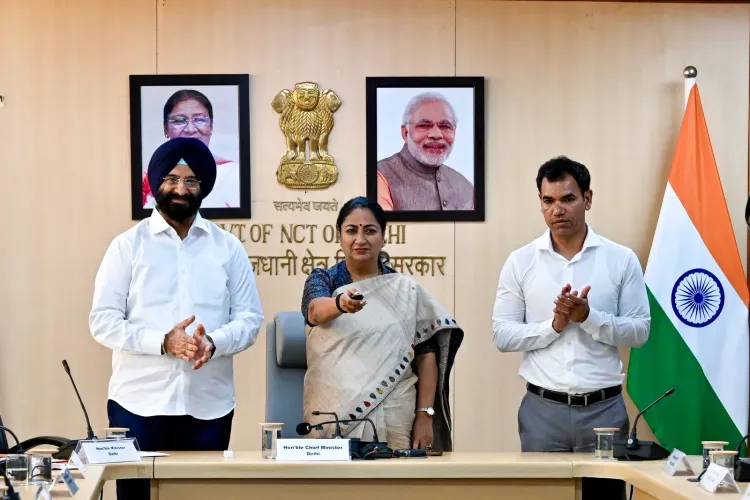
Delhi CM Rekha Gupta launches Dust Portal 2.0 for AI-based construction site monitoring
Synopsis
Delhi has moved from rule books to real-time AI: Dust Portal 2.0, launched by CM Rekha Gupta, deploys GIS mapping, 360-degree cameras, and PM sensors to police construction dust — the single largest contributor to the capital's PM-10 load at 66 per cent. A fully digital challan system is next.
Key Takeaways
Delhi CM Rekha Gupta launched Dust Portal 2.0 on 13 July , an AI-powered dust pollution monitoring platform.
Developed by the Delhi Pollution Control Committee (DPCC) , it covers construction and demolition sites across the capital.
The portal uses GIS mapping , PTZ cameras , PM-10 and PM-2.5 sensors , and real-time AI analytics.
Dust accounts for 27% of Delhi's total air pollution in summer and 66% of PM-10 emissions year-round, according to government data.
A fully digital challan process — enabling direct issuance of notices through the portal — is in development.
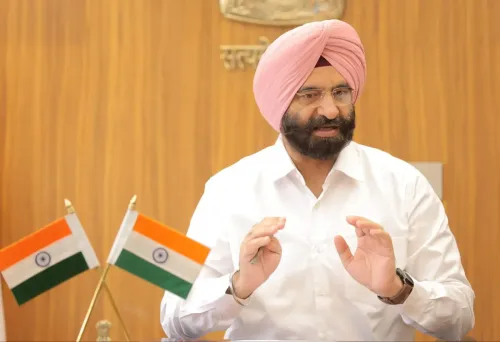
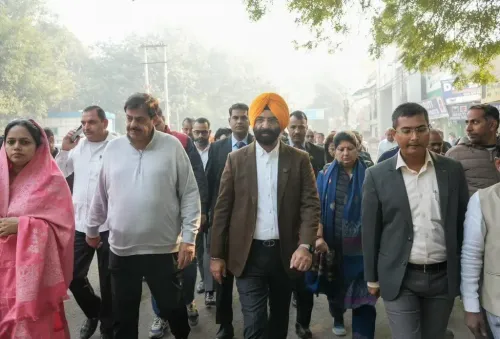
Environment Minister Manjinder Singh Sirsa was present at the launch alongside senior DPCC officials.
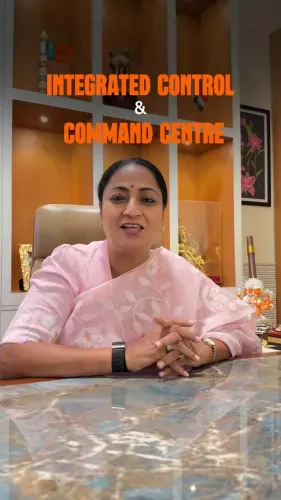
Delhi Chief Minister Rekha Gupta on Monday, 13 July launched Dust Portal 2.0 — a Dust Pollution Control Self-Assessment Web Portal and Mobile Application — marking a significant step in the capital's technology-driven fight against air pollution. Developed by the Delhi Pollution Control Committee (DPCC), the platform uses artificial intelligence to monitor dust control measures at construction and demolition sites across New Delhi in real time.
What Dust Portal 2.0 Does
The portal integrates GIS mapping, live 360-degree PTZ cameras, PM-10 and PM-2.5 sensors, real-time analytics, and AI-based monitoring to track compliance at construction sites. It accurately maps individual sites and self-assesses five key parameters related to dust control, making enforcement more uniform and transparent.
Project directors gain access to a self-assessment facility, while the system simultaneously strengthens data-driven enforcement. Notably, the portal also identifies the nearest Air Quality Monitoring Stations (AQMS) to each construction site, enabling localised air quality analysis. A live demonstration of the system was conducted during the launch event.
Why Dust Pollution Is a Priority
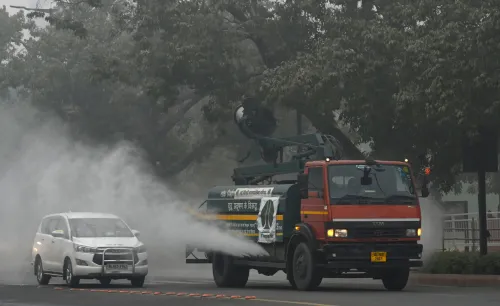
According to Delhi government data, dust from roads, soil, and construction activity accounts for roughly 27 per cent of total air pollution in summer and approximately 15 per cent in winter. The figures are even starker when disaggregated by pollutant: dust contributes 66 per cent of PM-10 emissions and around 38 per cent of PM-2.5 emissions in the capital. Dust Portal 2.0 has been developed specifically to address this outsized share.
This comes amid persistent pressure on Delhi's administration to demonstrate measurable progress on air quality — a perennial concern that intensifies every winter and draws national scrutiny.
What the Government Said
Chief Minister Gupta said the fight against air pollution would be waged not only through strict regulation but also through 'modern and smart administrative systems.' She described Dust Portal 2.0 as a platform that would 'bring a significant change in the process of monitoring and managing dust pollution at construction sites.'
'Through AI and digital technology, our government is making the compliance process simpler, monitoring more effective, and enforcement more transparent,' she said. She added that the government aims to make Delhi 'one of the cleanest, greenest and most environmentally responsible capitals in the world.'
Delhi Environment Minister Manjinder Singh Sirsa and senior departmental officials were also present at the launch.
What Comes Next
The government is working towards making the challan process fully digital, so that notices and penalties can be issued directly through the portal, eliminating the possibility of irregularities or procedural delays, according to the official statement. Every construction agency is expected to become an active compliance partner under the new framework.
Whether the platform delivers on its promise of real-time enforcement will depend on consistent data quality from sensors and cameras — a challenge that similar smart-city initiatives have faced in the past.
Point of View
But the hard test is not the launch — it is the uptime of sensors and the consistency of enforcement six months from now. Delhi has a history of ambitious environmental dashboards that lose momentum after the press release. The 66 per cent PM-10 contribution from dust is a damning number that has been cited for years; what changes now is whether AI-generated evidence actually converts into challans, and whether those challans stick. The planned digital challan integration is the detail worth watching — it removes the human discretion that has historically allowed violators to negotiate their way out.
NationPress
12 Oct 2026
Frequently Asked Questions
What is Dust Portal 2.0 launched by Delhi CM Rekha Gupta?
Dust Portal 2.0 is an AI-powered web portal and mobile application developed by the Delhi Pollution Control Committee (DPCC) to monitor dust control measures at construction and demolition sites in real time. It was launched by Chief Minister Rekha Gupta on 13 July and uses GIS mapping, PTZ cameras, and PM-10/PM-2.5 sensors for enforcement.
How much does construction dust contribute to Delhi's air pollution?
According to Delhi government data, dust from roads, soil, and construction activity contributes around 27 per cent of total air pollution in summer and 15 per cent in winter. Its share in PM-10 emissions is 66 per cent and in PM-2.5 emissions approximately 38 per cent.
What technologies does Dust Portal 2.0 use?
The portal incorporates GIS mapping, live 360-degree PTZ cameras, PM-10 and PM-2.5 sensors, real-time analytics, and AI-based monitoring. It self-assesses five key dust-control parameters at each site and identifies the nearest Air Quality Monitoring Stations for localised analysis.
Who will use Dust Portal 2.0 and how?
Project directors at construction and demolition sites will use the portal's self-assessment facility to log compliance, while the DPCC will use the AI-generated data for monitoring and enforcement. The government is also working to integrate a fully digital challan system so notices can be issued directly through the platform.
What are the next steps after the Dust Portal 2.0 launch?
The Delhi government is working towards making the challan process completely digital, allowing notices and penalties to be issued directly through the portal. This is intended to eliminate procedural irregularities and ensure every construction agency becomes an active compliance partner.