Delhi LG Sandhu at JGU: India's strategic autonomy powers global partnerships
Synopsis
At an O.P. Jindal Global University lecture, Delhi LG and former US ambassador Sardar Taranjit Singh Sandhu made a pointed case: India's strategic autonomy — its ability to engage Washington, Moscow, Brussels and the Global South simultaneously — is not a legacy posture but a live competitive advantage in today's fracturing world order. His call to 'shape, not adapt' signals where India's diplomatic ambition is heading.
Key Takeaways
Sardar Taranjit Singh Sandhu , Lieutenant Governor of Delhi, delivered a public lecture at O.P.
Jindal Global University in Sonipat on 3 November 2026 .
He argued that India's strategic autonomy — engaging the US, Europe, Russia, Japan, Australia and the Global South simultaneously — is a core diplomatic asset.
Sandhu called on India to invest in education, research, infrastructure, defence, manufacturing, energy security and advanced technology to translate strengths into capabilities.
He stressed India's unique role in the Global South , urging technology and capability partnerships over traditional aid.
JGU Founding Vice Chancellor Prof.
Raj Kumar announced the launch of the inaugural World Ideas Forum 2027 , aimed at positioning the Global South as a generator of global ideas.
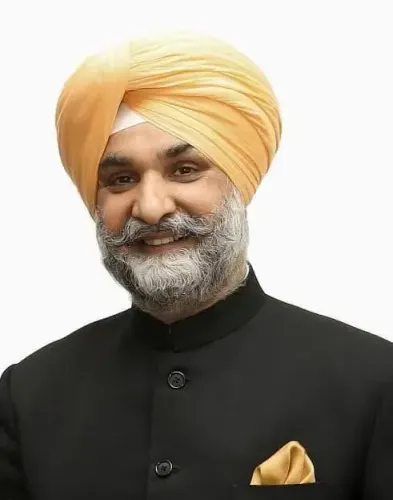
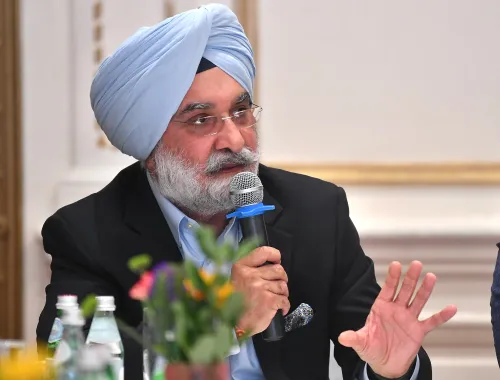
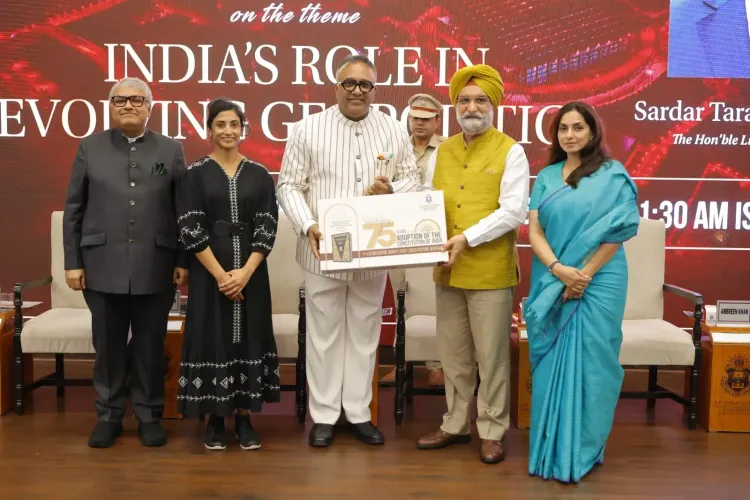
Sardar Taranjit Singh Sandhu, the Lieutenant Governor of Delhi, on 3 November 2026 delivered a distinguished public lecture at O.P. Jindal Global University (JGU) in Sonipat, arguing that India's strategic autonomy is its most durable asset in an era of intensifying geopolitical competition. Speaking on the theme 'India's Role in Evolving Geopolitics', the former Indian Foreign Service officer and ex-ambassador to the United States urged India to move beyond adapting to the decisions of others and actively shape the emerging international order.
The Strategic Autonomy Argument
Sandhu opened by framing the current moment as one of historic flux. 'We are living through a period of significant geopolitical transformation. The international order is being reshaped by strategic competition, regional conflicts and a growing contest over economic and resource security,' he said. He argued that countries are diversifying their supply chains and seeking reliable partners, a trend that creates a structural opening for India.
Central to his address was the concept of strategic autonomy — the freedom to assess international developments independently and take decisions anchored in national priorities. 'India's foreign policy has always been guided by the pursuit of national interest. Strategic autonomy gives us the freedom to assess international developments independently, develop partnerships and take decisions based on our national priorities,' he stated.
India's Diplomatic Reach Across Competing Blocs
Sandhu highlighted India's ability to maintain meaningful engagement with countries across competing geopolitical blocs as a distinctive advantage. 'India's partnerships are not limited to any one country or grouping. We engage with the United States, Europe, Russia, Japan, Australia and countries across the Global South,' he said, describing this breadth as 'a strategic asset' in itself.
He noted this reach is especially valuable in crisis periods, when direct communications between rival states break down. India's position, he argued, allows it to serve as a channel for engagement, protect its own interests, and contribute to broader international stability — a role that carries both diplomatic and economic dividends.
The Global South Dimension
Sandhu placed particular emphasis on India's relationship with the Global South, arguing that developing countries are actively seeking affordable technology, reliable healthcare, infrastructure investment, and market access. He called on India to go beyond aid-based assistance and instead 'share our expertise, facilitate technology partnerships, and help build capabilities' — drawing on both its credibility among developing nations and its ties with major powers.
This framing aligns with India's broader positioning at multilateral forums such as the G20 and the Global South Summit, where New Delhi has sought to act as a bridge between the industrialised world and emerging economies. Notably, it also echoes the university's own stated ambition: Prof. (Dr.) C. Raj Kumar, the Founding Vice Chancellor of JGU, announced the launch of the inaugural World Ideas Forum 2027, conceived to position the Global South as a generator — not merely a consumer — of global ideas.
What the University and Speakers Said
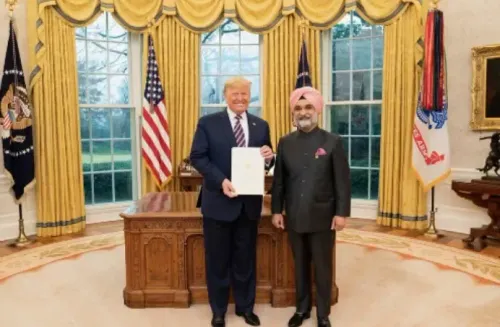
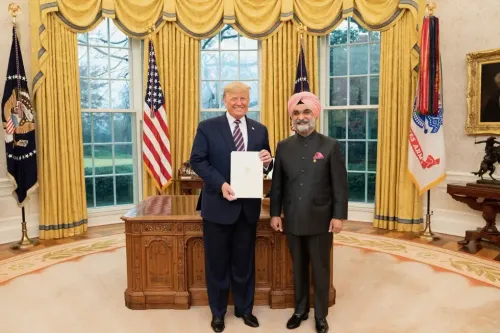
Welcoming Sandhu, Prof. C. Raj Kumar credited him with laying foundational groundwork for the India-US relationship during his tenure as ambassador in Washington. 'The India-US relationship has been possible to a large extent because of the leadership of our chief guest at a critical time and juncture in its history,' he said.
The event was introduced by Dr. Mohan Kumar, Professor and Dean, Strategic Affairs and Office of the JGU Vice Chancellor, himself a former Indian ambassador to France. Prof. (Dr.) Arpita Gupta, Dean of Research at JGU, provided an overview of the university's research output. A student interaction moderated by Prof. Ambreen Khan, Adjunct Professor of Practice, followed the main address, with questions centred on India's geopolitical future. Concluding remarks were delivered by Prof. Dabiru Sridhar Patnaik, Registrar, JGU.
India Must Help Shape the New Order
Sandhu closed with a call to ambition, urging sustained investment in education, research, infrastructure, defence, manufacturing, energy security, and advanced technology. 'India must approach this moment with ambition, confidence and a clear understanding of its national interests. Our role should not be confined to adapting to the decisions of others. We must participate in shaping the rules, institutions, technologies and economic partnerships that will define the international order in the years ahead,' he concluded.
How India translates this diplomatic philosophy into concrete institutional weight — at the United Nations, in trade negotiations, and in technology governance — will be closely watched in the months ahead.
Point of View
But the framing — from passive beneficiary to active rule-shaper — is the more interesting claim. The gap between that ambition and institutional reality is wide: India still lacks a permanent UN Security Council seat, its WTO positions are frequently reactive, and its technology governance influence remains limited. The strategic autonomy argument works best as a defensive posture; converting it into agenda-setting power requires a level of structural investment and diplomatic bandwidth that the lecture acknowledged but did not fully interrogate. JGU's World Ideas Forum 2027 is a small but telling signal that Indian institutions are beginning to invest in soft-power infrastructure — the question is whether that effort scales.
NationPress
3 Nov 2026
Frequently Asked Questions
What did Delhi LG Sardar Taranjit Singh Sandhu say about India's strategic autonomy?
Sandhu argued that India's strategic autonomy — the ability to engage the US, Europe, Russia, Japan, Australia and the Global South independently — is its most valuable diplomatic asset in a period of global geopolitical realignment. He said this freedom allows India to take decisions based purely on national priorities rather than the demands of any single alliance.
Where and when did the JGU geopolitics lecture take place?
The lecture took place on 3 November 2026 at O.P. Jindal Global University in Sonipat, Haryana. It was held under the theme 'India's Role in Evolving Geopolitics' as part of the university's distinguished public lecture series.
What is the World Ideas Forum 2027 announced at JGU?
The World Ideas Forum 2027 is an inaugural forum conceived by O.P. Jindal Global University, announced by Founding Vice Chancellor Prof. C. Raj Kumar at the event. Its stated aim is to position India and the broader Global South as generators of global ideas and policy frameworks, rather than consumers of ideas produced in the West.
Why does India's engagement with the Global South matter according to Sandhu?
Sandhu argued that developing countries are actively seeking affordable technology, reliable healthcare, infrastructure investment and market access, and that India is uniquely positioned to offer capability-building partnerships — not just aid. He said India's credibility across developing economies, combined with its ties to major powers, gives it a distinctive role in the emerging order.
Who is Sardar Taranjit Singh Sandhu?
Sardar Taranjit Singh Sandhu is the Lieutenant Governor of Delhi and a distinguished Indian Foreign Service veteran. He previously served as India's Ambassador to the United States, a tenure credited by JGU Vice Chancellor Prof. C. Raj Kumar with laying key foundations for the India-US bilateral relationship.