Delhi-NCR monsoon onset expected June 25-30, AQI stays poor
Synopsis
The IMD has pinned Delhi-NCR's monsoon arrival to a 25–30 June window, even as the southwest monsoon itself arrived over Kerala three days late. Thunderstorms are providing a brief respite, but with Anand Vihar's AQI at 284, the capital's air quality crisis will persist until sustained monsoon rains finally arrive.
Key Takeaways
The IMD forecasts the southwest monsoon will reach Delhi-NCR between 25 June and 30 June 2025 .
The monsoon made its Kerala onset on 4 June — three days behind its normal date.
Delhi , Noida , Gurugram , Ghaziabad , parts of Haryana , Punjab , and Chandigarh are all in the same onset window.
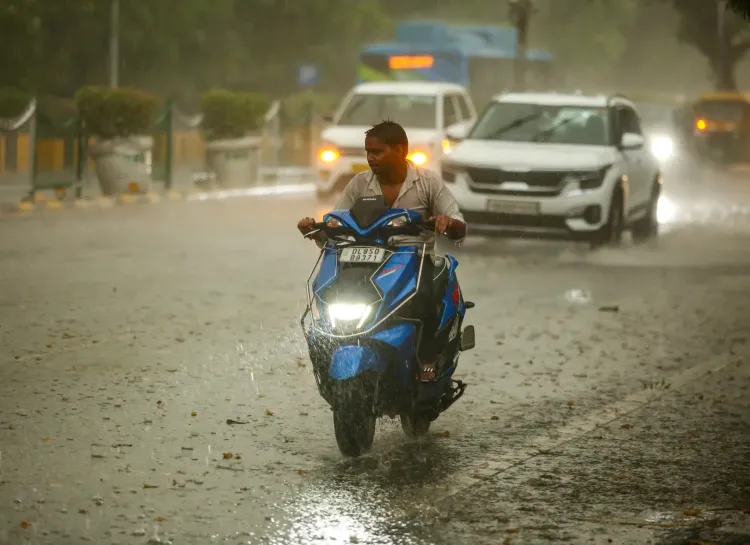
A Western Disturbance active since 3 June brought temporary heat relief but also waterlogging and lightning risks.
Delhi's AQI remains in the 'poor' category; Anand Vihar logged the highest reading at 284 on 6 June .
Last year, the monsoon reached Delhi on 29 June , two days later than the normal onset date of 27 June .
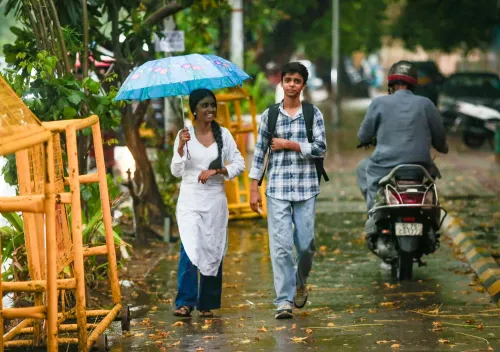
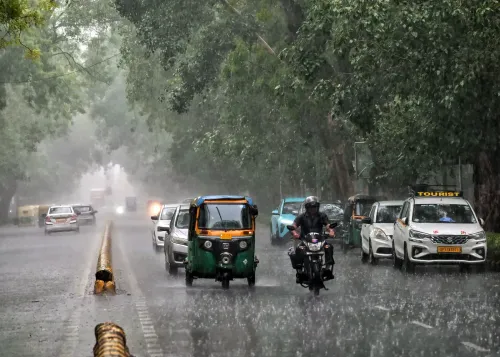
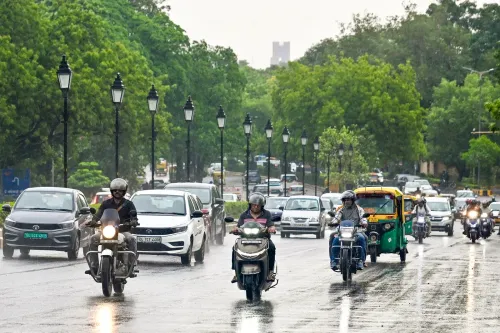
The India Meteorological Department (IMD) has forecast that the southwest monsoon is likely to reach Delhi and the wider National Capital Region (NCR) between 25 June and 30 June, giving residents a clearer window for the arrival of the season's rains. The forecast follows a spell of thunderstorms and scattered showers on Thursday, 6 June, which offered temporary relief from weeks of punishing summer heat.
Monsoon Timeline and Progression
The southwest monsoon made its onset over Kerala on 4 June, three days behind its normal date and five days after the IMD's initial projection. Despite the delayed start, weather experts expect the system to advance steadily, covering most parts of the country by the third week of June.
According to the IMD's monsoon progression map, Delhi, Noida, Gurugram, and Ghaziabad are all in the 25–30 June onset window. The weather system is also forecast to push into parts of Haryana, Punjab, and Chandigarh during the same period. Several northern and hilly regions — including parts of Himachal Pradesh, Jammu and Kashmir, and Ladakh — may also receive rainfall around the same time.
Western Disturbance Brings Interim Relief
A Western Disturbance that became active around 3 June has already delivered relief to millions across North India, where temperatures had remained exceptionally high for weeks. Meteorologists have, however, cautioned that sudden heavy-rain spells could cause waterlogging in urban areas, while strong winds and lightning pose risks in open spaces and mountainous terrain.
The IMD forecast continued thunderstorm and rainfall activity across several areas on 6 June, after which conditions are expected to gradually stabilise. Temperatures are likely to rise again once the current spell subsides, and may stay elevated until the monsoon advances further north toward the end of the month.
Historical Context
Last year, the southwest monsoon reached Delhi on 29 June — two days later than its normal onset date of 27 June, based on the 1961–2019 climatological average. The current forecast of a 25–30 June window places this year's arrival broadly in line with recent patterns, though the delayed Kerala onset has kept uncertainty elevated.
Air Quality Remains a Concern
Despite the rain-driven temperature dip, Delhi's air quality continued to languish in the 'poor' category on 6 June. Anand Vihar recorded the city's highest Air Quality Index (AQI) reading at 284, followed by Mundka at 239, Wazirpur at 214, Okhla Phase-2 at 208, and IIT Delhi at 187. Experts note that pre-monsoon showers provide only short-lived AQI relief; sustained improvement typically requires the full onset of the monsoon and consistent rainfall.
With the monsoon's arrival still weeks away, residents across Delhi-NCR can expect further heat spells interspersed with occasional thunderstorm activity before conditions change decisively.
Point of View
But the three-day delayed Kerala onset is a reminder that monsoon forecasting carries real uncertainty. What is less discussed is that even when the monsoon does arrive, Delhi's AQI rarely recovers quickly — particulate sources from construction, traffic, and stubble burning do not pause for rain. The capital's air quality problem is structural, and the monsoon provides seasonal relief, not a solution. Policymakers should resist treating the monsoon arrival as an AQI off-switch.
NationPress
22 Sept 2026
Frequently Asked Questions
When will the monsoon reach Delhi-NCR in 2025?
According to the IMD, the southwest monsoon is expected to reach Delhi, Noida, Gurugram, and Ghaziabad between 25 June and 30 June 2025. The normal onset date for Delhi, based on the 1961–2019 average, is 27 June.
Why was the monsoon delayed this year?
The southwest monsoon made its onset over Kerala on 4 June 2025, three days behind its normal date and five days after the IMD's initial forecast. Weather systems over the Arabian Sea delayed the monsoon's northward advance.
What is Delhi's current AQI and why is it still poor despite rainfall?
Delhi's AQI remained in the 'poor' category on 6 June, with Anand Vihar recording 284. Pre-monsoon thunderstorms provide only short-lived relief from pollution; a sustained improvement in air quality typically requires the full onset of the monsoon and consistent, prolonged rainfall.
Which other regions will receive monsoon rains in the same window as Delhi?
Parts of Haryana, Punjab, Chandigarh, Himachal Pradesh, Jammu and Kashmir, and Ladakh are also forecast to receive monsoon rainfall in the 25–30 June window, according to the IMD's progression map.
What precautions should residents take during pre-monsoon thunderstorms?
The IMD has warned that sudden heavy-rain spells can cause urban waterlogging, while strong winds and lightning pose risks in open spaces and hilly areas. Residents are advised to avoid open spaces and mountainous terrain during active thunderstorm alerts.