NEET protest fallout: Delhi Police action splits MP Assembly, BJP-Cong hold rival protests
Synopsis
A Delhi Police crackdown on NEET protesters and Rahul Gandhi has fractured the Madhya Pradesh Assembly's Monsoon Session, with Congress MLAs in black armbands demanding a debate and the BJP planning a counter-march on the Congress headquarters in Bhopal — turning a national controversy into a full-blown state legislature standoff.
Key Takeaways
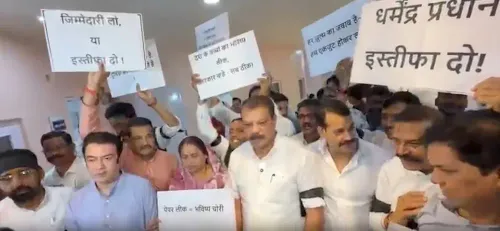
Congress MLAs led by Umang Singhar wore black armbands inside the MP Assembly on 22 July to protest Delhi Police action against Rahul Gandhi and NEET students.
Singhar alleged students were subjected to lathi-charges and tear gas in Delhi, and accused the BJP of blocking a House discussion.
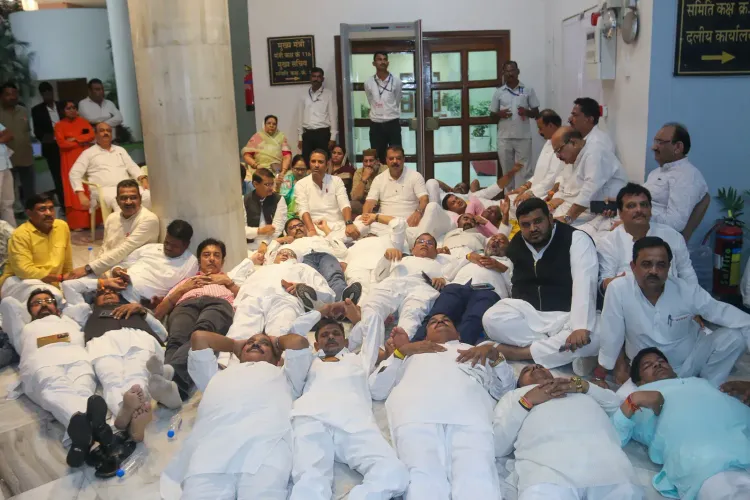
Congress had already staged a late-night protest at the MP Assembly complex the previous evening.
The BJP announced a counter-march to gherao the Madhya Pradesh Congress headquarters in Bhopal on the same day.
The BJP defended the Delhi Police action as lawful; Congress called it excessive and politically motivated.
The confrontation disrupted the third day of the Monsoon Session of the MP Assembly.
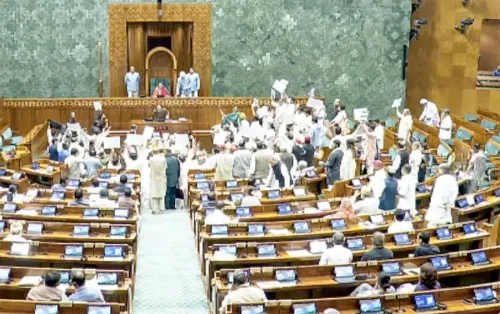
The political fallout from Delhi Police's action against Lok Sabha Leader of Opposition Rahul Gandhi and students demonstrating against the NEET paper leak spilled into the Madhya Pradesh Assembly on Wednesday, 22 July, as the Congress and the Bharatiya Janata Party (BJP) staged rival protests on the third day of the Monsoon Session in Bhopal. The confrontation underscored how a single incident in the national capital can rapidly fracture state legislatures along party lines.
Congress MLAs Stage Black Armband Protest
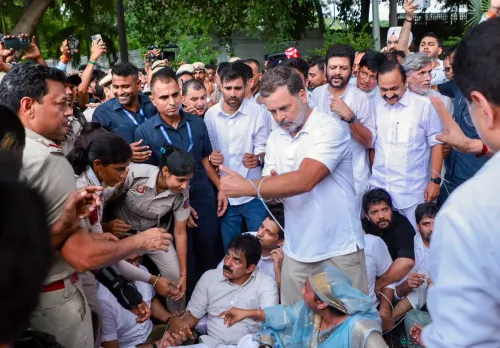
Congress legislators, led by Madhya Pradesh Leader of Opposition Umang Singhar, entered the Assembly wearing black armbands to register their opposition to what they described as excessive use of force by the Delhi Police against Gandhi and protesting students in New Delhi. The MLAs demanded that the House take up the matter for formal discussion.
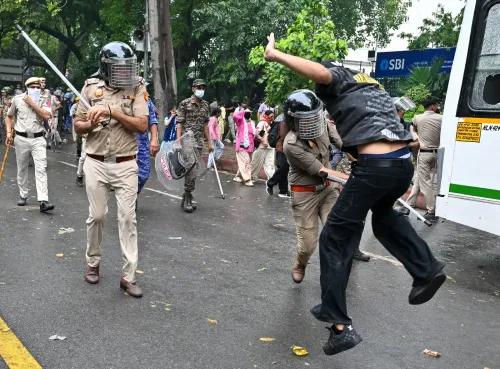
Speaking to reporters outside the Assembly, Singhar alleged that students agitating for their futures were subjected to lathi-charges and tear gas in Delhi. He claimed the ruling BJP was deliberately stonewalling any debate on the issue inside the legislature. 'The NEET paper leak, recruitment scams, unemployment and atrocities against students have become the BJP government's youth policy. Young people are seeking answers, but the government is showing arrogance,' Singhar said.
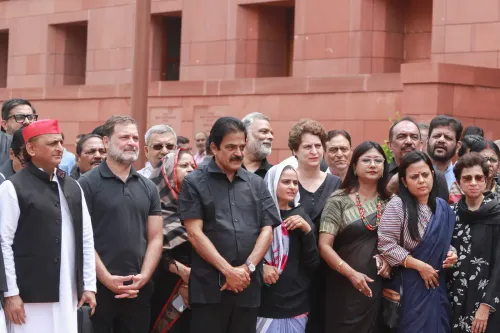
This protest followed a late-night demonstration the previous evening, when Congress MLAs gathered inside the MP Assembly complex to express solidarity with Gandhi and condemn the police action in Delhi — an indication of how quickly the controversy escalated within the party's state unit.
BJP Plans Counter-March to Congress Headquarters
The BJP swiftly announced a counter-protest, with state party leaders and workers scheduled to march to and gherao the Madhya Pradesh Congress headquarters in Bhopal on the same day. The party accused the Congress of deliberately misrepresenting the Delhi incident to extract political mileage, and defended the Delhi Police action as being carried out strictly within the bounds of law.
The rival mobilisations effectively transformed the MP Assembly's Monsoon Session into an arena for a proxy battle over events unfolding hundreds of kilometres away in the national capital.
The Delhi Flashpoint Behind the Bhopal Standoff
At the centre of the dispute is the Delhi Police's handling of a protest over the NEET paper leak — a controversy that has gripped the country since allegations emerged of large-scale irregularities in the undergraduate medical entrance examination. Congress has accused the police of deploying disproportionate force against Gandhi, party workers, and students during the demonstration. The BJP has maintained that the police response was lawful and necessary.
This is not the first time a controversy originating in Delhi has cascaded into state assemblies. The pattern reflects a broader dynamic in Indian politics where opposition parties use state legislatures as platforms to amplify national-level grievances, particularly ahead of electoral cycles.
What the Disruptions Mean for the Monsoon Session
The rival protests added considerable political heat to the ongoing Monsoon Session of the Madhya Pradesh Assembly, with both sides using Wednesday's proceedings to sharpen their attacks. The Congress's demand for a floor discussion remained unmet as of the day's proceedings, according to reports. With both parties committed to their positions, legislative business risks further disruption if the standoff continues.
How the MP government responds to calls for a House debate on the NEET issue could shape the remainder of the Monsoon Session.
Point of View
Where examination administration and student welfare are also at stake. The real question — whether Madhya Pradesh's own recruitment and examination systems are clean — went unasked on Wednesday.
NationPress
22 Jul 2026
Frequently Asked Questions
Why did Congress MLAs protest in the Madhya Pradesh Assembly on 22 July?
Congress MLAs wore black armbands and staged a protest inside the MP Assembly on 22 July to oppose the Delhi Police's use of force against Lok Sabha LoP Rahul Gandhi and students demonstrating against the NEET paper leak in New Delhi. They also demanded a formal discussion on the issue in the House.
What did MP Leader of Opposition Umang Singhar say about the Delhi incident?
Singhar alleged that students protesting in Delhi were subjected to lathi-charges and tear gas, and accused the BJP government of deliberately avoiding a debate on the issue inside the Assembly. He said the NEET paper leak and related issues had become the BJP's 'youth policy'.
What counter-action did the BJP announce in Bhopal?
The BJP announced a march to and gherao of the Madhya Pradesh Congress headquarters in Bhopal, accusing the Congress of misrepresenting the Delhi incident for political gain. The party defended the Delhi Police action as lawful.
How does this relate to the NEET paper leak controversy?
The NEET paper leak refers to alleged large-scale irregularities in the undergraduate medical entrance examination, which triggered nationwide student protests. The Delhi Police's handling of one such protest — at which Rahul Gandhi was also present — became the immediate flashpoint that spilled into the MP Assembly.
What impact did the protests have on the MP Assembly's Monsoon Session?
The rival demonstrations significantly disrupted the third day of the Monsoon Session, with legislative business taking a back seat to political confrontation. Congress's demand for a floor debate on NEET remained unmet, and further disruption is possible if the standoff continues.