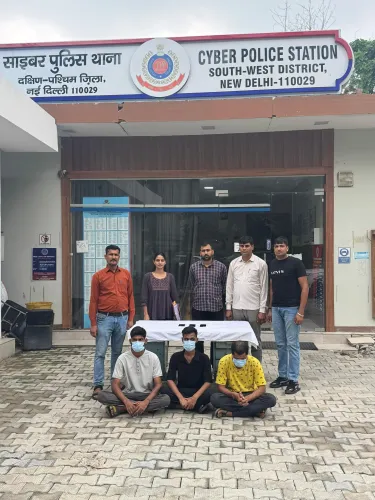
Delhi Cyber Police arrest two for fake Japan job fraud, ₹1.63 lakh duped
Synopsis
Two young men from Bareilly ran a sophisticated overseas job scam — impersonating Toyota Japan and Nippon Steel to harvest fees from desperate job seekers. Delhi's Cyber Police unravelled the scheme through a meticulous money trail, but the wider syndicate is still at large, and investigators suspect more victims remain unidentified.
Key Takeaways
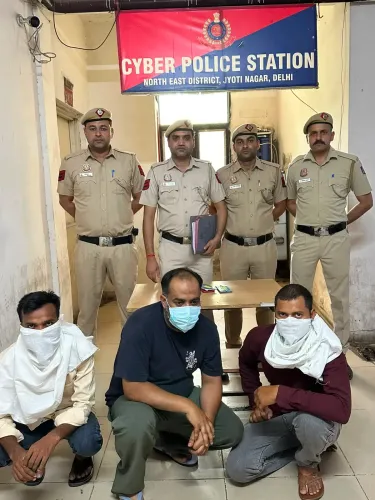
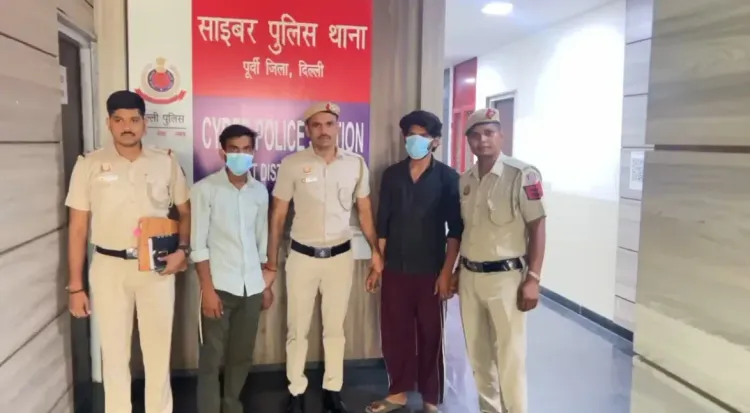
Delhi Cyber Police, East District arrested two accused on 17 June 2025 for running a fake overseas job fraud syndicate.
Victim 'R' was duped of ₹1.63 lakh on the false promise of a job in Japan .
Accused Kush Bhatnagar, 22 , and Amit, 23 , both of Bareilly, Uttar Pradesh , were arrested after a police team travelled to track them down.
The syndicate impersonated Toyota Japan and Nippon Steel Corporation Japan to lend credibility to fraudulent job offers.
Police traced ₹1,27,400 directly into Bhatnagar's account; Amit allegedly received ₹14,850 to facilitate withdrawals.
Investigation is ongoing to identify more victims, trace the full money trail, and apprehend remaining syndicate members.
Delhi Police's Cyber Police Station, East District, on Wednesday, 17 June 2025, arrested two members of an organised cyber fraud syndicate that targeted job seekers across India with fake overseas employment offers — impersonating companies including Toyota Japan and Nippon Steel Corporation Japan. The arrests followed a complaint by a victim who was duped of ₹1.63 lakh on the false promise of a job in Japan.
How the Fraud Came to Light
The case was triggered when a complainant, identified as 'R', reported to police that she had been deceived into depositing ₹1.63 lakh under the pretext of securing overseas employment. Police registered E-FIR No. 140/25, dated 22 December 2025, under Sections 318(4) and 319(2) of the Bharatiya Nyaya Sanhita (BNS) at Cyber Police Station, East District.
The accused had posed as recruitment consultants and representatives of reputed foreign firms, convincing victims to transfer money under multiple pretexts — including documentation charges, visa processing fees, attestation charges, verification fees, and other employment-related formalities.
The Money Trail and Arrests
A detailed financial analysis revealed that the defrauded amount had been routed through several beneficiary bank accounts. Investigators identified a key beneficiary account belonging to accused Kush Bhatnagar, into which ₹1,27,400 was credited as a first-layer transaction. Co-accused Amit received ₹14,850 and allegedly facilitated the withdrawal and onward transfer of the funds.
A dedicated police team travelled to Bareilly, Uttar Pradesh, where both accused resided, and conducted extensive field investigations. Based on bank records, digital evidence, and sustained interrogation, police gathered sufficient incriminating material to effect the arrests.
The arrested individuals have been identified as Kush Bhatnagar, 22, and Amit, 23, both residents of CB Ganj, Khalilpur Road, Bareilly, Uttar Pradesh. Police said no prior criminal record has been found against either accused.
Modus Operandi of the Syndicate
According to police, the syndicate operated through a well-structured playbook. Personal data and contact details of job seekers were harvested from online employment portals. Fraudulent emails were then sent to potential victims in the names of foreign companies, informing them that their resumes had been shortlisted for lucrative overseas roles.
Fake interviews were conducted, and candidates were asked to submit personal and professional documents. Once trust was established, the fraudsters demanded money under the guise of obtaining Ministry of External Affairs (MEA) attestation reports, embassy clearances, employment approval letters, and international verification reports. To evade detection, the accused allegedly used multiple bank accounts, SIM cards, email IDs, and digital platforms.
Digital Evidence Recovered
From Kush Bhatnagar, police seized a Nothing 3A Lite mobile phone, two Jio SIM cards, access to recruitment-related email accounts and online portals used to send fraudulent job offers, WhatsApp chats with co-accused, and other digital communications. From co-accused Amit, a mobile phone and related digital evidence pertaining to receipt and withdrawal of defrauded funds were recovered.
Investigation Ongoing
Authorities are continuing to examine digital evidence, trace the extended money trail, identify additional victims, and work towards recovering the defrauded amounts. Efforts are also underway to apprehend other members of the syndicate who remain at large. The case underscores the growing threat of organised overseas job fraud targeting vulnerable employment seekers across India.
Point of View
Armed with email accounts and borrowed brand names, nearly replicated the infrastructure of a legitimate overseas recruiter. The ₹1.63 lakh loss is likely the tip of the iceberg — police themselves acknowledge more victims are being identified. What is missing from most coverage of such cases is the systemic enabler: employment portals that sell or leak job-seeker data with minimal accountability, feeding fraudsters a ready-made target list. Until data-broker regulation catches up, the modus operandi will keep working.
NationPress
27 Sept 2026
Frequently Asked Questions
What was the fake overseas job fraud busted by Delhi Cyber Police?
Delhi Cyber Police arrested two men who posed as recruitment consultants representing companies like Toyota Japan and Nippon Steel Corporation Japan to extract fees from job seekers under false pretexts. A victim identified as 'R' lost ₹1.63 lakh after being promised a job in Japan.
Who were the accused arrested in the Delhi cyber job fraud case?
The arrested accused are Kush Bhatnagar, 22, and Amit, 23, both residents of CB Ganj, Khalilpur Road, Bareilly, Uttar Pradesh. Police said no prior criminal record has been found against either individual.
How did the job fraud syndicate operate?
The syndicate harvested job seekers' contact details from online employment portals, sent fraudulent emails in the names of reputed foreign companies, conducted fake interviews, and then demanded money for visa fees, MEA attestation, embassy clearances, and other fabricated formalities. Multiple bank accounts, SIM cards, and email IDs were used to collect and move the funds.
How much money was traced in the case?
Police traced ₹1,27,400 directly into Kush Bhatnagar's account as a first-layer transaction. Co-accused Amit received ₹14,850, which he allegedly withdrew and transferred further. The total amount reported by the complainant was ₹1.63 lakh.
What is the current status of the investigation?
Both accused have been arrested and the investigation is ongoing. Police are tracing the extended money trail, identifying additional victims, examining further digital evidence, and working to apprehend other members of the syndicate who remain at large.