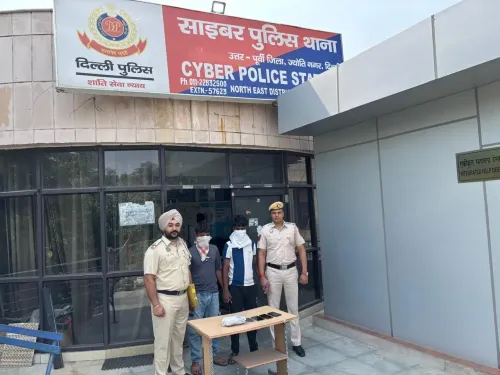
Delhi cyber police arrest 3 in ₹5.67 lakh UPI fraud, nephew named mastermind

Synopsis
A boutique owner's dormant SBI account lost ₹5.67 lakh to unauthorised UPI transfers — and the alleged mastermind turned out to be his own nephew. Delhi's Shahdara cyber police traced the money through a chain of mule accounts to nail three accused, exposing how family proximity and dormant balances are being exploited in digital fraud.
Key Takeaways
₹5,67,100 was fraudulently withdrawn from a State Bank of India account in Dilshad Garden via unauthorised UPI transactions.
Complainant Vinod Hira , a boutique owner, discovered the fraud after a ₹6,500 cheque was dishonoured due to insufficient funds. e-FIR No.
130/2026 was registered on 14 May 2026 under Section 318(4) of the Bharatiya Nyaya Sanhita (BNS) .
Alleged mastermind Nitin Gulati is the complainant's nephew; co-accused Adil Salmani and Maninder Singh operated mule accounts to layer the stolen funds.
All three were arrested after raids across Delhi and confrontation with digital and banking evidence; further investigation is underway.
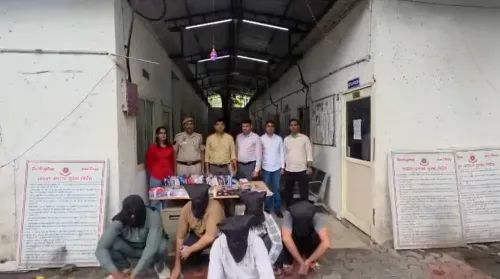
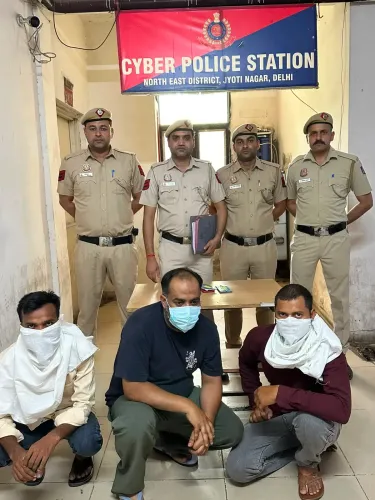
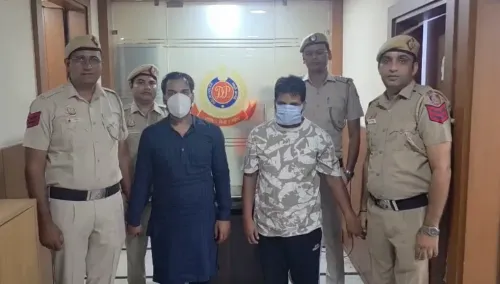
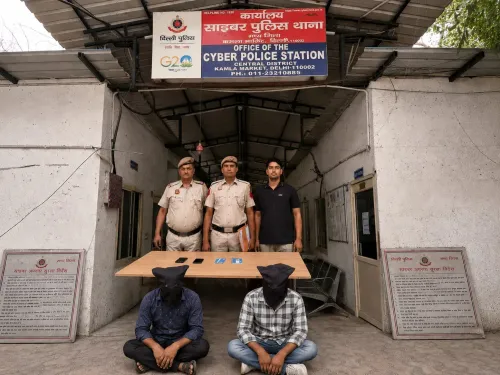
The Cyber Police Station of Delhi Police's Shahdara district has cracked a ₹5.67 lakh cyber fraud case, arresting three accused — including the alleged mastermind — after tracing unauthorised UPI transactions that drained a State Bank of India account in Dilshad Garden. The arrests were made following a complaint filed on 14 May 2026 by Vinod Hira, a boutique owner from Sarojini Nagar.
How the Fraud Came to Light
Vinod Hira, a resident of Dilshad Garden, discovered the fraud only after a cheque of ₹6,500 issued in favour of the New Delhi Municipal Council (NDMC) was dishonoured due to insufficient funds. On approaching his bank, he found that more than ₹5,67,100 had been siphoned from his account — which had held approximately ₹5.80 lakh — through a series of unauthorised UPI transactions. He lodged a complaint at PS Cyber Shahdara, prompting police to register e-FIR No. 130/2026 dated 14 May 2026 under Section 318(4) of the Bharatiya Nyaya Sanhita (BNS).
The Investigation Trail
A dedicated team comprising SI Sandeep Kumar, ASI Anil Kumar, and HC Vikrant Sharma was constituted under the supervision of SHO (Cyber) Vijay Kumar and the overall oversight of the Deputy Commissioner of Police, Shahdara. Investigators conducted an extensive analysis of bank records, UPI transaction trails, IP logs, and other digital evidence. The probe revealed that the stolen funds had been routed through multiple bank accounts in a deliberate attempt to obscure the money trail — a layering technique commonly associated with financial fraud.
The Accused and Their Roles
Three persons were arrested following raids at multiple locations across Delhi: Nitin Gulati, Adil Salmani, and Maninder Singh. According to investigators, Gulati — the complainant's own nephew — is the alleged mastermind who reportedly initiated the unauthorised UPI withdrawals from his uncle's dormant account and channelled the proceeds through mule accounts. Salmani and Maninder Singh allegedly provided and operated their bank accounts to facilitate the transfer and concealment of fraudulent proceeds. During interrogation, both reportedly admitted their involvement in operating the mule accounts used in the scheme.
Mule Accounts and Layering
The case highlights the growing use of mule bank accounts — accounts operated by third parties knowingly or unknowingly — to layer and legitimise stolen funds. Investigators established that money was transferred through multiple accounts before ultimately being traced back to Gulati as the primary beneficiary. This is consistent with a broader pattern flagged by the Reserve Bank of India (RBI) and cybercrime authorities, where dormant accounts with accumulated balances are increasingly targeted through insider access or social engineering.
Current Status
Police have secured digital and banking evidence establishing the complete financial transaction trail. All three accused have been arrested and confronted with documentary and technical evidence. Further investigation is currently underway.
Point of View
Exploiting a dormant account he likely knew about. The use of mule accounts for layering is now so routine that investigators had to trace multiple transaction hops before reaching the beneficiary, pointing to a sophistication that belies the relatively modest sum involved. Cybercrime units across India are increasingly encountering this pattern: dormant accounts, insider knowledge, and willing mule-account providers forming a low-tech but effective fraud chain. The bigger policy question is why banks do not flag sudden high-value UPI activity on long-dormant accounts as a real-time alert — a gap that regulators have yet to close comprehensively.
NationPress
27 Sept 2026
Frequently Asked Questions
What was the Delhi Shahdara cyber fraud case about?
The case involved the fraudulent withdrawal of ₹5,67,100 from a State Bank of India account belonging to Vinod Hira, a boutique owner from Dilshad Garden, through a series of unauthorised UPI transactions. The alleged mastermind was Hira's own nephew, Nitin Gulati, who reportedly siphoned the funds and routed them through mule bank accounts.
Who were the three persons arrested in the Delhi UPI fraud case?
Delhi Police arrested Nitin Gulati, identified as the alleged mastermind and the complainant's nephew, along with Adil Salmani and Maninder Singh, who allegedly provided their bank accounts as mule accounts to layer and conceal the stolen funds.
What is a mule bank account and how was it used in this case?
A mule bank account is an account operated by a third party to receive and transfer illegally obtained funds, helping to obscure the money trail. In this case, Salmani and Maninder Singh allegedly allowed their accounts to be used to route and layer the stolen ₹5.67 lakh before it was ultimately traced back to Gulati.
How did Vinod Hira discover the fraud?
Hira discovered the fraud when a cheque of ₹6,500 issued to the New Delhi Municipal Council was dishonoured due to insufficient funds. On checking with his bank, he found that over ₹5.67 lakh had been withdrawn from his account without authorisation.
What legal sections were invoked in the Delhi cyber fraud case?
Police registered e-FIR No. 130/2026 dated 14 May 2026 under Section 318(4) of the Bharatiya Nyaya Sanhita (BNS). Further investigation is ongoing, and additional charges may follow as the probe progresses.