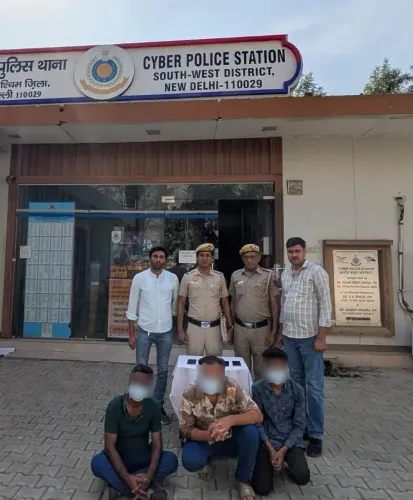
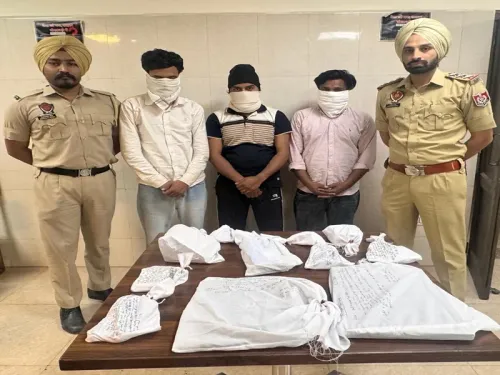
Delhi Police busts pan-India bank account syndicate, key member held in Shahdara

Synopsis
Delhi Police have cracked a pan-India mule-account syndicate that allegedly fed bank credentials to cyber fraudsters and illegal online gaming operators. The arrest of a 24-year-old operative in Shahdara — with 15 debit cards, 9 cheque books and 9 SIM cards on him — exposes a commission-driven supply chain for financial crime that stretches across state lines.
Key Takeaways
Delhi Police arrested Bhagh Singh , 24, in Shahdara on 18 November 2026 , dismantling a pan-India bank account trading syndicate.
Recovered items included 6 mobile phones , 15 debit cards , 9 cheque books , 4 passbooks , and 9 SIM cards .
At least two bank accounts recovered from Singh were linked to cybercrime complaints filed from multiple states.
The fraud trail linked approximately ₹80,000 from one complainant to an account held in the name of Ankita Enterprises .
The syndicate allegedly operated a commission-based model supplying mule accounts to cyber fraud and suspected illegal online gaming networks.
Investigation is ongoing; forensic examination of seized devices is expected to uncover additional associates.
Delhi Police have dismantled a pan-India bank account trading syndicate allegedly involved in procuring, selling, and supplying bank accounts for cyber fraud, suspected illegal online gaming, and other unlawful financial activities. The breakthrough came with the arrest of Bhagh Singh, 24, a key operative of the network, in Shahdara district on 18 November 2026.
The Arrest and Seized Material
Singh was apprehended by the Cyber Shahdara Police Station team following sustained technical surveillance and field verification. At the time of his arrest, investigators recovered six mobile phones, 15 debit cards, nine cheque books, four passbooks, and nine SIM cards from his possession. Preliminary verification also flagged two bank accounts linked to cybercrime complaints lodged from multiple states across the country.
How the Case Began
The investigation was triggered by a complaint from an individual who alleged he had been defrauded through an online investment scheme. According to police, the complainant received a message on Instagram offering attractive returns on digital investments, following which he was persuaded to join an online investment group. Fraudsters allegedly lured him with promises of high returns before making off with his money.
An e-FIR (No. 212/2026), dated 5 July 2026, was registered at PS Cyber Shahdara under Sections 318(4), 319, and 340 of the Bharatiya Nyaya Sanhita (BNS). Tracing the money trail revealed that approximately ₹80,000 of the defrauded amount had been transferred to a bank account held in the name of Ankita Enterprises.
How the Syndicate Operated
According to police, the syndicate ran on a commission-based model. Associates allegedly arranged for the opening of bank accounts — often in the names of unsuspecting individuals or shell entities — collected the banking kits, and supplied them to other members through various transport channels. These accounts were then used as mule accounts to receive and launder proceeds of cyber fraud and other illegal transactions.
Investigators used a combination of banking transaction analysis, digital footprints, IP logs, telecom records, and location-based intelligence to home in on Singh's role. He allegedly facilitated the procurement and delivery of bank accounts and instruments to other syndicate associates. This is consistent with a wider national pattern of mule-account networks that cyber fraud gangs increasingly rely on to distance themselves from traceable money flows.
Background and Ongoing Investigation
Singh is a native of Deshi Bhudiya in Udham Singh Nagar district, Uttarakhand, and was residing in Jai Vihar, Baprola, Delhi at the time of his arrest. The seized mobile phones and banking documents are currently under forensic examination to establish the full extent of his role and identify other members of the network.
Police confirmed that the investigation is ongoing, with efforts focused on verifying the recovered banking instruments, tracing the complete financial trail, and mapping additional associates. Further arrests are expected as the digital evidence is processed.
Point of View
Making traceability harder for victims and investigators alike. Delhi Police's use of IP logs, telecom records, and location intelligence to work backward from a single ₹80,000 transfer to a full syndicate operative is methodologically significant. The harder question is scale: with hundreds of similar complaints filed nationally each month, one arrest, however well-executed, barely dents the supply. Unless coordination between state police units, banks, and telecom regulators is institutionalised, mule-account networks will simply reconstitute around new recruits.
NationPress
21 Nov 2026
Frequently Asked Questions
What is a bank account trading syndicate?
A bank account trading syndicate is a criminal network that procures, sells, and supplies bank accounts — often opened in the names of real or fictitious persons — to other fraudsters who use them to receive and launder proceeds of cyber crime. Members typically earn commissions for arranging and delivering these 'mule accounts'.
Who was arrested in the Delhi Police cyber fraud bust?
Delhi Police arrested Bhagh Singh , a 24-year-old native of Udham Singh Nagar, Uttarakhand, from Shahdara in Delhi on 18 November 2026. He is accused of procuring and supplying bank accounts and banking instruments to other members of the pan-India syndicate.
How did investigators trace the syndicate?
The investigation began with a complaint about an online investment fraud, in which ₹80,000 was traced to an account named Ankita Enterprises. Police then used banking transaction analysis, digital footprints, IP logs, telecom records, and location-based intelligence to identify Singh's role in the network.
What charges have been filed?
An e-FIR (No. 212/2026) was registered at PS Cyber Shahdara on 5 July 2026 under Sections 318(4), 319, and 340 of the Bharatiya Nyaya Sanhita (BNS), which cover cheating, criminal breach of trust, and related offences.
What happens next in the investigation?
Police are conducting forensic examination of the six seized mobile phones and banking documents to map Singh's complete role and identify other syndicate members. Investigators are also working to verify all recovered banking instruments and trace the full financial trail across states.