Delhi CM Rekha Gupta: 5 mega road projects to cut NCR congestion

Synopsis
Delhi CM Rekha Gupta has put a ₹24,500 crore price tag on the capital's congestion cure — five projects including a Gurugram elevated corridor, an 8-km underground tunnel, and a 65-km Noida-Faridabad corridor. The ambition is world-class; the real test is whether construction timelines hold.
Key Takeaways
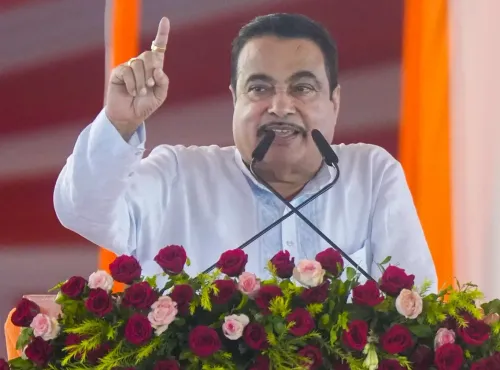
Delhi CM Rekha Gupta announced five major road projects on 28 May , discussed with Union Minister Nitin Gadkari .
The AIIMS-Mahipalpur-Gurugram Elevated Corridor — 20 km , six lanes — is estimated at ₹5,000 crore .
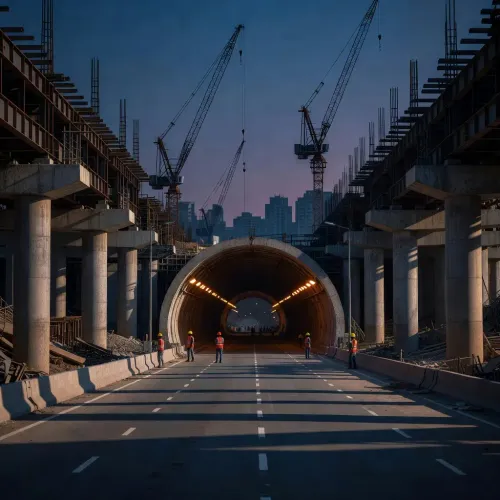
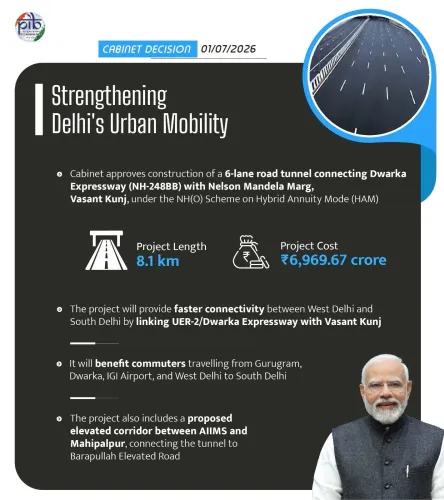
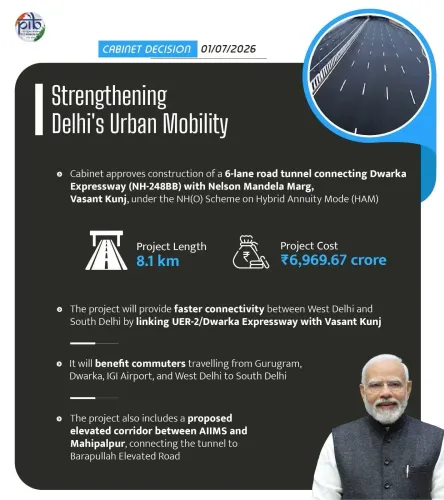
The Shiv Murti-Nelson Mandela Marg Tunnel — approximately 8 km underground — will cost an estimated ₹7,000 crore .
A 65-km Noida-Faridabad connectivity corridor is estimated at ₹7,500 crore , with construction targeted by December 2026 .
A 17-km Delhi-Katra Expressway link worth ₹1,500 crore is targeted to begin construction by March 2027 .
Combined estimated project outlay exceeds ₹24,500 crore across all five interventions.
Delhi Chief Minister Rekha Gupta on Thursday, 28 May announced that the Centre and the Delhi government are jointly pursuing five major road and connectivity projects worth a combined estimated outlay of over ₹24,500 crore, aimed at making Delhi congestion-free and world-class. The projects — spanning elevated corridors, tunnels, and expressway links — were discussed with Union Minister for Road Transport and Highways Nitin Gadkari under the 'double-engine government' framework.
Key Projects Announced
The centrepiece is the AIIMS-Mahipalpur-Gurugram Elevated Corridor, a 20-km, six-lane project estimated at ₹5,000 crore. It will deliver signal-free connectivity linking AIIMS, INA, Hauz Khas, Vasant Kunj, Mahipalpur, and Gurugram, while easing pressure on Dhaula Kuan, Mehrauli-Gurugram Road, and Rao Tula Ram Marg.
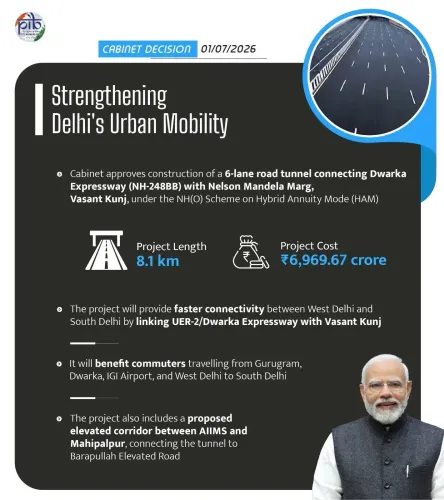
The second major intervention is the Shiv Murti-Nelson Mandela Marg Tunnel Project — an approximately 8-km, six-lane underground tunnel estimated at ₹7,000 crore. It will provide signal-free access from the Dwarka Expressway to Vasant Kunj, relieving congestion in Mahipalpur, Rangpuri, and Dhaula Kuan.
Expressway Links and Corridors
Under the Urban Extension Road-2 (UER-II) Extension Delhi-Dehradun Expressway Link Project, a 17-km, six-lane corridor estimated at ₹3,500 crore will connect the Delhi-Dehradun Expressway near Tronica City with UER-II. The project is expected to reduce traffic load on routes including IGI Airport, the Barapullah corridor, Mukarba Chowk, Singhu Border, and the Ashram-Badarpur stretch. It will also give direct expressway access to commuters from Dwarka, Rohini, Punjabi Bagh, and Gurugram. Construction is targeted to begin by December 2026, with alignment finalisation currently under way.
The proposed Delhi-Dehradun Expressway Noida-Faridabad Connectivity Corridor is the most ambitious in scale — spanning approximately 65 km across six lanes at an estimated cost of ₹7,500 crore. It will stitch together the Delhi-Dehradun Expressway, Delhi-Meerut Expressway, DND, Faridabad, and the Yamuna Expressway, improving access for Loni, Baghpat, Ghaziabad, Noida, and Faridabad. Work is also targeted to begin by December 2026.
Delhi-Katra Corridor Link
Chief Minister Gupta also highlighted a 17-km, six-lane corridor linking the Delhi-Amritsar-Katra Expressway with UER-II, estimated at ₹1,500 crore. Traffic from the Delhi-Katra Expressway will gain direct access to Delhi, Gurugram, and IGI Airport via UER-II and the Dwarka Expressway. The project is designed to divert heavy vehicles and improve freight movement across Delhi-NCR, with construction targeted to begin by March 2027.
What This Means for Delhi-NCR
Taken together, the five projects address some of Delhi-NCR's most persistently congested corridors — from the airport-Gurugram axis to the eastern and northern ring routes. Notably, all projects have been designed keeping future traffic growth in mind, according to the Chief Minister. The Centre-state coordination model invoked here reflects a broader infrastructure push under the National Capital Region's long-term mobility plan. How quickly these projects move from alignment finalisation to ground-breaking will determine whether the relief materialises before the next decade.
Point of View
But Delhi has a long history of infrastructure projects that linger in alignment and approval stages for years. The AIIMS-Gurugram corridor and the Shiv Murti tunnel address genuinely critical chokepoints, yet both are at planning stage with no confirmed funding disbursement timeline. The invocation of the 'double-engine government' framing is as much political as it is administrative — it positions the BJP-led state and Centre as unified, ahead of any electoral cycle. The harder question is execution: Delhi's urban road projects have routinely overrun timelines and costs, and with multiple projects targeting the same December 2026 construction start, sequencing and land acquisition will be the real bottlenecks.
NationPress
24 Sept 2026
Frequently Asked Questions
What are the five road projects announced by Delhi CM Rekha Gupta?
The five projects are: the AIIMS-Mahipalpur-Gurugram Elevated Corridor (₹5,000 crore), the Shiv Murti-Nelson Mandela Marg Tunnel (₹7,000 crore), the UER-II Extension Delhi-Dehradun Expressway Link (₹3,500 crore), the Delhi-Dehradun Expressway Noida-Faridabad Connectivity Corridor (₹7,500 crore), and the Delhi-Amritsar-Katra Expressway-UER-II Link (₹1,500 crore). Together they carry a combined estimated outlay of over ₹24,500 crore.
When will construction on these Delhi road projects begin?
The UER-II Extension and the Noida-Faridabad Corridor are both targeted to begin construction by December 2026, while the Delhi-Katra Expressway link is targeted for a March 2027 construction start. The AIIMS-Gurugram elevated corridor and the Shiv Murti tunnel do not yet have confirmed start dates.
How will the AIIMS-Mahipalpur-Gurugram Elevated Corridor help commuters?
The 20-km, six-lane corridor will provide signal-free connectivity between AIIMS, INA, Hauz Khas, Vasant Kunj, Mahipalpur, and Gurugram. It is designed to reduce congestion on Dhaula Kuan, Mehrauli-Gurugram Road, and Rao Tula Ram Marg — among Delhi's most congested arterials.
What is the Shiv Murti-Nelson Mandela Marg Tunnel Project?
It is a proposed approximately 8-km, six-lane underground tunnel estimated at ₹7,000 crore, connecting the Dwarka Expressway to Vasant Kunj. The tunnel aims to provide signal-free movement and ease congestion in Mahipalpur, Rangpuri, and Dhaula Kuan.
Which areas will benefit from the Noida-Faridabad Connectivity Corridor?
The approximately 65-km, six-lane corridor — estimated at ₹7,500 crore — will improve connectivity for Loni, Baghpat, Ghaziabad, Noida, and Faridabad. It will also reduce congestion at Kalindi Kunj, Sarai Kale Khan, and the Outer Ring Road by offering a controlled-access alternative for inter-city and freight traffic.