Delhi Government Allocates ₹453 Crore for Najafgarh Drain Road Project
Synopsis
In a significant development, the Delhi government has earmarked ₹453 crore for a new road project along the Najafgarh Drain, set to enhance intra-city connectivity and reduce traffic congestion. This initiative is part of a broader strategy to improve Delhi's transport infrastructure.
Key Takeaways
Project Budget: ₹453.95 crore allocated.
Total Length: Approximately 60.77 km of road.
Main Goals: Reduce congestion, travel time, and emissions.
Connectivity: Links to major roads and airport access.
Timeline: Construction set to start by May 2026.
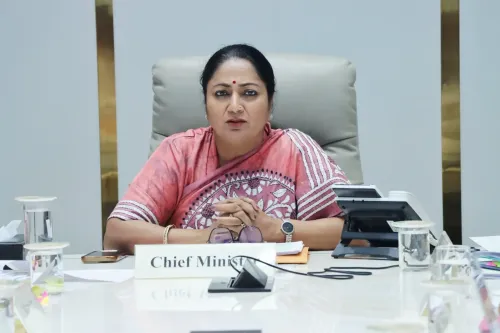
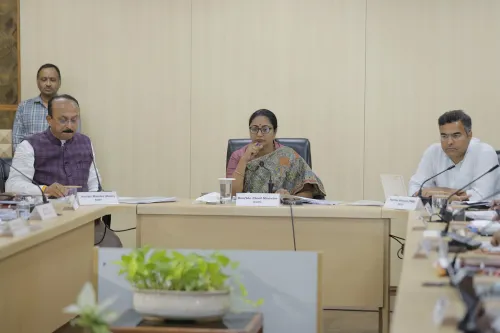
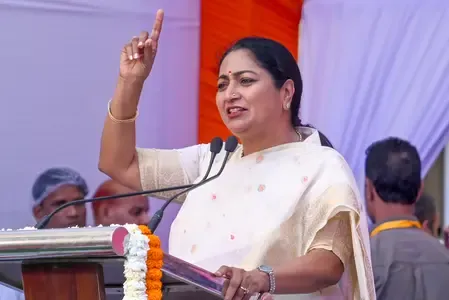
New Delhi, Feb 24 (NationPress) In a decisive move, Delhi Chief Minister Rekha Gupta led a meeting of the Finance Expenditure Committee, where a significant project was approved to build a two-lane road along both banks of the Najafgarh Drain.
The project has been allocated a budget of Rs 453.95 crore, as confirmed by the Chief Minister.
The main goals of this initiative are to alleviate traffic congestion on key routes, minimize travel time and fuel consumption, and reduce vehicular emissions.
This new corridor is set to transform Delhi’s transport infrastructure by offering an alternative intra-city route within the capital.
Present at the committee meeting, Irrigation and Flood Control Minister Pravesh Sahib Singh contributed to the discussions.
Outlining the project, the Chief Minister noted that a 5.94 km two-lane road will be established on the left bank from Jhatikra Bridge to Chhawla Bridge.
Roads spanning 27.415 km will be constructed on both sides of the drain, culminating in a total corridor length of 60.77 km.
This corridor will connect vital routes such as the Outer Ring Road, Inner Ring Road, Shivaji Marg, Pankha Road, and UER-II (which links to NH-9 Rohtak Road), among others.
At Basaidarapur, the project will interface with the Inner Ring Road; at Keshopur, it will connect with the Outer Ring Road; at Vikaspuri, it will link to Pankha Road; at Kakrola, it will join Najafgarh Road; and at Dhulsiras, it will connect to UER-II, offering direct access to the airport and the Dwarka Expressway.
The initiative will bridge rural and urban areas, enhancing connectivity from Dhansa to Basaidarapur, and benefiting regions including Uttam Nagar, Vikaspuri, Najafgarh, Bijwasan, Chhawla, Goyla Dairy, Dwarka, Baprola, Nilothi, Paschim Vihar, Rajouri Garden, and IGI Airport.
Moreover, it will bolster connectivity to Gurugram Sectors 104 and 110, further reinforcing ties between Delhi and Haryana.
Villages adjacent to the Dwarka Expressway—including Galibpur, Rawta Mor, Daurala, Jhuljhuli, Sarangpur, Dhansa, Ghummanhera, Shikarpur, Jhatikra, Kanganheri, and Chhawla—will also see improved access.
The project aims to protect government land alongside the drain corridor.
As part of the project, a paved road approximately 61 km long and 7 metres wide will be developed along the Najafgarh Drain, featuring dedicated tracks for walking, jogging, and cycling. A new bridge near the Dwarka Metro Depot will facilitate smoother transit.
Landscaping and tree planting efforts will be undertaken along the corridor, with new boundary walls constructed where necessary, and damaged walls repaired. Additionally, street lighting, signboards, and effective drainage systems will be installed to mitigate waterlogging during monsoons.
The project has received the green light from the relevant technical committee and the Flood Control Board. With these approvals in hand, further administrative processes will now be initiated.
The government aims to finalize necessary administrative approvals by March 2026, complete the tendering process by April 2026, and commence construction by May 2026.
Point of View
The administration aims to enhance connectivity while promoting sustainability through reduced emissions. This project is poised to benefit numerous residents and commuters in the capital.
NationPress
23 Sept 2026
Frequently Asked Questions
What is the budget allocated for the Najafgarh Drain road project?
The Delhi government has sanctioned a budget of Rs 453.95 crore for the Najafgarh Drain road project.
What are the main goals of this road project?
The primary objectives include reducing traffic congestion, minimizing travel time and fuel consumption, and lowering vehicular emissions.
How long will the road along the Najafgarh Drain be?
The total developed length of the corridor will be approximately 60.77 km.
When is the construction expected to begin?
Construction is anticipated to start in May 2026.
Which areas will benefit from this project?
The project will benefit areas such as Uttam Nagar, Vikaspuri, Najafgarh, Bijwasan, and others, enhancing connectivity to both rural and urban zones.