What Is Causing Dense Fog and Air Quality Concerns in Delhi?

Synopsis
Dense fog and poor air quality continue to affect Delhi, as residents face visibility issues and cooler temperatures. Recent rainfall has slightly improved conditions, but severe pollution levels persist in certain areas. As weather patterns fluctuate, the IMD forecasts more rain, potentially impacting air quality further.
Key Takeaways
Dense fog and poor air quality are impacting daily life in Delhi.
Recent rainfall has slightly improved pollution levels.
Areas like Jahangirpuri and RK Puram experience severe pollution .
IMD forecasts more rainfall and temperature fluctuations ahead.
Residents should take precautions to stay safe.
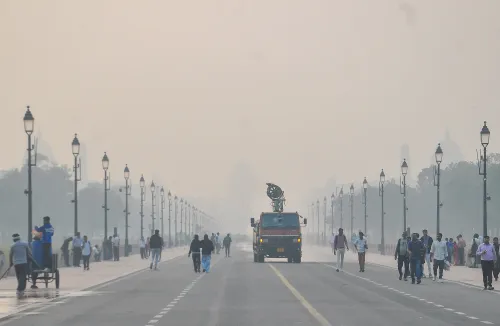
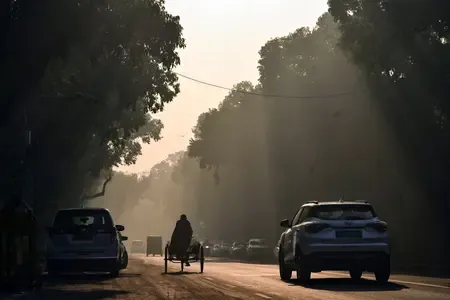
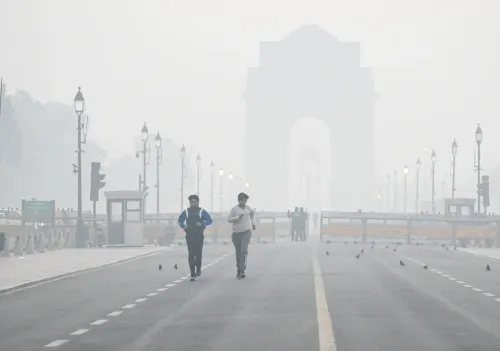
New Delhi, Jan 30 (NationPress) Residents of Delhi experienced a fog-laden Friday morning, as thick mist, overcast skies, and deteriorating air quality continued to plague the national capital. The day commenced with reduced visibility and cooler temperatures, while pollution levels posed ongoing concerns in various areas of the city amidst the shifting weather.
Air quality largely remained in the ‘poor’ category, though a few spots reported ‘moderate’ conditions. Despite ongoing worries, Delhi’s overall air quality showed a slight uptick on Friday morning. Data from the Central Pollution Control Board (CPCB) indicated that the city’s average Air Quality Index (AQI) was 231 at 6:00 a.m., categorizing it within the ‘poor’ range. Recent rainfall has played a role in marginally improving pollution levels compared to previous days.
Among the 39 air quality monitoring stations in Delhi, 13 reported ‘moderate’ air quality while 22 remained in the ‘poor’ category. Nonetheless, certain regions continued to face severe pollution challenges, with areas such as Jahangirpuri, RK Puram, Nehru Nagar, and Siri Fort recording AQI levels exceeding 300, classifying them as ‘very poor’.
CPCB data revealed that various locations in Delhi displayed differing pollution levels, including Anand Vihar (291), Ashok Vihar (271), Bawana (241), Burari Crossing (214), Dwarka Sector-8 (290), ITO (225), Jawaharlal Nehru Stadium (282), Lodhi Road (132), Narela (144), Patparganj (263), Pusa (169), Rohini (276), and Sonia Vihar (269).
In the nearby region of Noida, AQI levels were recorded at Noida Sector-62 (183), Noida Sector-1 (264), and Noida Sector-116 (264), reflecting similar air quality patterns.
The India Meteorological Department (IMD) has announced that another western disturbance is anticipated to impact northwest India starting February 2. Additionally, the presence of a subtropical westerly jet stream over northeast India is contributing to unstable weather conditions. These meteorological systems are projected to bring cloud cover, rainfall, and temperature fluctuations in the coming days.
For January 30, the IMD has forecasted shallow to moderate fog in the morning hours in Delhi, along with generally overcast skies. Minimum temperatures are expected to remain above the seasonal average, while daytime temperatures are anticipated to be notably cooler than usual.
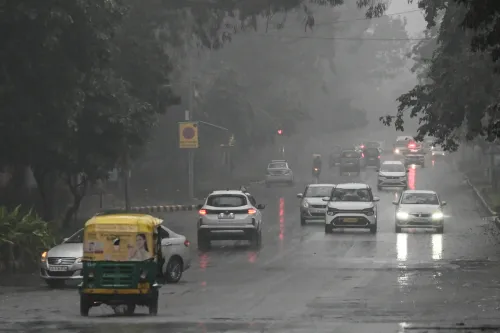
The IMD also predicts rainfall and thunderstorms in Delhi and surrounding areas from January 31 to February 2. A further decline in minimum temperatures by 3 to 4 degrees Celsius is likely in the next two days, followed by a gradual increase of 5 to 7 degrees Celsius. A yellow alert has been issued for heavy rainfall on January 31 and February 1, which may further affect visibility and air quality.
This month, Delhi recorded its highest January rainfall in four years. With the recent spell of rain, the city’s total rainfall for January has reached 24 mm, marking the highest since 2022. The wettest January day in recent history was January 8, 2022, when Delhi received 40.6 mm of rainfall.
Point of View
It's vital to recognize the ongoing challenges faced by Delhi residents due to fluctuating weather and air quality issues. While recent rains have provided some relief, persistent pollution remains a serious concern. We urge authorities to prioritize air quality improvements and implement effective measures to safeguard the health of our citizens.
NationPress
21 Sept 2026
Frequently Asked Questions
What is the current air quality status in Delhi?
As of January 30, Delhi is experiencing 'poor' air quality with an average AQI of 231, although some areas report 'moderate' levels.
How does fog impact visibility in Delhi?
The dense fog in Delhi has led to reduced visibility, making travel challenging for residents and affecting daily activities.
What weather changes can we expect in the coming days?
The IMD predicts further rainfall and thunderstorms in Delhi from January 31 to February 2, along with temperature fluctuations.
Are there any areas in Delhi with severe pollution?
Yes, regions such as Jahangirpuri, RK Puram, and Nehru Nagar have reported AQI levels exceeding 300, categorizing them as 'very poor'.
What precautions should residents take during this weather?
Residents are advised to limit outdoor activities, use masks when necessary, and stay updated on air quality reports.