Uttarakhand CMO: Dhami calls cities engines of citizens' dreams
Synopsis
The Chief Minister's Office of Uttarakhand has shared remarks by CM Pushkar Singh Dhami describing cities as the spaces where citizens' dreams and aspirations take shape, and urging municipal officials to focus on delivering public facilities. The message places urban local bodies at the centre of the state's service-delivery push.
Key Takeaways
The Chief Minister's Office of Uttarakhand posted CM Pushkar Singh Dhami's remarks on 3 June 2026.
Dhami described cities as the spaces shaping citizens' dreams, aspirations and future possibilities.
The message directly addressed municipal officials on their duty to deliver public facilities.
Uttarakhand aligns urban governance with central missions like AMRUT, launched in 2015.
Cities such as Dehradun, Haridwar and Haldwani face rising service-delivery pressures.
State-level reviews of municipal performance are the likely next step.
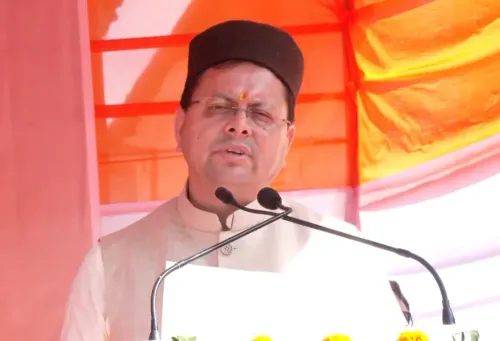
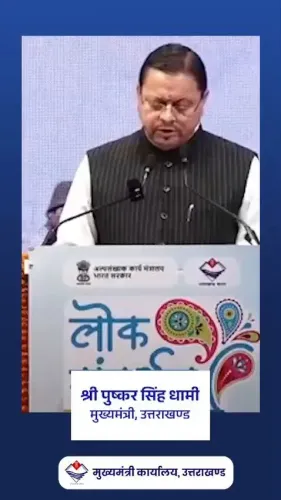
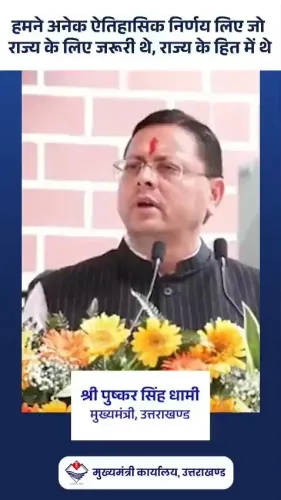
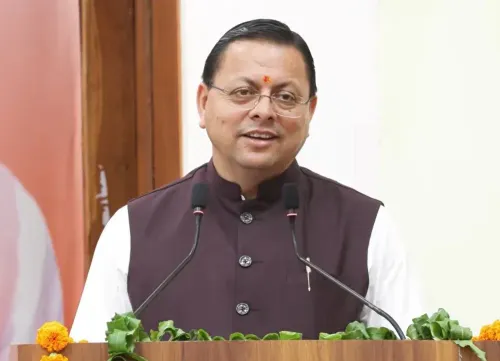
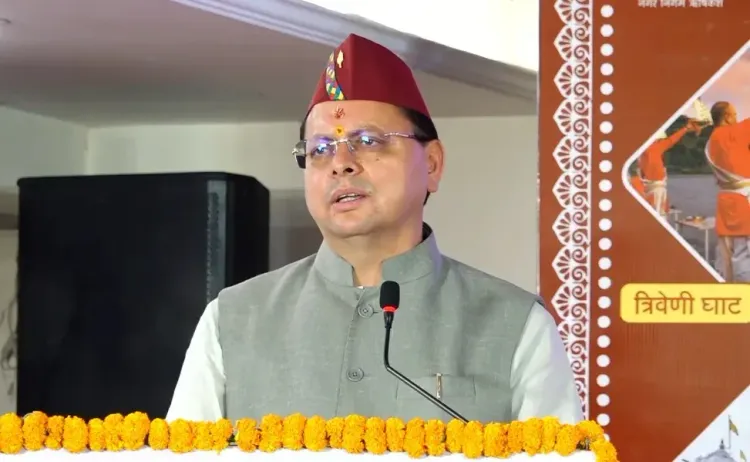
The Chief Minister's Office of Uttarakhand on 3 June 2026 shared remarks by Chief Minister Pushkar Singh Dhami framing urban centres as the crucibles where citizens' ambitions take shape, and urging civic functionaries to focus on last-mile service delivery. The post, published from Dehradun, foregrounded the role of municipal officials in translating governance into everyday convenience for urban residents.
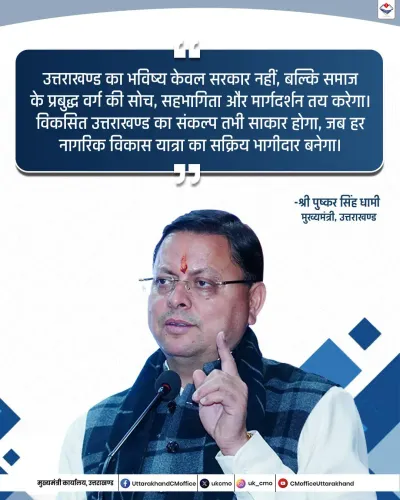
Quoting the Chief Minister, the post said: 'The dreams, aspirations and future possibilities of our citizens take shape in cities. All of you carry out the work of delivering facilities to the public in your cities.' The original Hindi line — 'हमारे नागरिकों के सपनों, आकांक्षाओं और भविष्य की संभावनाओं को शहरों में आकार मिलता है' — was attributed directly to Shri Pushkar Dhami.
Context
Pushkar Singh Dhami has served as Chief Minister of Uttarakhand since 2021, with urban governance forming a recurring strand of his administrative messaging. The remarks appear pitched at municipal officials, positioning them as the frontline of citizen-facing administration.
The framing of cities as spaces where personal aspiration meets public infrastructure echoes a broader Indian governance vocabulary that has gained traction over the past decade, as smaller Himalayan towns absorb migration from rural hinterlands and from outside the state.
Policy backdrop
Uttarakhand's urban service architecture sits within a national framework anchored by the Atal Mission for Rejuvenation and Urban Transformation (AMRUT), launched in 2015 to upgrade water supply, sewerage, drainage and green spaces in Indian cities. State governments are expected to align municipal plans with such central missions while running their own local-body machinery.
For a hill state like Uttarakhand, where towns such as Dehradun, Haridwar, Rishikesh, Haldwani and Roorkee shoulder disproportionate population and pilgrimage loads, the pressure on municipal capacity is acute. The Chief Minister's emphasis on officials 'delivering facilities to the public' tracks that operational reality.
Stakeholders and impact
The immediate audience is the cadre of municipal officials — commissioners, executive officers and elected representatives of urban local bodies — who administer schemes ranging from solid-waste management to property-tax reform and drinking-water supply.
For urban residents, such top-down signalling typically precedes reviews of municipal performance, where service-delivery indicators are tied to fund flows under central and state schemes. Citizens' groups in Uttarakhand have flagged drainage, parking and unplanned construction as persistent grievances in the larger towns.
The post's appeal to officials also carries political resonance, with urban voters in Uttarakhand historically shaping electoral outcomes in the plains districts more sharply than in the hills.
What's next
The statement is likely to be followed by departmental reviews of municipal performance and a closer integration of state initiatives with centrally sponsored urban missions. Indicators to watch include progress on water and sanitation coverage, ease-of-living metrics, and the rollout of digital service interfaces by urban local bodies.
If the messaging translates into measurable benchmarks for municipal officers, it could mark a shift from exhortation to accountability — a recurring test for state governments seeking to keep pace with the aspirations they describe.
Point of View
Where urban growth in the plains districts increasingly outpaces planning capacity, the framing of cities as aspiration engines is both political and administrative. It aligns the state with the national arc of urban-mission-led governance running through AMRUT and successor schemes. The real test will be whether the language of aspiration converts into auditable performance metrics for urban local bodies.
NationPress
17 Oct 2026
Frequently Asked Questions
What did Uttarakhand CM Pushkar Dhami say about cities?
CM Pushkar Singh Dhami said that the dreams, aspirations and future possibilities of citizens take shape in cities, and urged municipal officials to focus on delivering facilities to the public. The remarks were shared by the Chief Minister's Office of Uttarakhand on 3 June 2026.
Who is the Chief Minister of Uttarakhand in 2026?
Pushkar Singh Dhami is the Chief Minister of Uttarakhand, a position he has held since 2021. He oversees the state's administrative initiatives, including urban governance and development.
What is the AMRUT scheme mentioned in urban governance?
The Atal Mission for Rejuvenation and Urban Transformation, or AMRUT, is a central scheme launched in 2015 to strengthen urban infrastructure such as water supply, sewerage, drainage and green spaces across Indian cities, including those in Uttarakhand.
Which are the major cities in Uttarakhand facing urban pressures?
Dehradun, Haridwar, Rishikesh, Haldwani and Roorkee are among the larger urban centres in Uttarakhand that handle significant population and, in some cases, pilgrimage loads. These cities are the focus of municipal service-delivery efforts.
What role do municipal officials play in Uttarakhand?
Municipal officials in Uttarakhand administer urban local bodies and are responsible for delivering services such as water supply, sanitation, solid-waste management and civic amenities. The Chief Minister has identified them as the frontline of public service delivery in cities.