CM Dhami pays tribute to Raja Ram Mohan Roy on death anniversary
Synopsis
Uttarakhand Chief Minister Pushkar Singh Dhami marked Raja Ram Mohan Roy's death anniversary on 27 September 2026, honouring the Brahmo Samaj founder's crusade against sati, and his legacy of advancing women's rights, education, and social equality in 19th-century India.
Key Takeaways
Uttarakhand CM Pushkar Singh Dhami posted a tribute to Raja Ram Mohan Roy on his death anniversary, 27 September 2026 .
Roy founded the Brahmo Samaj in 1828 , India's first organised socio-religious reform movement promoting monotheism and social equality.
His advocacy directly led to the Bengal Sati Regulation of 1829 , which abolished the practice of widow immolation.
CM Dhami credited Roy's work for 'igniting a new consciousness in Indian society' around women's rights, education, and human dignity.
Indian political leaders across parties routinely mark Roy's anniversary, connecting colonial-era reform ideals to contemporary governance themes.
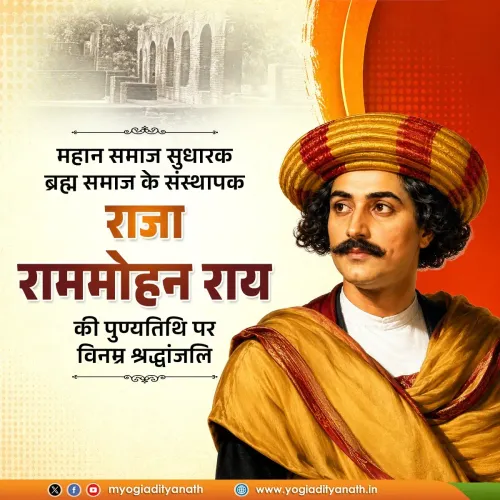
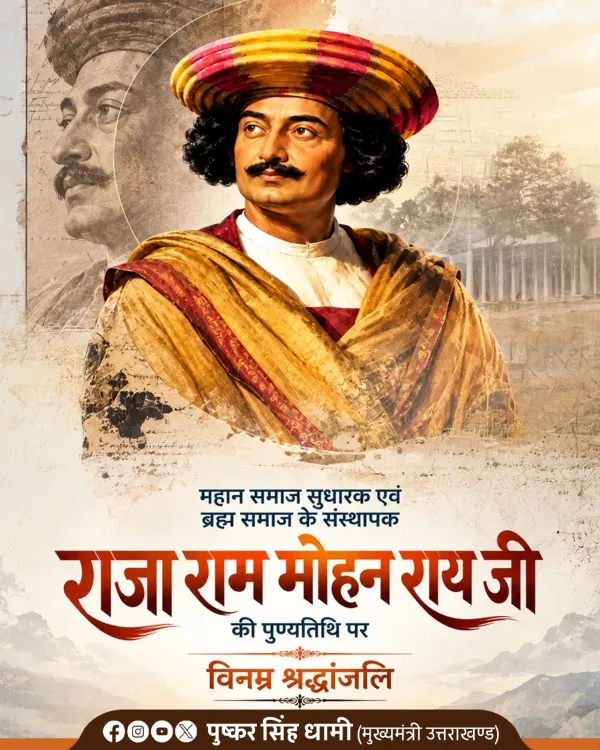
Two centuries after he reshaped the moral architecture of Indian society, Raja Ram Mohan Roy is remembered this Sunday by leaders across the country — including Uttarakhand Chief Minister Pushkar Singh Dhami, who posted a heartfelt tribute on X marking the reformer's death anniversary on 27 September 2026.
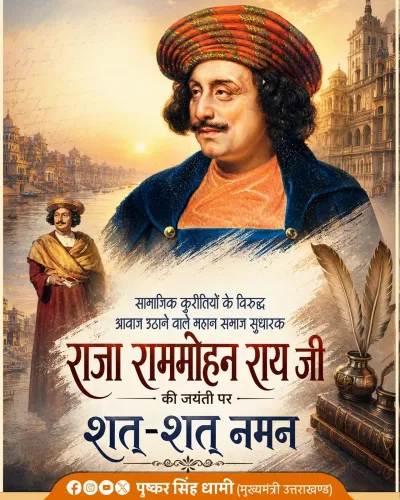
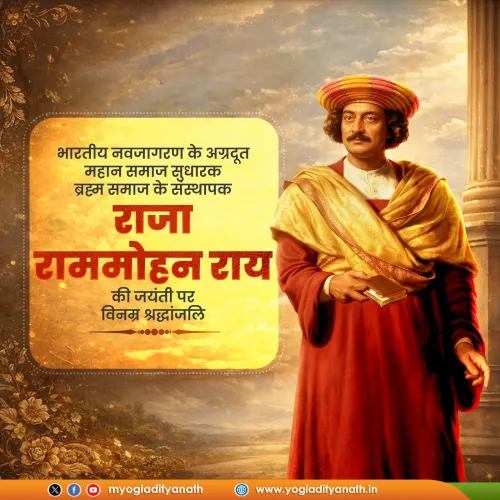
In his post, CM Dhami described Roy as a 'pioneer of social and religious renaissance' and the 'founder of Brahmo Samaj,' offering what he called a humble homage — 'विनम्र श्रद्धांजलि' ('humble tribute') — to the great reformer. He credited Roy's relentless efforts for women's rights, education, and social equality with igniting a 'new consciousness in Indian society,' calling his life an enduring source of inspiration for social awakening and human dignity.
The man who rewrote India's social contract
Raja Ram Mohan Roy founded the Brahmo Samaj in 1828, establishing India's first organised socio-religious reform platform. Rooted in monotheism and the rejection of idol worship, it challenged centuries of entrenched practice with the force of reason. But Roy's most consequential battle was waged on the ground — against sati, the practice of widow immolation. His sustained advocacy directly led to the Bengal Sati Regulation of 1829, which formally abolished the practice, making it one of the earliest landmark legislative victories of India's reform era. He also fought fiercely for women's rights to education and property, and championed English-medium schooling as a bridge between India's classical heritage and the modern world.Why Indian leaders keep returning to Roy's legacy
Marking the death anniversaries of 19th-century reformers has become a durable ritual in Indian political life, cutting across party lines. For CM Dhami, invoking Roy's legacy aligns reform-era ideals — education, equality, women's dignity — with the governance priorities his administration has publicly emphasised in Uttarakhand. Roy's story also carries a particular resonance at a moment when debates around social equality and women's rights remain live policy conversations at every level of Indian governance. The Brahmo Samaj's founding principle — that social progress and spiritual renewal must walk together — continues to be cited as a philosophical touchstone across India's reform discourse. Roy died in Bristol, England, in 1833, while advocating for India's interests abroad, a detail that only deepens the poignancy of each annual commemoration. He was, in a very literal sense, a reformer who gave everything — including his final years — to the cause he believed in. That is the legacy CM Dhami's tribute gestures toward today.Point of View
Citing Roy is notable: it signals an embrace of the rationalist, socially progressive strand of India's pre-independence history, one that sits alongside the party's broader Hindu cultural nationalism. The tribute also keeps Roy's specific legislative victories — particularly the abolition of sati — in public memory, reinforcing the argument that state intervention can and should drive social transformation. As debates over women's safety and education outcomes continue in Uttarakhand and nationally, the symbolic alignment with Roy's legacy is unlikely to be accidental.
NationPress
27 Sept 2026
Frequently Asked Questions
When did Raja Ram Mohan Roy die?
Raja Ram Mohan Roy died on 27 September 1833 in Bristol, England, while on a visit to advocate for India's interests. His death anniversary is marked annually across India.
What is Brahmo Samaj and who founded it?
Brahmo Samaj was founded by Raja Ram Mohan Roy in 1828. It was India's first organised socio-religious reform movement, promoting monotheism, social equality, and the rejection of caste-based discrimination.
What did Raja Ram Mohan Roy do for women's rights?
Raja Ram Mohan Roy campaigned vigorously against sati (widow immolation) and child marriage, and advocated for women's rights to education and property. His efforts led directly to the Bengal Sati Regulation of 1829, which abolished sati.
Why did CM Dhami pay tribute to Raja Ram Mohan Roy?
Uttarakhand Chief Minister Pushkar Singh Dhami posted a tribute on 27 September 2026 to mark Roy's death anniversary, honouring his legacy of social reform, women's rights, and educational advancement.
What is the Bengal Sati Regulation of 1829?
The Bengal Sati Regulation of 1829 was a colonial-era law that formally abolished the practice of sati — the immolation of widows on their husband's funeral pyres. It was enacted following sustained advocacy by Raja Ram Mohan Roy.