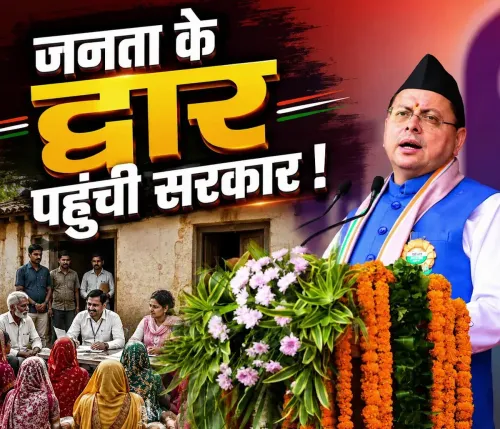
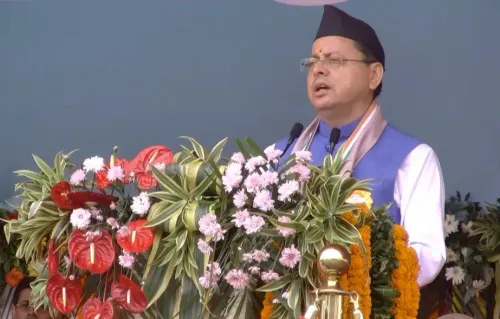
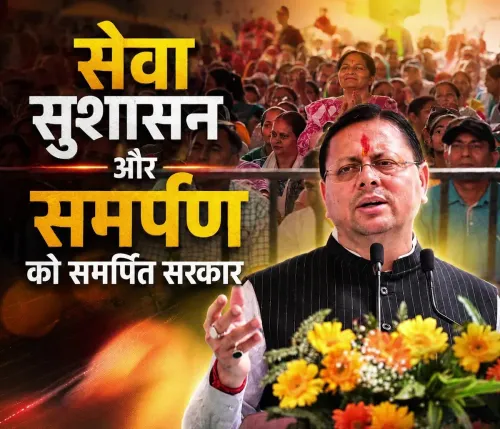
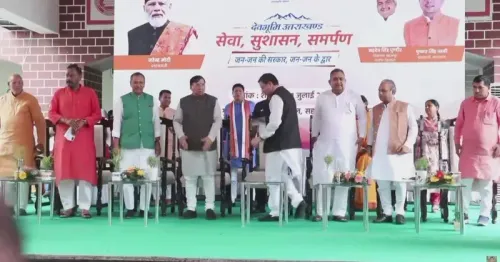
CM Dhami's Jan Jan Ki Sarkar Campaign Crosses 6.5 Lakh Mark
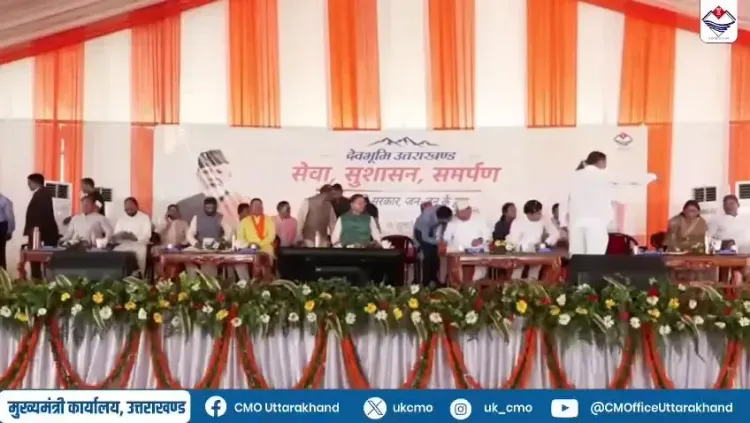
Synopsis
Uttarakhand CM Pushkar Singh Dhami's flagship Jan Jan Ki Sarkar - Jan Jan Ke Dwar outreach campaign has crossed 6.5 lakh participants across two phases, the CMO confirmed on August 2, 2026, marking a significant scale-up of the state's doorstep governance push.
Key Takeaways
The Jan Jan Ki Sarkar - Jan Jan Ke Dwar campaign has completed two phases in Uttarakhand.
Over 6.5 lakh (650,000) residents have participated in the campaign so far.
The drive is directed by Chief Minister Pushkar Singh Dhami and focuses on doorstep service delivery and grievance redressal.
The campaign aligns with the BJP government's post-2022 election emphasis on administrative reform and good governance.
Further phases are expected, with outcomes on resolved grievances yet to be officially reported.
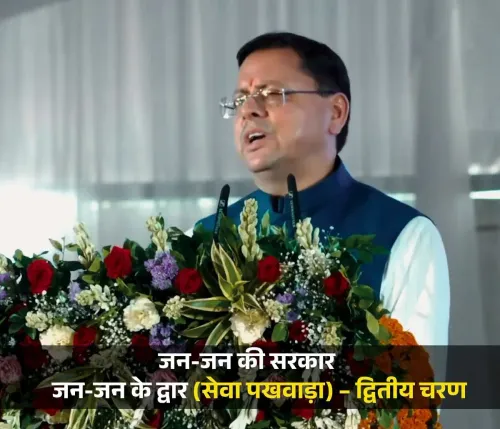
More than 6.5 lakh residents of Uttarakhand have now walked through the doors of a government initiative designed to bring the state to their doorstep. The Chief Minister's Office of Uttarakhand announced on Sunday, August 2, 2026 that the Jan Jan Ki Sarkar - Jan Jan Ke Dwar ('Government for All - At Everyone's Door') campaign has completed two phases with participation crossing that milestone — a scale that signals genuine reach beyond the usual administrative machinery.
What the campaign does — and why the numbers matter
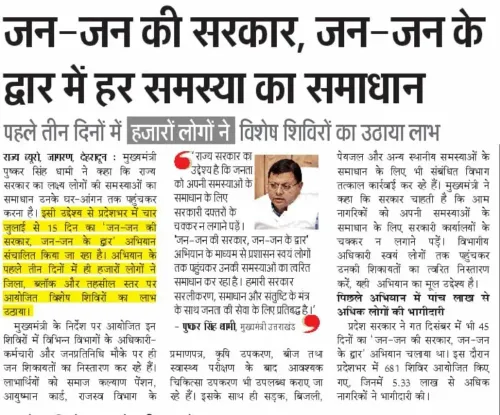
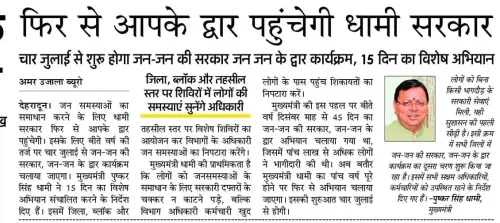
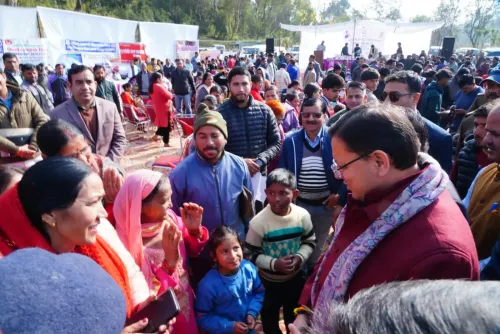
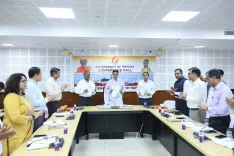
Directed by Chief Minister Pushkar Singh Dhami, the campaign is a structured public outreach drive aimed at last-mile delivery of government services and on-the-spot grievance redressal. Rather than asking citizens to navigate bureaucratic channels, officials are taken to communities — a model that has gained traction across several Indian states as a way to close the gap between policy and people. Two completed phases and over 6,50,000 participants suggest the programme has moved well past a pilot stage into something with operational depth.
Dhami's governance bet after 2022
Pushkar Singh Dhami, who has led the BJP government in Uttarakhand since 2021 and consolidated power after the 2022 assembly elections, has positioned good governance and administrative reform as central to his second term. Campaigns of this kind — combining physical outreach camps with digital portals — are part of a broader push to make the state's hill districts, where terrain makes service delivery genuinely hard, feel connected to the government. For a Himalayan state whose population is spread across remote valleys, that is not a small ambition.
The post, shared with the hashtags #GoodGovernance, #Dehradun, and #Uttarakhand, frames the campaign explicitly as a 'major medium of public service' — language that signals the administration intends to keep it running and likely expand it to further phases.
Whether the participation numbers translate into measurable outcomes — resolved grievances, faster service timelines, documented delivery — is the question the next phase will have to answer.
Point of View
Who won a second term on a development and administration platform, participation numbers serve a dual purpose: they demonstrate administrative reach and generate a political narrative of accessibility. The campaign mirrors similar programmes in BJP-governed states, suggesting a coordinated template for last-mile governance branding. The real test — whether grievances are resolved and services actually delivered — will define whether this is durable reform or well-managed optics.
NationPress
17 Sept 2026
Frequently Asked Questions
What is the Jan Jan Ki Sarkar Jan Jan Ke Dwar campaign in Uttarakhand?
It is a state government public outreach initiative directed by Chief Minister Pushkar Singh Dhami that brings officials directly to communities for doorstep service delivery and on-the-spot grievance redressal.
How many people have participated in the Jan Jan Ki Sarkar campaign?
According to the Chief Minister's Office, over 6.5 lakh (650,000) people have participated across the campaign's two completed phases as of August 2, 2026.
How many phases has the Jan Jan Ki Sarkar campaign completed?
The campaign has completed two phases as of the CMO's announcement on August 2, 2026, with further phases expected.
Who is running the Jan Jan Ki Sarkar campaign in Uttarakhand?
The campaign is run under the direction of Chief Minister Pushkar Singh Dhami by the Uttarakhand state government, involving district administration and officials who conduct outreach camps across the state.
What is the goal of Uttarakhand's doorstep governance campaign?
The campaign aims to close the gap between government services and citizens — particularly in Uttarakhand's remote hill districts — by taking officials and services directly to communities rather than requiring residents to navigate bureaucratic channels.