CM Dhami Hails Uttarakhand as Sacred Source of Ganga and Yamuna
Synopsis
Uttarakhand Chief Minister Pushkar Singh Dhami described his state as the sacred Devbhoomi nestled in the Himalayas, highlighting it as the origin of the Ganga and Yamuna — rivers central to Hindu faith, pilgrimage, and the state's identity.
Key Takeaways
CM Pushkar Singh Dhami publicly reaffirmed Uttarakhand's identity as Devbhoomi on 30 July 2026 .
He specifically named the Ganga and Yamuna as sacred rivers originating within the state.
The Gangotri and Yamunotri glaciers in Uttarakhand are the source points of these two rivers.
The Devbhoomi framing is a consistent pillar of Uttarakhand's official communications and religious tourism positioning.
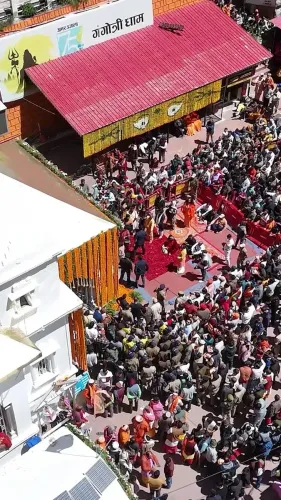
The statement connects to the broader Char Dham pilgrimage circuit , a major driver of the state's economy.
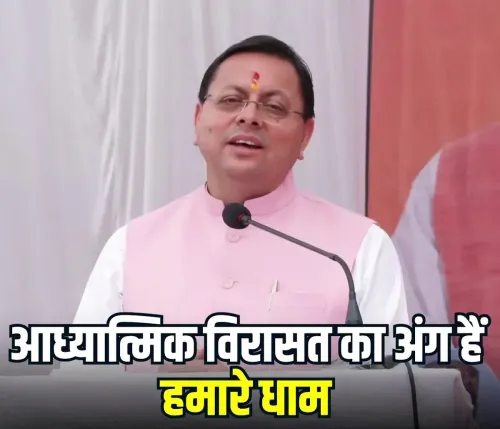
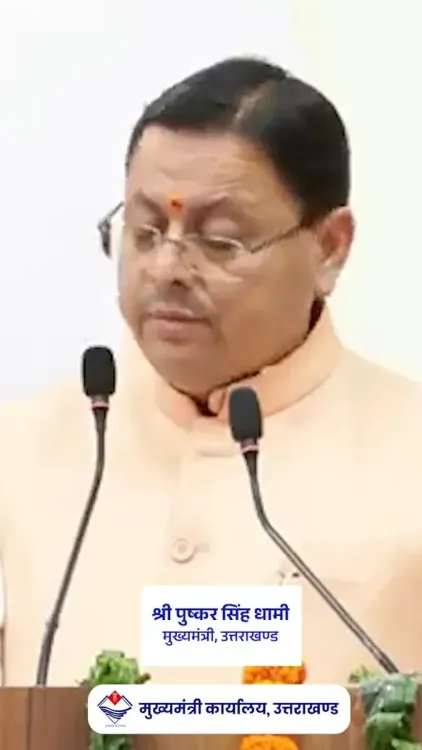
In the Himalayas, two of India's most revered rivers are born — and Uttarakhand Chief Minister Pushkar Singh Dhami wants the world to remember that. On Thursday, 30 July 2026, the Chief Minister's Office of Uttarakhand shared a statement from Dhami reaffirming the state's identity as the sacred cradle of the Ganga and the Yamuna.
Dhami's words, in Hindi, were unambiguous: 'Hamara Pradesh Himalaya ki god mein basi hui vah pavan Devbhoomi hai jahan Yamuna aur Ganga jaisi pavitra nadiyon ka udgam sthal hai' — 'Our state is that sacred Devbhoomi nestled in the lap of the Himalayas, where holy rivers like the Yamuna and the Ganga have their origin.'
Devbhoomi — More Than a Name
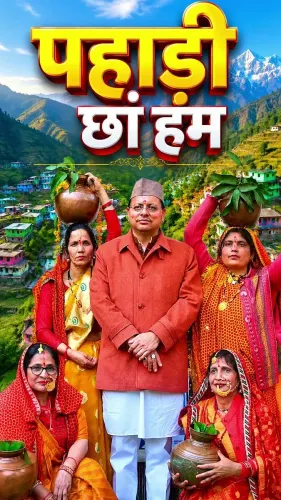
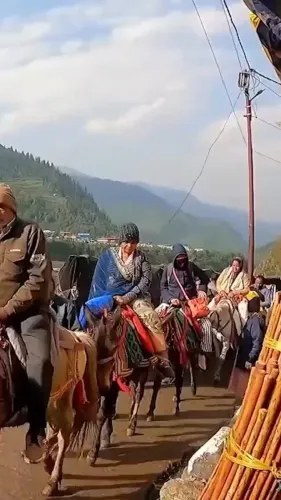
Uttarakhand has carried the title Devbhoomi — 'Land of the Gods' — since long before it became a separate state in 2000. The label is not ceremonial. The Gangotri glacier feeds the Ganga; the Yamunotri glacier gives rise to the Yamuna. Both are anchor points of the Char Dham pilgrimage circuit, which draws millions of Hindu pilgrims every year and anchors the state's religious tourism economy. Successive governments in Dehradun have leaned into this identity — in policy speeches, tourism campaigns, and conservation messaging. Dhami's statement follows that established pattern, reinforcing a brand that is simultaneously spiritual, ecological, and economic.Rivers as Identity, Rivers as Policy
For Uttarakhand, the Ganga and Yamuna are not just cultural symbols — they are the state's most consequential natural assets. Glacial health, pilgrimage infrastructure, and river conservation are policy pressure points that flow directly from the geography Dhami invoked. When a Chief Minister publicly names these rivers as the state's defining inheritance, it signals continued political attention to the Himalayan ecosystem that sustains them. The question that follows such declarations is always the same: will the rhetoric translate into concrete action on glacial source protection and pilgrimage route infrastructure? That is the ledger on which Devbhoomi's stewards will ultimately be judged.Point of View
Positions Uttarakhand as an irreplaceable pilgrimage destination, and frames the state's ecological assets in terms that resonate with BJP's broader Hindutva cultural narrative. The statement carries no new policy content, but its public articulation by the Chief Minister keeps the Char Dham and Himalayan conservation agenda in the political foreground. For a state whose economy is heavily dependent on religious tourism, that visibility is itself a form of governance signalling. The real test is whether such statements are accompanied by measurable investment in glacial protection and pilgrimage infrastructure.
NationPress
14 Sept 2026
Frequently Asked Questions
Why is Uttarakhand called Devbhoomi?
Uttarakhand is called Devbhoomi, meaning 'Land of the Gods,' because it is home to numerous Hindu shrines, temples, and the glacial origins of sacred rivers like the Ganga and Yamuna. The term has been central to the state's cultural and tourism identity since its formation in 2000.
Where does the Ganga river originate?
The Ganga originates at the Gangotri glacier in Uttarakhand, which is also the site of the Gangotri temple, one of the four shrines of the Char Dham pilgrimage circuit.
Where does the Yamuna river originate?
The Yamuna originates at the Yamunotri glacier in Uttarakhand, with the Yamunotri temple marking the river's sacred source and serving as another Char Dham pilgrimage destination.
What is the Char Dham pilgrimage circuit in Uttarakhand?
The Char Dham circuit comprises four sacred sites — Yamunotri, Gangotri, Kedarnath, and Badrinath — all located in Uttarakhand. It is one of Hinduism's most important pilgrimage routes and a cornerstone of the state's religious tourism economy.
Who is Pushkar Singh Dhami?
Pushkar Singh Dhami is the Chief Minister of Uttarakhand, belonging to the Bharatiya Janata Party. He has held the office since 2021 and has consistently championed the state's Devbhoomi identity in official communications.