CM Dhami: Uttarakhand Moving From Remittance Economy to Industry
Synopsis
CM Pushkar Singh Dhami quoted Union Home Minister Amit Shah on 6 November 2026, arguing that Congress-era policies trapped Uttarakhand in a remittance economy while BJP's industrial push is now generating employment and investment in the state.
Key Takeaways
CM Pushkar Singh Dhami quoted Amit Shah on 6 November 2026 to contrast Congress and BJP governance in Uttarakhand.
The post labels the Congress period a 'money-order economy' — one sustained by remittances from youth forced to migrate out of the hills.
The BJP argument holds that deliberate Congress policy failures prevented hill water resources and youth from benefiting the state.
The government says Uttarakhand is now shifting to an industrial economy generating local employment, investment, and wealth.
Industrial growth has been centred in plains districts like Haridwar and Udham Singh Nagar , with manufacturing and investor incentives as key levers.
Out-migration statistics and industrial job creation figures from hill districts remain the key metrics to watch.
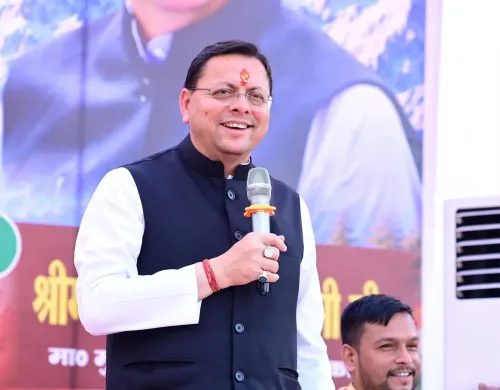
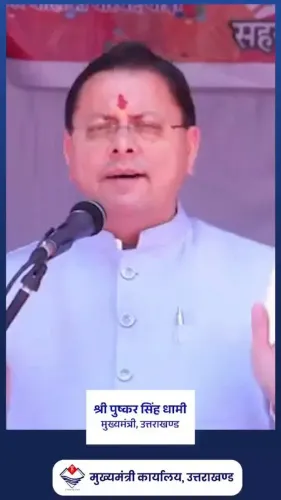
For decades, Uttarakhand's hills quietly exported their most valuable resource — their people. Uttarakhand Chief Minister Pushkar Singh Dhami on Friday, 6 November 2026, quoted Union Home and Cooperation Minister Amit Shah to frame that era as a deliberate political choice — and to declare it over.
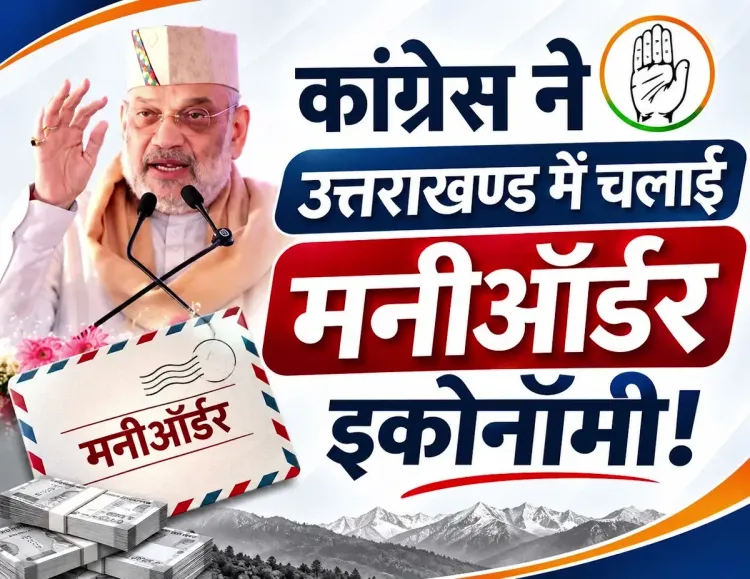
Citing Shah's words, Dhami shared: 'Kांग्रेस शासनकाल में उत्तराखण्ड को मनीऑर्डर इकोनॉमी तक सीमित रखा गया' — 'During Congress rule, Uttarakhand was kept confined to a money-order economy. Policies were crafted such that the mountains' water and youth could not serve the mountains. But today, Uttarakhand is advancing toward an industrial economy, where industries are generating employment, investment, and wealth.'
The 'Money-Order Economy' Label and What It Means
The phrase maniorder economy is a sharp political shorthand for a structural reality: hill families historically survived on cash remittances wired home by sons and daughters who had to leave for plains cities or other states. Uttarakhand, carved out of Uttar Pradesh in 2000 specifically to address the developmental neglect of its hill districts, never fully broke that cycle in its early years. Out-migration from districts like Pauri, Almora, and Chamoli became so chronic that dozens of villages turned into ghost settlements.
The BJP's core argument — amplified here through Shah's framing — is that Congress-era state policy actively perpetuated this dependency by failing to build industrial infrastructure in the region. The Congress governed Uttarakhand for significant stretches after the state's formation.
The Industrial Push: Haridwar, Udham Singh Nagar, and the Plains Districts
The pivot Dhami points to is concentrated in the state's plains-belt districts. Haridwar and Udham Singh Nagar have hosted industrial estates and special economic zones that attracted pharmaceutical, FMCG, and manufacturing units over successive administrations. The BJP-led state government has sought to deepen this by promoting investor summits and manufacturing incentives designed to keep young people from the hills employed closer to home.
The claim that this shift is now decisively underway — 'udhyogon ke madhyam se rozgaar, nivesh aur dhan ka srijan ho raha hai' ('employment, investment, and wealth are being created through industries') — is the government's headline metric. Independent verification of out-migration trends and job creation numbers from hill districts in 2026 is not yet established.
Shah's Voice Lending Weight to the Narrative
Dhami's choice to quote Shah directly, rather than speak in his own voice alone, is deliberate political architecture. The Union Home Minister is among the BJP's most authoritative voices on state-level governance, and anchoring the economic argument in his words signals that this is not merely a state-level talking point — it is a national party position on Uttarakhand's transformation story.
With industrial policy incentives and out-migration statistics under watch, the real test of this narrative will play out not in social media posts but in whether hill district census data, in coming years, tells a different story from the last two decades. The mountains are waiting for their youth to come home — and stay.
Point of View
He simultaneously elevates a local economic argument to national-party authority and reinforces the Congress-versus-BJP binary that the BJP deploys in every Uttarakhand election cycle. The 'money-order economy' framing is potent precisely because it is rooted in a lived reality — chronic out-migration from hill districts — giving it emotional resonance beyond mere political spin. The unanswered question is whether the industrial corridor growth in the plains districts is yet translating into measurable reductions in hill-district out-migration, which would be the only empirical validation of the transformation narrative the BJP is building.
NationPress
6 Nov 2026
Frequently Asked Questions
What did CM Dhami say about Uttarakhand's economy?
CM Pushkar Singh Dhami quoted Union Home Minister Amit Shah to argue that Congress rule kept Uttarakhand a 'money-order economy' dependent on remittances, while the current BJP government is building an industrial economy that creates local jobs and investment.
What is a 'money-order economy' in the context of Uttarakhand?
A 'money-order economy' refers to a region where local livelihoods depend heavily on cash remittances sent by family members who have migrated to other states or cities for work, rather than on locally generated employment or industry.
When was Uttarakhand formed and why?
Uttarakhand was formed on 9 November 2000 after being carved out of Uttar Pradesh, primarily to address the long-standing developmental neglect of its Himalayan hill districts.
Which districts in Uttarakhand have seen major industrial growth?
The plains districts of Haridwar and Udham Singh Nagar have been the primary hubs for industrial estates, special economic zones, and manufacturing investments in Uttarakhand.
What is Amit Shah's role and why did Dhami quote him?
Amit Shah is India's Union Home and Cooperation Minister and a senior BJP leader. Dhami quoted him to lend national-party authority to the economic narrative around Uttarakhand's industrial transformation.