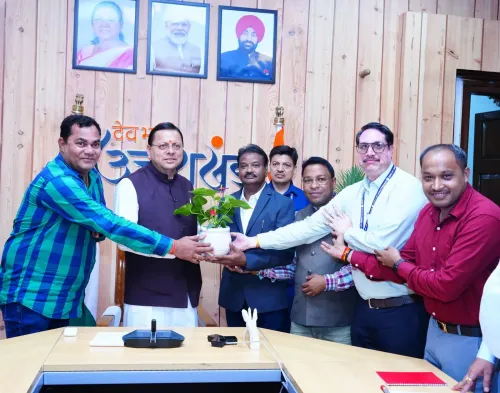
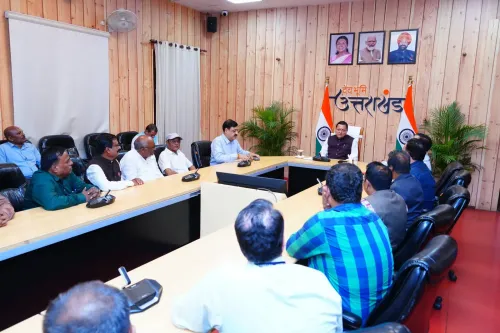
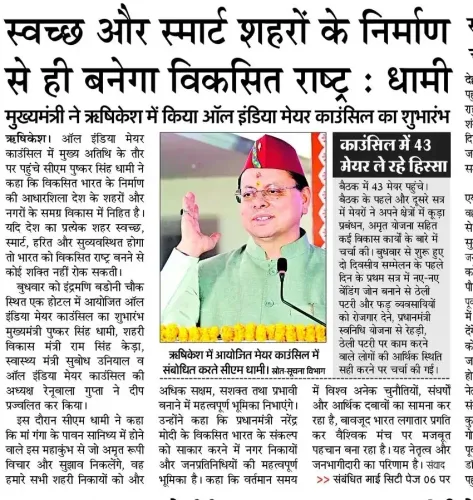
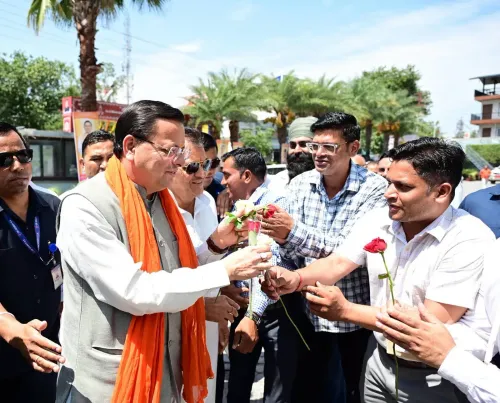
CM Dhami welcomes mayors to 117th All India Mayors Council meet in Rishikesh
Synopsis
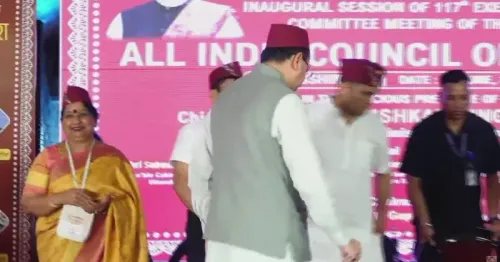
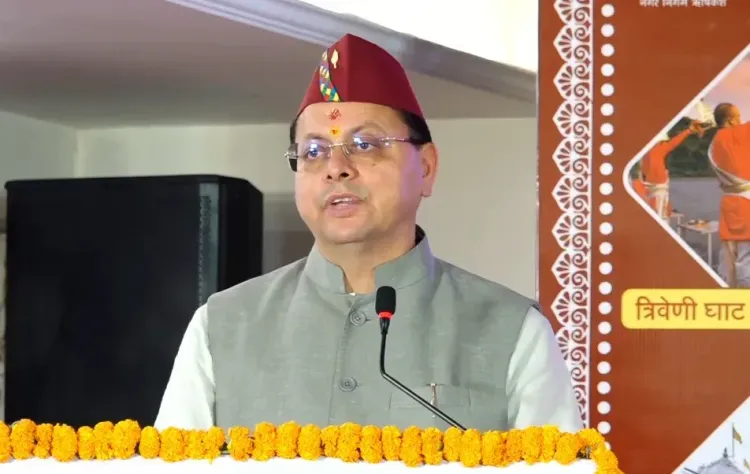
Chief Minister Pushkar Singh Dhami welcomed mayors from across the country to the 117th Executive Committee Meeting of the All India Mayors Council in Rishikesh, positioning Uttarakhand as host to a national deliberation on urban governance, municipal administration and city-level policy coordination.
Key Takeaways
CM Pushkar Singh Dhami welcomed mayors to the 117th Executive Committee Meeting of the All India Mayors Council .
The meeting is being held in Rishikesh , Uttarakhand .
Mayors from various cities across India are participating in the deliberations.
The Council is a national forum for elected mayors on urban governance issues.
Such gatherings draw on the framework of the 74th Constitutional Amendment Act, 1992 .
Hosting the event highlights Uttarakhand's role in national urban-policy exchange.
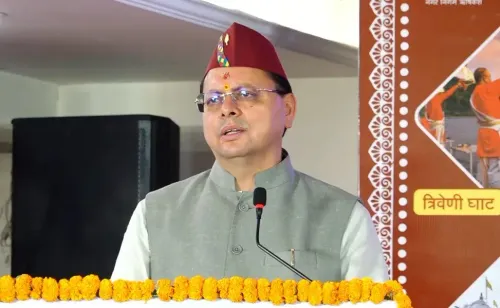
The Chief Minister's Office of Uttarakhand on 3 June 2026 shared remarks from Chief Minister Pushkar Singh Dhami welcoming municipal leaders from across the country to the 117th Executive Committee Meeting of the All India Mayors Council, being held in Rishikesh. The post foregrounds Uttarakhand's role as host to a national-level deliberation on urban governance.
In the post, the Chief Minister said, 'Rishikesh mein aayojit Akhil Bharatiya Mahapaur Parishad ki 117vi Karyakari Samiti ki baithak mein desh ke vibhinn shahron se padhare sabhi mahapauron ka main hardik swagat evam abhinandan karta hoon' ('I extend a warm welcome and felicitations to all mayors who have arrived from various cities of the country for the 117th Executive Committee Meeting of the All India Mayors Council held in Rishikesh').
Context
The All India Mayors Council is a national forum that brings together elected mayors from municipal bodies across Indian states to deliberate on questions of urban governance, civic services and inter-city coordination. Its executive committee meetings rotate across host cities, giving state governments an opportunity to showcase local administration and infrastructure.
Hosting the 117th edition in Rishikesh — a pilgrimage and yoga-tourism hub in Dehradun district — places Uttarakhand's tourism-led urban model on display before peers from across the country. The town has, in recent years, repeatedly been used by the state for national convenings.
Policy backdrop
Discussions among mayors typically draw on the framework established by the 74th Constitutional Amendment Act of 1992, which gave constitutional recognition to urban local bodies and devolved a defined set of functions to municipalities. The amendment remains the reference point for debates on municipal finance, devolution and ward-level planning.
Since then, central programmes covering sanitation, housing, smart cities and urban transport have layered additional responsibilities onto municipal corporations. Forums such as the Mayors Council are often used to compare implementation experience and to flag operational gaps in delivery.
For Uttarakhand, where rapid urbanisation in the plains contrasts with fragile hill towns, such exchanges carry a particular salience. The state has been working to align its municipal bodies with national schemes while contending with disaster risk, pilgrimage-season load and migration pressures.
Stakeholders and impact
The immediate stakeholders are the visiting mayors and the municipal corporations they represent, along with the urban development machinery of the host state. Resolutions and informal understandings arrived at in such meetings often feed into state-level policy positions on issues ranging from property tax reform to solid waste management.
For residents of participating cities, the gathering matters mainly through its downstream effect on municipal practice — the borrowing of administrative templates, sharing of digital governance tools and coordination on common challenges such as air quality, water supply and street-vendor regulation.
For the host, the event also has a soft-power dimension. By convening peers in Rishikesh, the Uttarakhand government signals confidence in the town's hospitality and event-management capacity, reinforcing its positioning as a venue for conferences beyond the religious-tourism circuit.
What's next
The substantive agenda of the 117th meeting, the list of participating cities and any joint resolutions adopted will become clearer as the proceedings advance. Observers will watch for recommendations on municipal finance, urban service delivery and inter-state learning that mayors may take back to their councils.
For Chief Minister Pushkar Singh Dhami, the welcome address sets the tone for Uttarakhand's engagement with peer states on urban policy. The test of such gatherings lies in whether the conversations in Rishikesh translate into measurable shifts in how Indian cities are administered in the months that follow.
Point of View
The Uttarakhand government inserts itself into a national conversation on urban governance that is usually dominated by the metros. It also reinforces a pattern of using the state's pilgrimage towns as venues for policy diplomacy. The real signal will lie in whether the meeting produces concrete recommendations on municipal finance and service delivery, or remains primarily a networking forum.
NationPress
17 Oct 2026
Frequently Asked Questions
What is the 117th All India Mayors Council meeting about?
It is the 117th Executive Committee Meeting of the All India Mayors Council, a national forum where elected mayors from across India deliberate on urban governance, municipal administration and city-level service delivery.
Where is the 117th Mayors Council meeting being held?
The meeting is being held in Rishikesh, a town in Uttarakhand's Dehradun district known as a pilgrimage and yoga-tourism hub.
Who welcomed the mayors to the Rishikesh meeting?
Uttarakhand Chief Minister Pushkar Singh Dhami welcomed mayors from various cities of the country to the gathering, in a message shared by the Chief Minister's Office.
What is the All India Mayors Council?
The All India Mayors Council is a national-level body representing elected mayors of municipal corporations across Indian states, used as a platform for exchange on urban policy and administration.
Why does Uttarakhand host such national events in Rishikesh?
Rishikesh is frequently used by the state for national convenings because of its tourism infrastructure, hospitality capacity and symbolic value as a pilgrimage and wellness destination.