CM Dhami Expands Joshimath Relief to PMAY, Hill-Style Homes
Synopsis
The Uttarakhand government under CM Pushkar Singh Dhami is expanding disaster compensation in Jyotirmath, Chamoli, to cover traditional hill-architecture homes and PMAY-built houses damaged by land subsidence — broadening relief eligibility for vulnerable mountain families.
Key Takeaways
The Chief Minister's Office of Uttarakhand announced on 25 July 2026 that rehabilitation efforts for subsidence-hit families in Jyotirmath, Chamoli are ongoing.
Both traditional pahadi (hill-style) buildings and Pradhan Mantri Awas Yojana (PMAY) houses are being brought within the compensation framework.
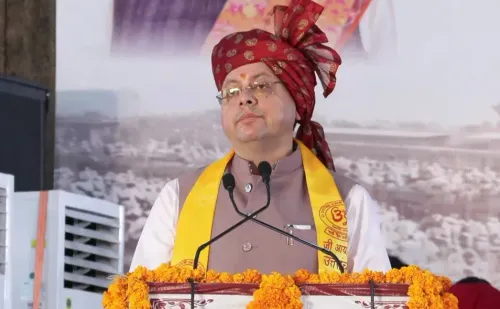
CM Pushkar Singh Dhami is leading the state government's disaster response for the affected district.
Joshimath was declared a disaster zone in 2023 after widespread land subsidence damaged hundreds of structures.
The expansion reflects a broader pattern of integrating central housing schemes into state-level disaster management in Uttarakhand's mountain districts.
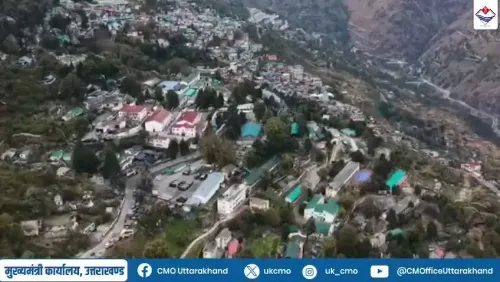
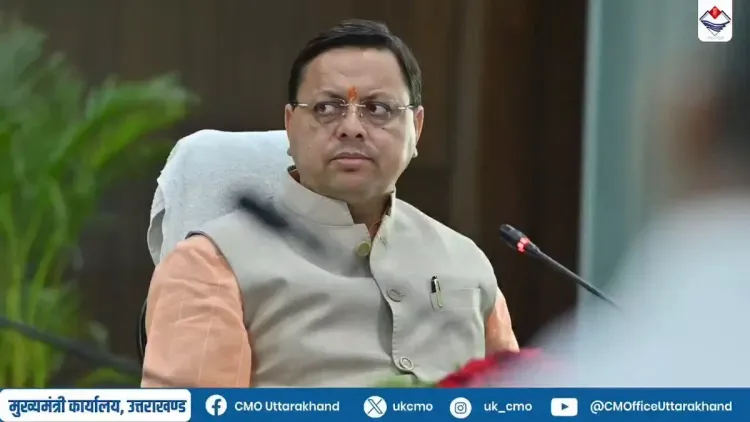
The Chief Minister's Office of Uttarakhand announced on Saturday, 25 July 2026 that the state government under Chief Minister Pushkar Singh Dhami is actively working to rehabilitate families affected by land subsidence in Jyotirmath (Joshimath), Chamoli district, and has moved to bring both traditional hill-architecture homes and houses built under the Pradhan Mantri Awas Yojana (PMAY) within the ambit of disaster compensation.
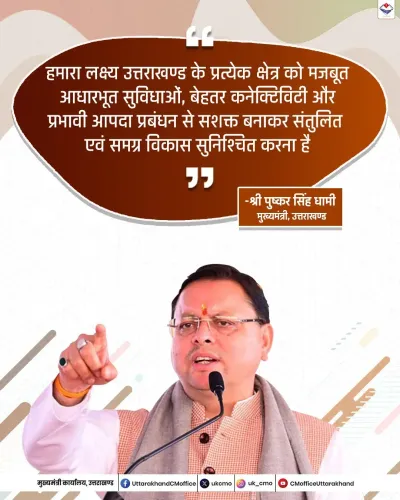
The official post stated: 'मुख्यमंत्री श्री पुष्कर सिंह धामी के नेतृत्व में राज्य सरकार आपदा प्रभावित परिवारों के पुनर्वास के लिए लगातार प्रयासरत है' — ('Under the leadership of Chief Minister Pushkar Singh Dhami, the state government is continuously working for the rehabilitation of disaster-affected families'). It further noted that traditional hill-style buildings and PMAY-constructed homes damaged by bhoo-dhansaav (land subsidence) in Jyotirmath are being included in the compensation framework.
Context
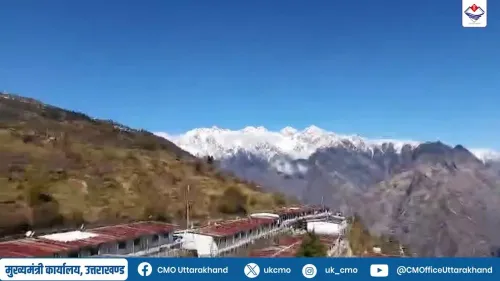
Jyotirmath, commonly known as Joshimath, is a high-altitude town in Chamoli district in the Garhwal Himalayas. The town has faced documented and accelerating land subsidence, with cracks appearing in hundreds of homes and public structures. The crisis drew national attention in early 2023, when the state government declared it a disaster zone and initiated surveys for compensation and relocation of affected households.
The Himalayan region's geological fragility — compounded by construction pressures, seismic activity, and glacial dynamics — has made Chamoli one of Uttarakhand's most disaster-prone districts. The 2013 Kedarnath floods prompted the state to build dedicated disaster relief funds and rehabilitation protocols that have since been expanded after each successive event.
Policy Backdrop
The Pradhan Mantri Awas Yojana, launched by the central government in 2015, provides pucca (permanent) housing to eligible rural and urban beneficiaries. Its guidelines have been updated over time to allow flexibility in disaster-prone zones, enabling damaged PMAY units to be folded into state relief packages — a step the Uttarakhand government is now formally acting on for Jyotirmath.
Traditional hill-style homes — built with local stone, timber, and mud mortar — represent a distinct architectural category that has historically fallen outside standard compensation matrices designed for RCC (reinforced concrete) structures. Including them signals a broadening of the eligibility criteria to reflect the ground reality of mountain settlements.
Stakeholders and Impact
The primary beneficiaries are disaster-affected families in Jyotirmath who own either traditional pahadi (hill-style) homes or houses constructed under PMAY. Many of these households are economically vulnerable, having already lost the use of their properties due to subsidence-induced structural damage.
The move also has implications for local contractors, surveyors, and district administration officials tasked with eligibility verification — a process that will need to distinguish between the two housing categories and assess the degree of damage attributable to land subsidence.
What's Next
Attention will now turn to the rollout timeline, the specific compensation amounts for each housing category, and the mechanism for eligibility verification in Chamoli. Any supplementary budget provisions or formal requests to the central government for additional assistance under the National Disaster Response Fund (NDRF) will be closely watched. The broader question of permanent relocation for the most severely affected households in Jyotirmath remains an unresolved dimension of the rehabilitation effort.
Point of View
Addressing a gap that has historically left pahadi architecture outside standard disaster matrices. It also reflects a growing administrative tendency to integrate centrally sponsored housing schemes into state disaster management — a model that could set precedent for other Himalayan states. The announcement, however, stops short of specifying compensation amounts or timelines, leaving the real test to implementation. With Joshimath's subsidence crisis now in its third year of public attention, political pressure on the Dhami government to demonstrate tangible outcomes — not just policy intent — will only intensify.
NationPress
24 Oct 2026
Frequently Asked Questions
What is the latest news on Joshimath land subsidence relief in 2026?
The Uttarakhand government announced on 25 July 2026 that traditional hill-style homes and PMAY houses damaged by land subsidence in Jyotirmath (Joshimath), Chamoli, will be included in the state's disaster compensation framework under CM Pushkar Singh Dhami.
Will PMAY houses get compensation for Joshimath subsidence damage?
Yes. The Chief Minister's Office of Uttarakhand stated that houses built under the Pradhan Mantri Awas Yojana (PMAY) in Jyotirmath affected by land subsidence are being brought within the ambit of disaster compensation.
What is bhoo-dhansaav and why is it affecting Joshimath?
Bhoo-dhansaav means land subsidence — the gradual sinking or settling of the ground. Joshimath (Jyotirmath) in Chamoli district sits on geologically fragile Himalayan terrain, and has experienced accelerating subsidence that has cracked and damaged hundreds of buildings, prompting the state to declare it a disaster zone in 2023.
What is the Pradhan Mantri Awas Yojana (PMAY)?
PMAY is a central government housing scheme launched in 2015 that provides pucca (permanent) houses to eligible rural and urban beneficiaries across India. Its guidelines have been updated to allow damaged PMAY units in disaster-prone zones to be included in state relief packages.
Who is Pushkar Singh Dhami and what is his role in Uttarakhand disaster relief?
Pushkar Singh Dhami is the Chief Minister of Uttarakhand since 2021. He leads the state government's disaster response and rehabilitation policies, including the current effort to compensate families affected by land subsidence in Chamoli district.