Dholera SIR gets 200-bed hospital, school and hotels to back semiconductor hub
Synopsis
Dholera is no longer just a semiconductor site on a map — Gujarat is building a whole city around it. A 200-bed hospital, IB school, hotels and a ₹20,667 crore rail link are all in motion, anchored by Tata Electronics' ₹91,000 crore chip fab. With VGGS 2027 approaching, the state is betting Dholera can become India's most ambitious planned industrial city.
Key Takeaways
Gujarat Chief Minister Bhupendra Patel reviewed urban and industrial infrastructure progress at Dholera SIR on 16 November 2026 .
A 200-bed multi-speciality hospital and an IB-curriculum school are under development; the hospital is targeted for completion by December 2026 .
Tata Electronics is building a ₹91,000 crore semiconductor fabrication plant at Dholera, with an estimated employment potential of 21,000 people .
The 134-km Ahmedabad-Dholera semi-high-speed railway received Union Cabinet approval in May 2026 at an estimated cost of ₹20,667 crore .
Around 1.11 lakh saplings have been planted across 53 hectares in the Activation Area as part of an environmental initiative.
Dholera is set to be a key investment showcase at the Vibrant Gujarat Global Summit 2027 .
A 200-bed multi-speciality hospital, an International Baccalaureate (IB)-curriculum school, hotels, a food court and a range of civic amenities are being developed in the Activation Area of Dholera Special Investment Region (DSIR) in Gujarat, as the state works to build a fully functional urban township alongside its fast-emerging semiconductor manufacturing hub. The hospital is targeted for completion by December 2026, according to a recent Union government account of the region's progress.
CM Reviews Infrastructure Progress
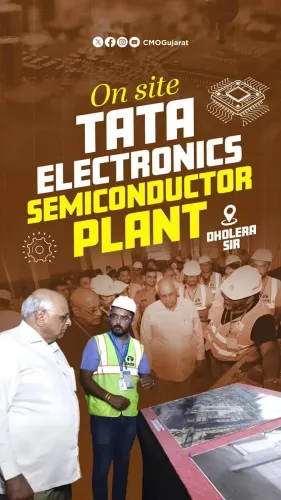
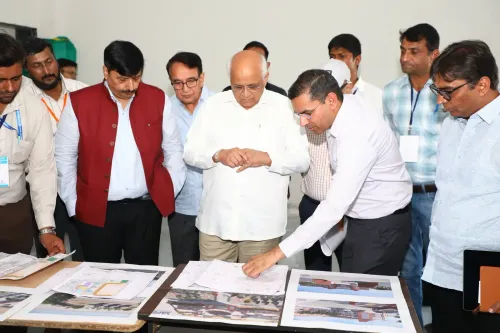
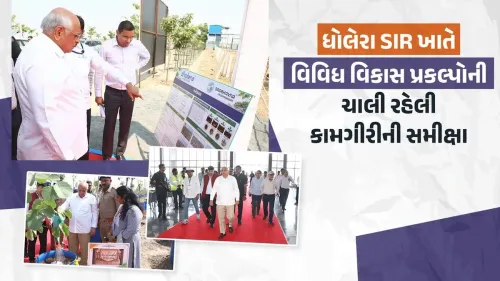
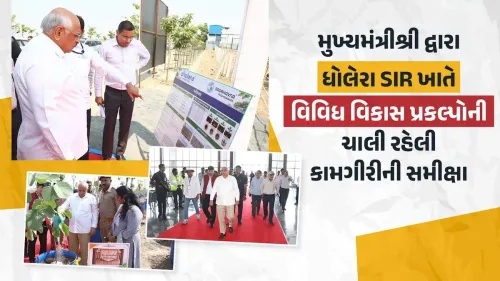
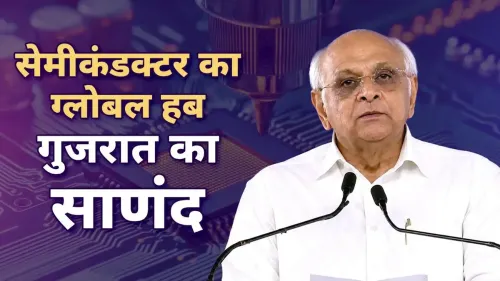
Gujarat Chief Minister Bhupendra Patel on Monday, 16 November 2026, conducted a detailed review of industrial, social and urban infrastructure projects at Dholera. The review assessed progress since his previous visit and examined facilities being readied to support businesses, investors, professionals and residents as industrial activity in the region accelerates.
Projects reviewed included the 200-bed multi-speciality hospital, an integrated school, a fire station, a hotel, a guest house, a food court and a tent city, along with residential and commercial developments. Several hospitality facilities are reported to be nearing completion — among them a 42-room guest house with suites and conference facilities, a food court capable of serving around 600 people, and a 50-tent tent city. These are intended to accommodate investors, business delegations and other visitors and are expected to become operational shortly.
Tata Electronics Semiconductor Plant: The Anchor Investment
The urban build-out is being planned around Tata Electronics' semiconductor fabrication facility — the centrepiece of Dholera's industrial ecosystem. The company is constructing a 12-inch (300 mm) wafer fabrication plant at an estimated investment of ₹91,000 crore. The facility is expected to manufacture chips for automobiles, mobile devices and artificial intelligence applications.
The Union government has notified a special economic zone for the project spanning 66.166 hectares, with an estimated employment potential of 21,000 people. The scale of the semiconductor project is expected to draw ancillary industries, technology firms, research institutions and component suppliers, generating additional demand for skilled workers and urban services.
Connectivity and Green Cover
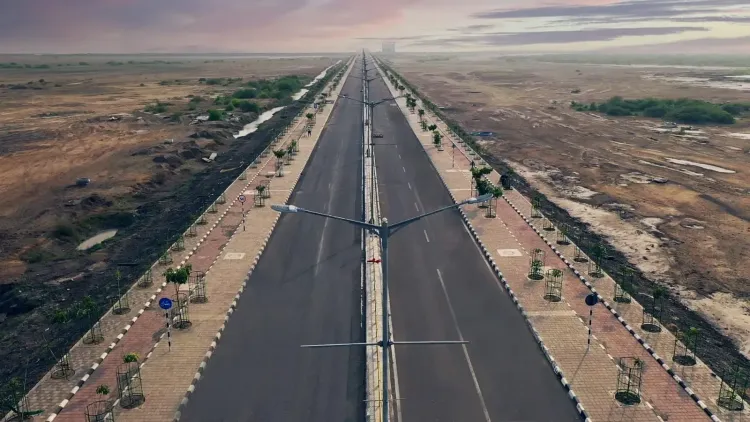
Connectivity improvements are a core pillar of Dholera's development blueprint. The Ahmedabad-Dholera Expressway has already enhanced road access to the region. An international airport is targeted to become operational by the end of 2026. Rail links in the pipeline include the 23-km Bhimnath-Dholera Logistics Hub rail link and the 134-km Ahmedabad-Dholera semi-high-speed double railway line, the latter having received Union Cabinet approval in May 2026 at an estimated cost of ₹20,667 crore.
On the environmental front, a plantation drive conducted in partnership with the Forest Department and Sadhbhavna Trust has resulted in approximately 1.11 lakh saplings planted across 53 hectares in the Activation Area. Drum plantation techniques have been introduced to improve sapling survival rates and bolster the region's green cover.
VGGS 2027 and the Investment Push
Dholera is expected to be a flagship showcase at the Vibrant Gujarat Global Summit (VGGS) 2027, with the state government actively seeking private investment in hospitals, hotels, educational institutions, residential projects, commercial spaces and other urban services. The development strategy is designed to position Dholera as a self-sustaining planned city — not merely an industrial zone — capable of supporting a growing population of workers, professionals and their families.
The parallel advancement of industrial, social, environmental and transport infrastructure is widely seen as central to determining whether Dholera realises its long-term potential as one of India's most ambitious planned industrial cities.
Point of View
Repeatedly featured at Vibrant Gujarat summits without commensurate on-ground delivery. The Tata Electronics semiconductor plant changes that calculus — a ₹91,000 crore anchor investment is real leverage, and the state is visibly rushing social infrastructure to match. The critical question is sequencing: a chip fab attracts engineers and technicians from day one, and they will not wait for a hospital that is perennially 'nearing completion.' If civic infrastructure lags the factory by even a year, talent retention becomes the first casualty of an otherwise well-designed blueprint.
NationPress
16 Nov 2026
Frequently Asked Questions
What civic infrastructure is being built at Dholera SIR?
A 200-bed multi-speciality hospital, an IB-curriculum school, a 42-room guest house, a food court for 600 people, a 50-tent tent city, hotels and commercial developments are all under development in the Activation Area of Dholera Special Investment Region. The hospital is targeted for completion by December 2026.
What is the Tata Electronics semiconductor project at Dholera?
Tata Electronics is setting up a 12-inch (300 mm) wafer semiconductor fabrication plant at Dholera at an estimated investment of ₹91,000 crore. The facility will manufacture chips for automobiles, mobile devices and AI applications, and is expected to generate employment for around 21,000 people within a Union government-notified special economic zone of 66.166 hectares.
What is the Ahmedabad-Dholera railway project and what does it cost?
The Ahmedabad-Dholera semi-high-speed double railway line is a 134-km rail corridor that received Union Cabinet approval in May 2026 at an estimated cost of ₹20,667 crore. A separate 23-km Bhimnath-Dholera Logistics Hub rail link is also planned to strengthen freight connectivity.
When will Dholera's international airport become operational?
The Dholera international airport is targeted to become operational by the end of 2026, according to current development timelines. The Ahmedabad-Dholera Expressway is already functional, improving road access to the region.
What is the significance of VGGS 2027 for Dholera?
The Vibrant Gujarat Global Summit 2027 is expected to be a major platform for attracting private investment into Dholera's non-industrial sectors — hospitals, hotels, schools, residential projects and commercial spaces. The Gujarat government is positioning Dholera as a self-sustaining planned city, not just an industrial zone, ahead of the summit.