Dinesh Ganvir takes charge as GSI Director General, to intensify critical minerals hunt
Synopsis
India's top geological body has a new chief with a clear mandate: find more critical minerals, faster. Dinesh Ganvir, who oversaw a five-fold jump in critical mineral investigations in his previous role, now heads the GSI at a time when India's EV, defence, and clean-energy ambitions are directly tied to reducing reliance on imported lithium, cobalt, and rare earths.
Key Takeaways
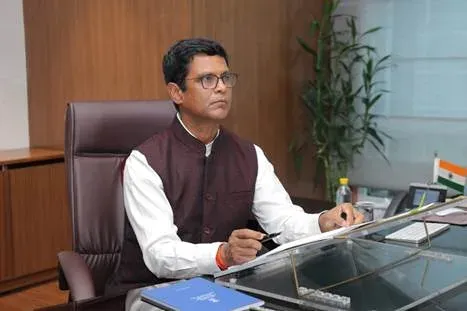
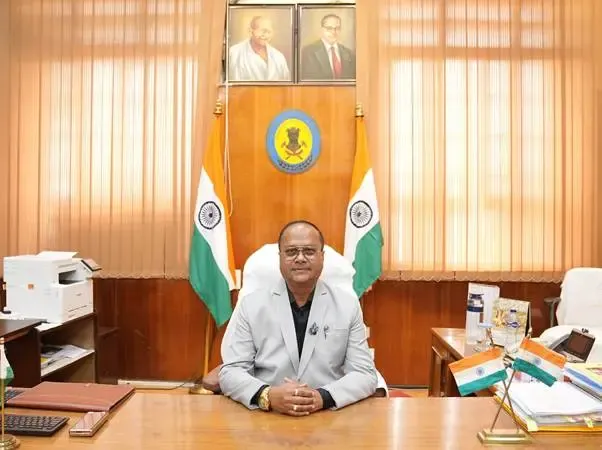
Dinesh Vitthalrao Ganvir assumed charge as Director General of GSI on 1 November 2026 in New Delhi .
He brings over 32 years of experience in geological investigations, mineral exploration, and institutional leadership.
His top priority is intensifying exploration for critical and strategic minerals to reduce import dependence and advance Atmanirbhar Bharat .
As National Mission Head-II , Ganvir spearheaded a five-fold jump in critical mineral investigations.
The GSI will also strengthen work on landslide early warning , glacial studies , infrastructure projects, and offshore exploration .
Ganvir has represented India at international mining forums including the India–Peru Joint Working Group , the Russia–India Mining Sub-Group , and IMARC 2022 in Australia.
Dinesh Vitthalrao Ganvir formally assumed charge as Director General of the Geological Survey of India (GSI) on 1 November 2026 in New Delhi, bringing over 32 years of expertise in geological investigations, mineral exploration, engineering geology, and institutional leadership to the country's apex geoscientific body. His appointment comes at a pivotal moment as India races to secure critical and strategic minerals amid growing global competition.
Key Priorities Under New Leadership
Ganvir has identified intensifying exploration for critical and strategic minerals as his foremost priority. This will be pursued through integrated geoscientific investigations, advanced mineral prospectivity mapping, and the systematic generation of scientifically robust, auction-ready mineral blocks, according to an official statement. The stated objectives are to strengthen mineral security, reduce import dependence, and advance the vision of 'Atmanirbhar Bharat'.
He also underscored the importance of harnessing emerging technologies and advanced data analytics alongside rigorous field-based investigations. Strengthening laboratory infrastructure, upgrading analytical capabilities, and expanding offshore exploration are among the additional focus areas outlined by the new Director General.
Broader Geoscientific Mandate
Beyond mineral exploration, Ganvir confirmed that the GSI will continue its contributions to fundamental geoscientific research, landslide early warning systems, glacial and cryospheric studies, major infrastructure projects, and hazard assessment. These functions are considered vital to informed policymaking, disaster preparedness, and sustainable development across the country.
The emphasis, he added, will remain on generating reliable, science-based inputs that address India's evolving developmental and societal priorities — a mandate that spans everything from mountain communities vulnerable to glacial lake outbursts to urban planners requiring ground stability data.
Ganvir's Career at GSI
Ganvir joined the Geological Survey of India in 1994 after completing his Master's degree in Geology from RTMNU University, Nagpur. Over more than three decades, his work has spanned geological mapping, mineral exploration, and multidisciplinary geoscientific studies. Notable assignments include thematic mapping in the Western Bastar Craton, gold and diamond exploration in the Sakoli Fold Belt of Maharashtra, and geoscientific work associated with the conservation of UNESCO World Heritage Sites including the Bhimbetka Rock Shelters and Ellora Caves.
Ganvir has also represented the GSI at international forums including the India–Peru Joint Working Group, the Russia–India Mining Sub-Group, and IMARC 2022 in Australia.
Track Record on Critical Minerals
In his most recent leadership role as National Mission Head-II, Ganvir was instrumental in planning and monitoring multidisciplinary field programmes and nationwide mineral exploration. Notably, he spearheaded a five-fold jump in investigations for critical and strategic minerals in recent times and oversaw the preparation of geological reports and exploration blocks for the mineral auctions process, in line with GSI's national mandate.
With India's battery, EV, defence, and clean-energy sectors increasingly dependent on lithium, cobalt, and rare earth elements — much of which is currently imported — the new GSI chief's focus on critical minerals could have significant downstream implications for industrial policy and supply-chain resilience.
Point of View
Auction-ready blocks at the pace India's industrial policy now demands. A five-fold jump in investigations is a headline-worthy metric; what matters more is how many of those investigations yield blocks that actually clear auction. India's import dependence on lithium, cobalt, and rare earths remains structurally high, and a change at the top, however competent, does not by itself resolve the gap between geological prospecting and industrial offtake. The emphasis on technology integration and offshore exploration is welcome, but laboratory infrastructure and analytical capacity — which Ganvir himself flagged as needing upgrades — have been perennial bottlenecks that deserve as much urgency as the exploration targets themselves.
NationPress
1 Nov 2026
Frequently Asked Questions
Who is Dinesh Ganvir and what is his new role?
Dinesh Vitthalrao Ganvir is a geoscientist with over 32 years of experience who assumed charge as Director General of the Geological Survey of India on 1 November 2026. He joined GSI in 1994 and previously served as National Mission Head-II, overseeing nationwide mineral exploration programmes.
What are Dinesh Ganvir's key priorities as GSI Director General?
Ganvir has identified intensifying exploration for critical and strategic minerals, advancing mineral prospectivity mapping, and generating auction-ready mineral blocks as top priorities. He also plans to strengthen laboratory infrastructure, expand offshore exploration, and integrate advanced data analytics into field investigations.
Why is critical mineral exploration important for India?
India's EV, defence, clean-energy, and battery sectors depend heavily on critical minerals such as lithium, cobalt, and rare earth elements, most of which are currently imported. Increasing domestic exploration is central to reducing import dependence and achieving the government's Atmanirbhar Bharat objectives.
What was Ganvir's track record on critical minerals before this appointment?
As National Mission Head-II at GSI, Ganvir spearheaded a five-fold jump in investigations for critical and strategic minerals and oversaw the preparation of geological reports and exploration blocks for mineral auctions. He also represented GSI at international forums including IMARC 2022 in Australia.
What other areas will the GSI focus on under the new Director General?
Beyond mineral exploration, the GSI will continue work on landslide early warning systems, glacial and cryospheric studies, hazard assessment, and support for major infrastructure projects. Ganvir has emphasised generating reliable, science-based inputs for policymaking and disaster preparedness.