Kishan Reddy orders mission-mode push on mining, critical minerals
Synopsis
Union Minister G. Kishan Reddy has put India's mining bureaucracy on notice: fast-track or fall short. With over 6.5 lakh sq. km. already mapped and a GSI five-year roadmap covering 48,000 sq. km. of advanced exploration, Monday's Bengaluru review signals that India is treating critical mineral security — lithium, REE, cobalt, PGE — as a strategic priority, not a departmental routine.
Key Takeaways
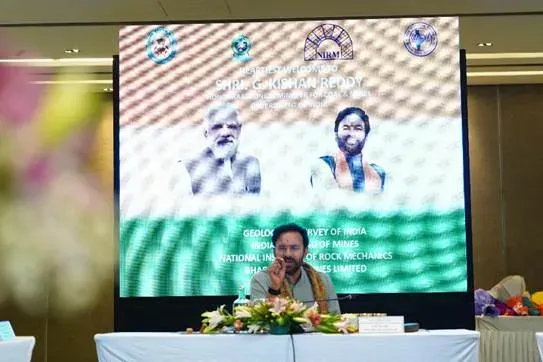
Kishan Reddy chaired high-level review meetings in Bengaluru on 25 May with GSI , NIRM , IBM , and RSAS officials.
Agencies directed to adopt a mission-mode approach prioritising technology, transparency, and efficiency.
GSI's five-year roadmap covers advanced-stage exploration across nearly 48,000 sq. km. , with AI/ML-enabled mineral targeting.
Over 6.5 lakh sq. km. covered under the National Aerogeophysical Mapping Programme , yielding more than 200 exploration projects .
Focus minerals include lithium , cobalt , nickel , REE , vanadium , tungsten , and Platinum Group Elements .
IBM presented findings on critical mineral enrichment under the National Critical Mineral Mission .
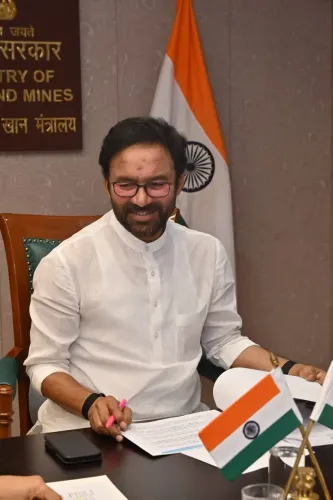
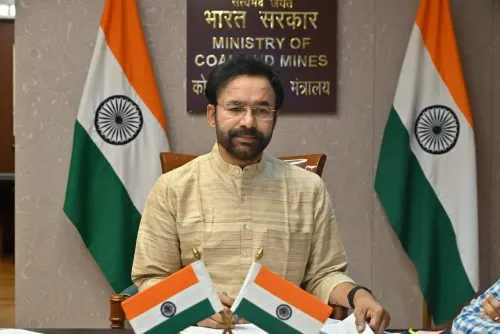
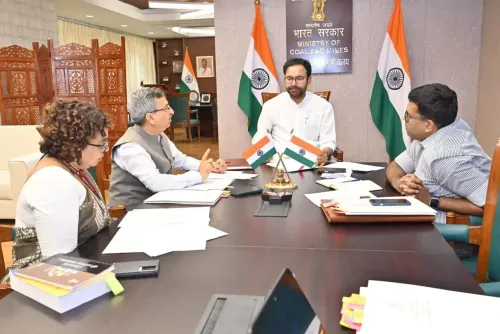
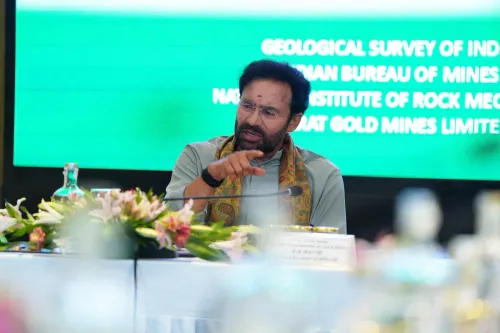
Union Minister for Coal and Mines G. Kishan Reddy on Monday, 25 May directed all mining and exploration agencies under the Ministry to fast-track pending projects and adopt a mission-mode approach, as India moves to shore up its mineral security and meet the strategic targets of Viksit Bharat 2047. The directive came during a series of high-level review meetings held in Bengaluru with senior officials of four key institutions.
Key Directives from the Minister
Chairing the review sessions, Reddy told agency heads that speed, accountability, and visible outcomes are non-negotiable. 'All organisations must fast-track pending projects and ensure that technology, transparency, and efficiency become the foundation of every institutional process. The people of India and the Government of India expect speed, accountability and visible outcomes from every agency working in this sector,' he said.
The Minister stressed that the mining and exploration sector holds a pivotal role in securing India's industrial expansion and strategic mineral self-reliance, citing Prime Minister Narendra Modi's vision of a globally competitive, self-reliant economy.
Focus on Critical and Strategic Minerals
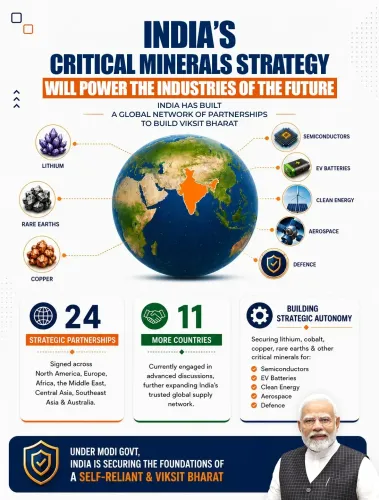
The reviews placed particular emphasis on accelerating exploration of critical and strategic minerals, including Rare Earth Elements (REE), lithium, nickel, cobalt, tungsten, vanadium, and Platinum Group Elements (PGE) — materials central to clean energy, defence, and advanced manufacturing supply chains.
Reddy underscored the role of emerging technologies in reshaping exploration: 'The future of mineral exploration lies in technology-driven systems, including AI, remote sensing, integrated geoscience analytics, and advanced exploration methodologies. Our institutions must lead this transformation to make India future-ready and resource-secure.'
What the Agencies Presented
The Geological Survey of India (GSI) reported major exploration outcomes across Karnataka and Goa, identifying zones bearing gold, copper, PGE, nickel, and cobalt. GSI also outlined a five-year roadmap featuring large-scale thematic mapping, AI/ML-enabled mineral targeting, and advanced-stage exploration covering nearly 48,000 sq. km. — advances made possible by reforms under the MMDR Amendment Act, 2015.
The National Institute of Rock Mechanics (NIRM) showcased its work on nationally significant infrastructure projects — hydropower, metro rail, tunnel engineering, seismic monitoring, and controlled blasting near sensitive sites — alongside capabilities in rock mechanics and geotechnical solutions.
The Indian Bureau of Mines (IBM) reviewed progress on sustainable mining practices, operationalisation of auctioned mineral blocks, scientific mine closure, and critical mineral enrichment under the National Critical Mineral Mission.
The Remote Sensing and Aerial Survey (RSAS) division reported that more than 6.5 lakh sq. km. has already been covered under the National Aerogeophysical Mapping Programme (NAGMP), generating over 200 exploration projects using aero-geophysical datasets, including hyperspectral remote sensing and AI/ML-driven mineral prospectivity mapping.
Broader Context and What Comes Next
This comes amid intensifying global competition for critical minerals, with major economies racing to secure supply chains for electric vehicles, semiconductors, and renewable energy infrastructure. India's push aligns with its stated goal of reducing import dependence on minerals currently sourced heavily from China and other suppliers.
With institutional roadmaps now on the table and a minister-level mandate for mission-mode execution, the pace at which pending exploration projects move to production will be the real measure of Monday's directive.
Point of View
000 sq. km. roadmap and NAGMP's 200-plus projects translate into auctioned blocks and operational mines within a policy cycle, not the next one. Global critical mineral competition is not waiting for India's institutional pace to catch up.
NationPress
9 Oct 2026
Frequently Asked Questions
What did Kishan Reddy direct mining agencies to do?
Union Minister G. Kishan Reddy directed all mining and exploration agencies under the Ministry of Coal and Mines to fast-track pending projects and adopt a mission-mode approach centred on technology, transparency, and efficiency. The directive was issued during high-level review meetings in Bengaluru on 25 May.
Which agencies were reviewed at the Bengaluru meetings?
The review covered four key institutions: the Geological Survey of India (GSI), the National Institute of Rock Mechanics (NIRM), the Indian Bureau of Mines (IBM), and the Remote Sensing and Aerial Survey (RSAS) division. Each presented updates on ongoing projects, technological capabilities, and exploration progress.
What critical minerals is India focusing on?
India's exploration push is targeting Rare Earth Elements (REE), lithium, nickel, cobalt, tungsten, vanadium, and Platinum Group Elements (PGE) — materials critical to electric vehicles, clean energy, defence, and advanced manufacturing. GSI has already identified zones bearing several of these minerals in Karnataka and Goa.
How much area has been covered under the National Aerogeophysical Mapping Programme?
More than 6.5 lakh sq. km. has been covered under the NAGMP, generating over 200 exploration projects using aero-geophysical datasets. The programme employs hyperspectral remote sensing and AI/ML-driven mineral prospectivity mapping.
How does this connect to India's Viksit Bharat 2047 goal?
The Ministry has aligned its institutional exploration and mining efforts with the national vision of Viksit Bharat 2047, which aims to make India a developed, self-reliant economy by its centenary of independence. Securing domestic critical mineral supply chains is seen as foundational to that goal, reducing dependence on imports for key industrial inputs.