Will GSI Launch 300 Critical Mineral Projects in 2026-27?
Synopsis
The Geological Survey of India is gearing up for an ambitious exploration initiative in 2026-27, targeting approximately 300 projects to enhance India's critical mineral security. With a focus on modern technology and strategic coordination, these efforts aim to significantly impact the nation’s mineral landscape. Will this be a game changer for India’s mineral exploration?
Key Takeaways
The GSI aims to initiate around 300 projects for critical minerals.
A total of 1,068 scientific projects are planned for the upcoming field season.
Enhanced focus on leveraging advanced technologies in mineral exploration.
Collaboration among agencies is emphasized for efficient exploration.
Training programs are designed for capacity building among stakeholders.
New Delhi, Jan 21 (NationPress) The Secretary of the Ministry of Mines, Piyush Goyal, announced on Wednesday that the Geological Survey of India (GSI) is set to enhance its exploration initiatives for critical and strategic minerals by undertaking approximately 300 projects during the period of 2026-27.
He instructed the GSI to finalize its current field season within a year, implementing a system of continuous rolling approvals for projects rather than annual approvals, allowing for comprehensive exploration of prospective areas.
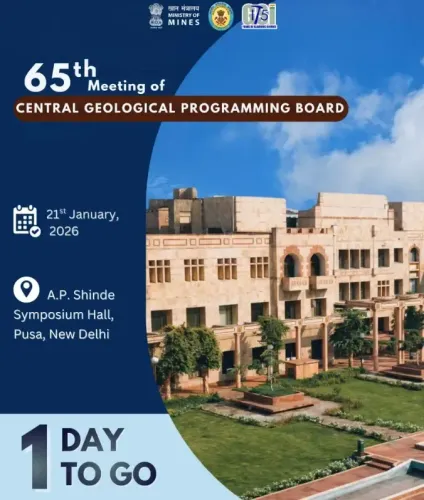
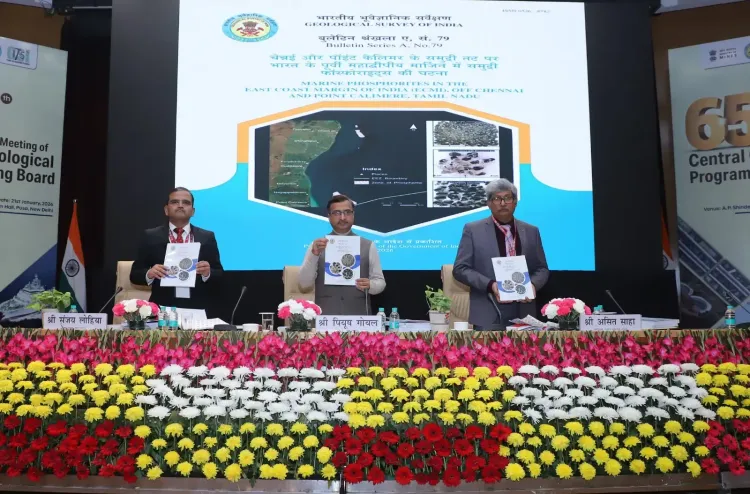
During a meeting of the Central Geological Programming Board (CGPB), the Secretary emphasized the necessity of a coordinated strategy among all agencies to accelerate the exploration framework in India.
At this gathering, the Geological Survey of India presented its Annual Programme for the upcoming field season of 2026-27, which includes 1,068 scientific projects for discussion. Notably, these exploration-related projects represent approximately 55 percent of the total. GSI has also developed around 37 projects in the international border area, which features 16 mineral exploration projects across the Western, Eastern, Northern, and North-Eastern regions.
For the 2026–27 field season, there is a remarkable increase of approximately 46 percent in G3 stage exploration projects, indicating GSI’s strategic pivot towards outcome-driven, resource-rich exploration. Additionally, a strong emphasis has been placed on critical mineral exploration, with 236 projects established in this area, highlighting GSI’s committed and progressive approach to bolstering India’s critical mineral security, which is set to be further strengthened, according to an official statement from the Ministry of Mines.
Moreover, GSI has outlined 144 projects focusing on Natural Hazard Studies, Public Good Geoscience, and Fundamental Geoscience for the 2026–27 field season, addressing landslide and geotechnical studies, polar and glaciological research, climate change, and environmental research, alongside essential geoscientific inquiries. These efforts reaffirm GSI’s dedication to disaster risk mitigation, climate resilience, and scientific advancement.
Additionally, GSI has planned 58 Geoinformatics and Data Analysis projects for 2026-27, concentrating on the generation, integration, analysis, dissemination, and management of geospatial data. These initiatives underscore the use of cutting-edge AI/ML modeling, legacy data integration, and emerging technologies to boost exploration efficiency.
GSI has also proposed 160 training programs across various themes aimed at enhancing the Training and Capacity Building of GSI personnel and stakeholders from Central Institutions, State Governments, PSUs, private sector, and academia, reflecting its strong commitment to human resource development and institutional fortification.
In his opening remarks, Asit Saha, Director General of the Geological Survey of India, emphasized that the forthcoming Annual Programme places significant weight on utilizing advanced geoscientific technologies, digital platforms, and AI-driven tools to hasten mineral discovery, particularly of hidden and deep-seated deposits.
The Director General further stated that targeted exploration of critical and strategic minerals would significantly bolster the nation’s mineral security and support burgeoning sectors of the economy.
Sanjay Lohiya, Additional Secretary, Mines, highlighted the critical importance of expediting exploration activities within the country. He instructed GSI, NPEAs, and other exploration entities to ensure timely completion of projects. He mentioned that agencies engaged in exploration should reference the National Geoscience Data Repository (NGDR) portal of the Ministry of Mines to prevent work duplication.
He urged State DGMs and all stakeholders to contribute their data to the NGDR. Furthermore, he indicated that the Ministry of Mines has established a policy for the recovery of critical and strategic minerals from ongoing exploration projects, existing mines, and dumps, overburdens, and tailings.
Lohiya called upon all stakeholders, including GSI, IBM, AMD, DAE, the Ministry of Coal, and State DGMs, to adopt and execute the policy within their specific domains.
Point of View
The Geological Survey of India's extensive plan to explore critical minerals is a strategic maneuver that could reinforce India's mineral security and catalyze economic growth. The emphasis on modern technology and collaborative efforts among agencies reflects a forward-thinking approach to resource management. This initiative aligns with national interests and promises to enhance India's standing in the global minerals arena.
NationPress
15 Oct 2026
Frequently Asked Questions
What is the purpose of GSI's 300 projects?
The 300 projects aim to enhance exploration efforts for critical and strategic minerals, strengthening India's mineral security.
How many scientific projects will GSI undertake in total?
GSI plans to undertake a total of 1,068 scientific projects during the 2026-27 field season.
What technological advancements will GSI utilize?
GSI will leverage advanced geoscientific technologies, digital platforms, and AI-enabled tools to accelerate mineral discovery.
What is the significance of the NGDR portal?
The NGDR portal serves as a resource for exploration agencies to avoid duplication of efforts in mineral exploration.
How does GSI plan to support human resource development?
GSI has proposed 160 training programs aimed at enhancing the skills of personnel and stakeholders across various sectors.