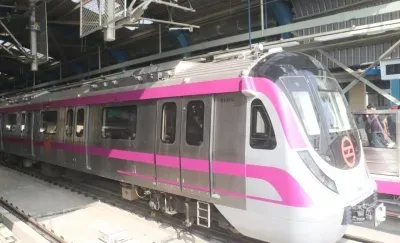
DMRC warns against kite flying near elevated Metro lines ahead of Independence Day
Synopsis
With Independence Day kite-flying season days away, DMRC is sounding the alarm: a single drifting kite string near its 25,000-volt overhead lines could halt trains across Delhi-NCR's 416 km elevated network — or prove fatal. Dedicated teams are deployed, but the corporation says public cooperation is the only reliable safeguard.
Key Takeaways
DMRC issued a public safety advisory on 12 August urging residents to avoid kite flying near elevated Metro lines ahead of Independence Day on 15 August .
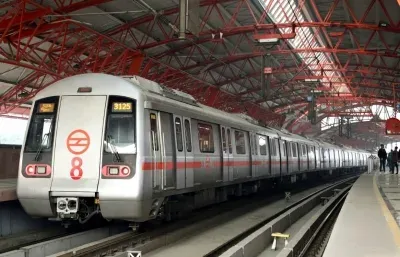
Delhi Metro's elevated network spans 416 km and runs on 25,000-volt live overhead equipment (OHE).
Kite strings — particularly metallic maanjha — can entangle with OHE wires or the train pantograph, risking service disruption or fatal electrocution.
Dedicated teams have been deployed near kite-incident-prone stations to remove strings swiftly.
DMRC has asked residents to fly kites only in open spaces away from Metro infrastructure and directed train operators and station staff to remain on heightened alert.
The Delhi Metro Rail Corporation (DMRC) on Wednesday, 12 August issued a public safety advisory urging residents across Delhi-NCR to avoid flying kites near elevated Metro lines ahead of Independence Day on 15 August. The corporation warned that kite strings — especially metallic maanjha — could entangle with high-voltage overhead equipment (OHE) and trigger service disruptions or prove fatal.
The Safety Risk Explained
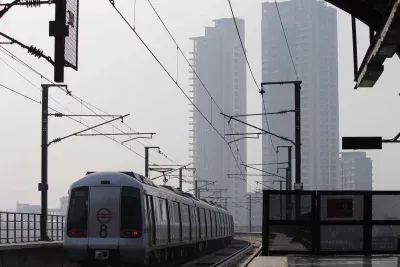
Delhi Metro's elevated network spans 416 km across Delhi-NCR and is powered by 25,000-volt live OHE wires running alongside the tracks. DMRC cautioned that kite strings drifting into these wires — or getting caught in the pantograph of a moving train — could trip the OHE, damage the pantograph, or halt services on busy corridors. The corporation noted that direct or indirect contact with the high-voltage lines can be fatal, particularly when metallic maanjha is involved.
In its advisory, DMRC stated: 'Any direct or indirect contact with the 25,000 Volts OHE may prove fatal besides leading to OHE tripping or damage to the Metro train/pantograph, thereby, resulting into service disruptions.'
Why Independence Day Raises the Risk
Kite flying is a deeply rooted tradition in Delhi-NCR, surging every year around 15 August. The festival draws participants across residential neighbourhoods that often sit directly beneath or adjacent to elevated Metro corridors. DMRC said the seasonal spike in kite-flying activity is what makes this period particularly high-risk for its infrastructure and passengers.
This is not the first time DMRC has flagged the issue — the corporation has issued similar pre-Independence Day advisories in previous years, underscoring a recurring challenge that dedicated operational measures alone have not fully resolved.
What DMRC Is Doing
The Metro operator said it has deployed dedicated teams near stations identified as prone to kite-related incidents. These teams are tasked with swiftly removing kite strings spotted around Metro infrastructure before they can cause damage. Train operators and station staff have also been directed to remain on heightened alert throughout the kite-flying season and to report any strings that could pose a risk to the OHE or moving trains.
What DMRC Is Asking the Public to Do
DMRC has appealed to residents to fly kites only in open spaces safely away from Metro infrastructure. The corporation stressed that public cooperation is essential to protect not just Metro passengers and staff, but also members of the general public who could be harmed by contact with high-voltage equipment.
With Independence Day days away and kite-flying activity set to intensify, DMRC's ability to maintain uninterrupted services will depend significantly on how widely this advisory is heeded across the capital.
Point of View
Yet the risk recurs because enforcement near residential elevated corridors remains thin and awareness campaigns have not penetrated far enough. The real question is whether deploying teams at 'prone stations' after strings appear is adequate, or whether DMRC needs a more proactive community-engagement model — particularly in dense neighbourhoods where kite flying and Metro infrastructure coexist in close proximity. A single OHE trip during peak Independence Day travel would affect hundreds of thousands of commuters.
NationPress
27 Sept 2026
Frequently Asked Questions
Why is DMRC warning against kite flying near Metro lines?
DMRC has warned that kite strings can get entangled with its 25,000-volt overhead equipment (OHE) or the pantograph of moving trains, risking fatal electrocution and service disruptions. The advisory was issued on 12 August ahead of the Independence Day kite-flying surge on 15 August.
What is the danger of metallic maanjha near Metro lines?
Metallic maanjha is electrically conductive, meaning contact — direct or indirect — with DMRC's 25,000-volt OHE can be fatal. Even non-metallic strings can trip the OHE or damage the train pantograph, potentially halting services across the network.
What steps has DMRC taken to manage the risk?
DMRC has deployed dedicated teams near stations identified as prone to kite-related incidents to remove strings quickly. Train operators and station staff have been placed on heightened alert to spot and report strings near Metro infrastructure during the kite-flying season.
Where can residents safely fly kites in Delhi-NCR?
DMRC has advised residents to fly kites only in open spaces that are safely away from elevated Metro corridors. The corporation has not specified designated zones, but has urged people to stay clear of any area where Metro overhead lines are visible.
How large is Delhi Metro's elevated network?
Delhi Metro's network spans 416 km across Delhi-NCR and is primarily elevated, making a large portion of the system potentially vulnerable to kite-string entanglement during the Independence Day season.