Dr. Jitendra Singh flags piped gas rollout for J&K homes
Synopsis
Union Minister Dr. Jitendra Singh has highlighted the expansion of piped natural gas to households in Jammu and Kashmir, citing a 30 percent cost advantage over LPG. The rollout is backed by PNGRB-authorised CGD networks and National Gas Grid extensions, advancing India's goal of raising natural gas's share in the energy mix to 15 percent by 2030.
Key Takeaways
Jitendra Singh shared a headline on June 9, 2026 , flagging piped natural gas expansion to Jammu and Kashmir households.
Piped natural gas is reported to be 30 percent cheaper than LPG for domestic consumers.
PNGRB has authorised CGD networks for Jammu, Srinagar , and other J&K districts through bidding rounds from 2018 to 2023 .
The National Gas Grid and Urja Ganga pipeline extensions are designed to connect J&K with the mainland gas transmission network.
India's national target is to raise natural gas to 15 percent of the energy mix by 2030 , with J&K CGD rollouts contributing to that goal.
Reduced LPG dependence is expected to ease the government's subsidy burden while improving household energy affordability in the Union Territory.
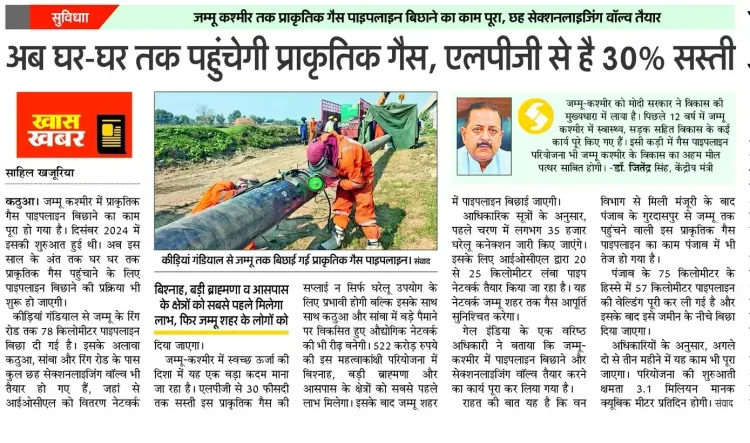
Union Science and Technology Minister Dr. Jitendra Singh on Tuesday, June 9, 2026, shared a headline highlighting that piped natural gas is set to reach households across Jammu and Kashmir, with the fuel reported to be 30 percent cheaper than LPG. The post, shared on X, underscores the Union Territory's ongoing energy infrastructure push under central government programmes.
Context
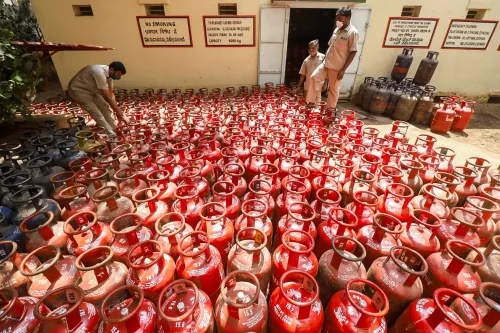
The headline shared by the minister — 'Ab ghar-ghar tak pahunchegi prakritik gas, LPG se hai 30% sasti' ('Piped natural gas will now reach every home, 30 percent cheaper than LPG') — points to the expanding City Gas Distribution (CGD) network in Jammu and Kashmir. The rollout is part of a broader national effort to deepen the penetration of clean, affordable fuel in regions that have historically relied on bottled LPG cylinders.
Dr. Jitendra Singh, who represents the Udhampur constituency in Jammu and Kashmir and frequently amplifies development milestones in the Union Territory, used the post to draw attention to what the government frames as a tangible improvement in household energy access.
Policy Backdrop
The Petroleum and Natural Gas Regulatory Board (PNGRB) has authorised CGD networks for Jammu, Srinagar, and several other districts through successive bidding rounds between 2018 and 2023. These licences allow authorised entities to lay pipelines for both domestic and commercial consumers, replacing dependence on LPG cylinders.
Complementing this, the National Gas Grid and Urja Ganga pipeline extension plans announced in 2021–22 aim to physically connect Jammu and Kashmir with the mainland gas transmission network, addressing the geographic isolation that had long made piped gas unviable in the region. The central government has set a national target of raising natural gas's share in the overall energy mix to 15 percent by 2030, and J&K's inclusion in CGD rounds is a direct step toward that goal.
Reducing LPG import dependence also eases the subsidy burden on the exchequer, making the CGD push fiscally attractive beyond its environmental and consumer-welfare rationale.
Stakeholders and Impact
The primary beneficiaries are J&K households, particularly those in urban and peri-urban areas of Jammu and Srinagar divisions, who currently pay market-linked LPG prices for cooking fuel. A reported 30 percent cost advantage for piped natural gas, if sustained, would represent meaningful savings for middle- and lower-income families over the course of a year.
Businesses, commercial establishments, and small industries in the Union Territory also stand to gain from a more stable and competitively priced fuel source, which could lower operational costs and reduce logistics friction associated with cylinder procurement. For the environment, the shift from LPG to a grid-supplied gas network reduces cylinder transportation emissions and supports cleaner urban air quality.
What's Next
Attention will now turn to the commissioning timelines for CGD pipelines in the remaining districts of Jammu and Kashmir that are yet to receive authorised network coverage. Upcoming PNGRB bidding rounds or infrastructure commissioning announcements will be key indicators of how quickly the 'every home' aspiration can be realised on the ground.
Any revision to LPG subsidy allocations in J&K as piped gas penetration rises will also be closely watched, as the government may recalibrate support structures to reflect the changing fuel landscape. The minister's amplification of this development signals continued political attention to energy access in Jammu and Kashmir as a flagship deliverable of the post-2019 reorganisation era.
Point of View
Where energy access milestones are presented as proof points of governance dividends. The piped gas rollout fits squarely into the Centre's dual agenda of fiscal rationalisation — trimming LPG subsidy exposure — and clean-energy optics ahead of India's 2030 gas-mix targets. For J&K specifically, where infrastructure parity with mainland India remains a politically charged benchmark, CGD expansion carries symbolic weight beyond its economic value. The minister's consistent amplification of such developments reflects how the Union Territory continues to function as a showcase for central policy delivery.
NationPress
26 Oct 2026
Frequently Asked Questions
What is piped natural gas and how does it work in homes?
Piped natural gas (PNG) is delivered directly to households through an underground pipeline network, eliminating the need for LPG cylinders. A meter installed at the home measures consumption, and residents pay only for the gas they use, making it more convenient and often more economical than bottled LPG.
Is piped natural gas really 30 percent cheaper than LPG in Jammu and Kashmir?
Union Minister Dr. Jitendra Singh shared a headline on June 9, 2026 citing a 30 percent cost advantage of piped natural gas over LPG for J&K households. The exact differential can vary based on prevailing gas and LPG prices, but CGD networks generally offer a cost benefit due to lower distribution overheads.
Which areas of Jammu and Kashmir will get piped natural gas?
PNGRB-authorised CGD networks cover Jammu and Srinagar, among other districts, with licences granted through bidding rounds from 2018 to 2023. The National Gas Grid and Urja Ganga pipeline extensions are intended to progressively expand coverage to remaining areas of the Union Territory.
What is the PNGRB and what role does it play in gas distribution?
The Petroleum and Natural Gas Regulatory Board (PNGRB) is India's statutory regulator for the downstream gas sector. It awards geographical area authorisations to companies for laying CGD networks, setting the legal and commercial framework within which piped gas reaches homes and businesses.
How does the piped gas expansion in J&K relate to India's energy goals?
India has set a target of raising natural gas's share in the national energy mix to 15 percent by 2030. Expanding CGD networks in Jammu and Kashmir is part of this broader push, reducing dependence on imported LPG cylinders and supporting cleaner cooking fuel access across the country.