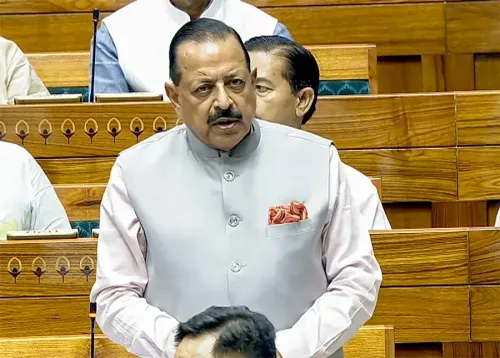
Dr. Jitendra Singh calls out inflated paper leak figures in Lok Sabha

Synopsis
Union Minister Dr. Jitendra Singh exposed an arithmetically impossible Opposition claim — that 750 crore children were affected by paper leaks — during the Lok Sabha debate on the Public Examinations (Prevention of Unfair Means) Amendment Bill, 2026, noting the world's entire population is only ~800 crore.
Key Takeaways
During the Lok Sabha debate on July 30, 2026 , an Opposition member claimed 152 paper leaks impacted 750 crore children in India.
Jitendra Singh pointed out this figure nearly equals the entire world population of approximately 800 crore , calling the claim 'hilarious'.
The debate centred on The Public Examinations (Prevention of Unfair Means) Amendment Bill, 2026 , which seeks to strengthen the 2024 Act against exam malpractice.
India's exam paper leak problem — most visibly linked to the NEET controversy — is real and has triggered prior legislative action.
The minister's intervention shifted scrutiny onto the credibility of Opposition statistics without addressing the substantive merits of the amendment.
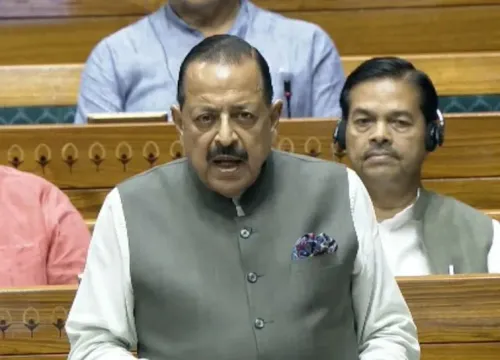
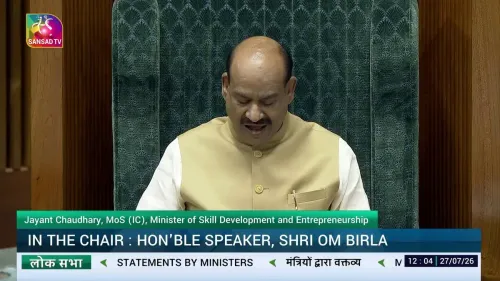
A single statistical impossibility became the sharpest moment in Parliament on Thursday, July 30, 2026, when Union Minister Dr. Jitendra Singh turned a Opposition claim inside out on the floor of the Lok Sabha — pointing out that the numbers being cited to attack the government on exam paper leaks exceeded the total population of the planet.
The claim that broke its own arithmetic
During the debate on The Public Examinations (Prevention of Unfair Means) Amendment Bill, 2026, an Opposition member alleged that 152 paper leaks had impacted 750 crore children in India. Dr. Singh's rejoinder was blunt: 'Nothing could be more hilarious!' — and the math backed him. India's total population is roughly 140 crore. The entire world's population stands at approximately 800 crore. A figure of 750 crore affected children would mean nearly every human being alive today was a student harmed by Indian exam fraud.
The minister's point was not merely rhetorical. Inflated or unverifiable statistics in a legislative debate weaken the credibility of genuine grievances — and India has plenty of those when it comes to exam integrity.
Why the bill exists in the first place
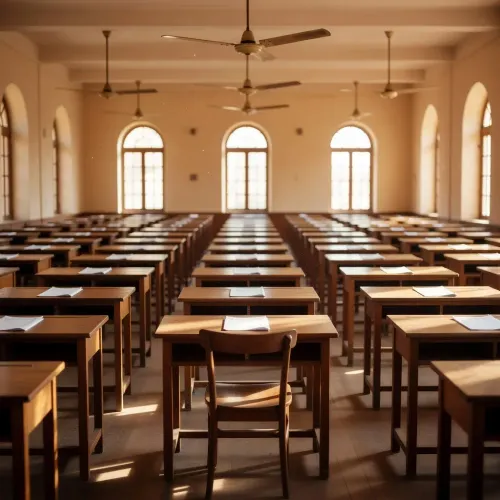
The amendment being debated builds on The Public Examinations (Prevention of Unfair Means) Act, 2024, which Parliament passed in the wake of a string of high-profile paper leak controversies — most visibly around the NEET undergraduate medical entrance examination. That episode triggered nationwide student protests and forced a hard reckoning with the machinery governing millions of aspirants' futures.
The 2026 amendment is designed to tighten that framework further, with stricter deterrence and oversight mechanisms. The legislative intent is serious; the stakes for students, exam authorities, and public trust in merit-based selection are real.
Arithmetic as a political weapon
Dr. Singh's intervention illustrates a recurring dynamic in Indian parliamentary debates: when opposition numbers collapse under basic scrutiny, the government's counter-argument writes itself. The minister did not need to defend the exam system's record — he simply let the figure of 750 crore do the work.
Whether the amendment itself provides adequate safeguards against the documented paper leak problem remains the substantive question Parliament must answer. One embarrassing statistic does not resolve the underlying crisis — but it does shift the burden of credibility back onto those making the loudest claims.
India's exam integrity crisis is real and documented. The debate it deserves should be built on numbers that actually add up.
Point of View
But limited. Exposing an inflated statistic lands well in the chamber and on social media, yet it sidesteps the harder question of whether the 2026 amendment meaningfully closes the loopholes that allowed documented paper leaks to occur under the current government's watch. The episode also reflects a broader pattern in Indian legislative debates where both sides reach for dramatic numbers, and the credibility of the entire conversation suffers. The real test is not who scores the better rejoinder, but whether the bill that emerges can actually protect the millions of students whose futures hinge on exam integrity.
NationPress
30 Jul 2026
Frequently Asked Questions
What did Dr. Jitendra Singh say about paper leaks in Lok Sabha?
Dr. Singh called an Opposition claim 'hilarious,' pointing out that the figure of 750 crore children allegedly affected by paper leaks is nearly equal to the world's entire population of around 800 crore.
What is the Public Examinations (Prevention of Unfair Means) Amendment Bill, 2026?
It is an amendment to the 2024 Act passed by Parliament to curb malpractices and paper leaks in public examinations, with the 2026 version seeking to tighten penalties and oversight further.
How many paper leaks did the Opposition claim in Parliament?
An Opposition member claimed there were 152 paper leaks impacting 750 crore children in India, a figure Dr. Jitendra Singh rejected as statistically impossible.
What is India's actual population compared to the 750 crore claim?
India's population is approximately 140 crore. The world's total population is around 800 crore, making the claim that 750 crore Indian children were affected arithmetically impossible.
What triggered India's exam paper leak legislation?
High-profile paper leak controversies, most prominently around the NEET medical entrance exam, triggered nationwide student protests and led Parliament to enact the Public Examinations (Prevention of Unfair Means) Act, 2024.