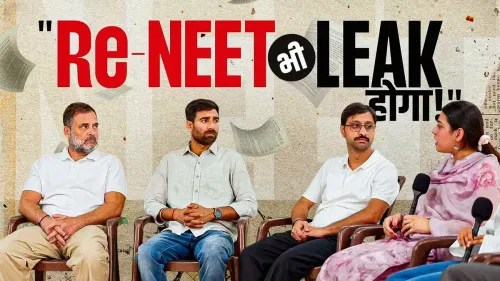
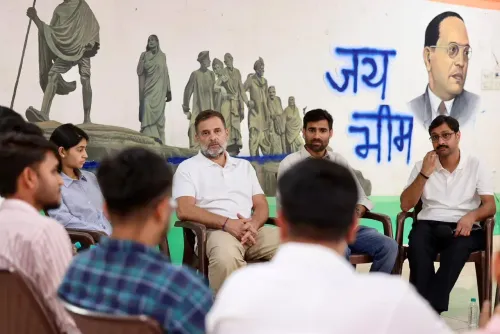
Dr. Jitendra Singh: Rahul Gandhi backtracked on NEET dharna deal
Synopsis
Union Minister Dr. Jitendra Singh has alleged that Rahul Gandhi shifted his demands during a surprise dharna near Akbar Road on 21 July 2026 — first seeking only a parliamentary discussion on NEET, then adding the Union Education Minister's resignation after the government accepted the original condition.
Key Takeaways
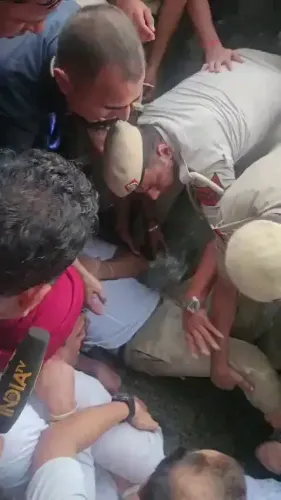
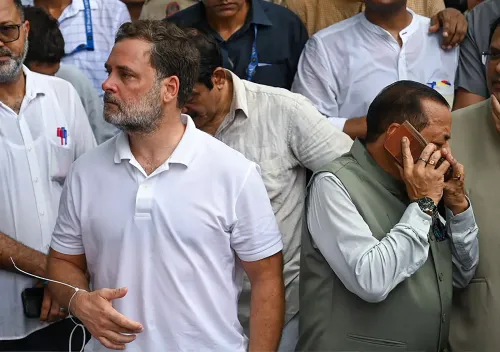
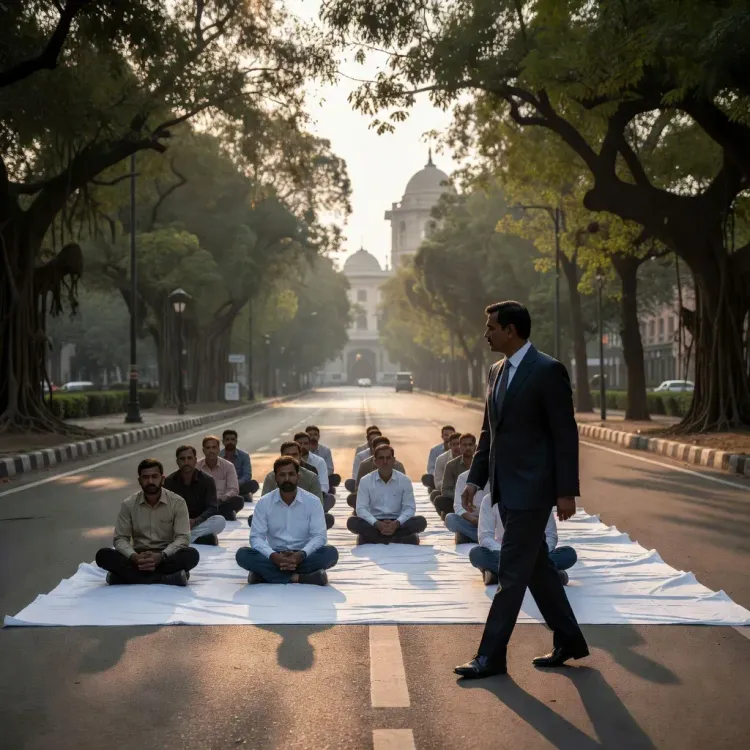
Congress leaders including Rahul Gandhi, Priyanka Gandhi, and Mallikarjun Kharge staged a spontaneous dharna near Akbar Road, New Delhi on 21 July 2026 .
The government sent Dr.
Jitendra Singh and Union Home Secretary Govind Mohan to negotiate on-site, citing respect for the seniority of the Congress delegation.
Rahul Gandhi's initial stated condition for ending the dharna was a government commitment to discuss NEET and related issues in Parliament , which the government accepted.
After acceptance was conveyed, Gandhi reportedly added a second demand: the resignation of the Union Education Minister , saying his demands had changed.
Singh said Congress has not filed any formal parliamentary notice to initiate a NEET discussion despite demanding one.
The government reaffirmed it is ready for a parliamentary debate on NEET and all connected agitation issues.
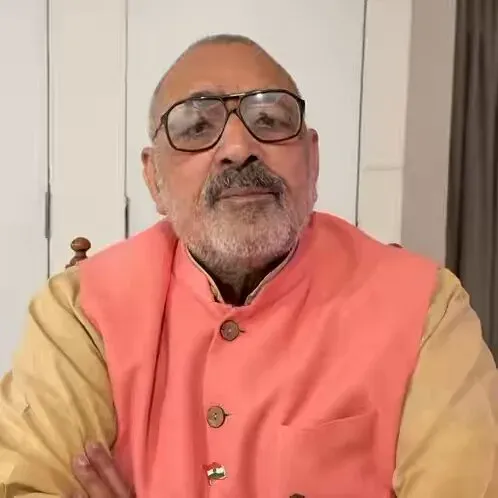
Union Science and Technology Minister Dr. Jitendra Singh on Tuesday, 21 July 2026 posted a detailed account on X alleging that Leader of the Opposition Rahul Gandhi shifted his demands mid-negotiation during a spontaneous dharna near Akbar Road, New Delhi, after the government had already accepted his initial condition for ending the protest.
Context
According to Dr. Singh's post, Congress National President Mallikarjun Kharge, Rahul Gandhi, Priyanka Gandhi, and other senior leaders unexpectedly sat on a dharna with supporters near Akbar Road. The government, cognisant of the seniority of the delegation, dispatched Dr. Singh along with Union Home Secretary Govind Mohan to hold talks on the spot.
Dr. Singh wrote that Rahul Gandhi was first requested to end the protest because the site was not designated for dharnas and was causing inconvenience to the general public — 'जनसाधारण को काफी असुविधा भी पहुंच रही है' ('the general public was being considerably inconvenienced').
Policy Backdrop
NEET — the National Eligibility cum Entrance Test — has been the sole national entrance examination for undergraduate medical and dental admissions since the 2016 academic year. In 2024, widespread allegations of paper leaks and irregularities triggered large-scale student protests and sustained opposition demands for a re-examination and ministerial accountability. The controversy has continued to animate parliamentary and street-level politics.
Opposition parties in India have a long practice of organising dharnas near Parliament and central government offices to press for floor time on sensitive examination controversies. Governments have routinely responded by sending senior ministers for on-site negotiations and committing to parliamentary discussion.
The Disputed Negotiation
Dr. Singh's account states that Rahul Gandhi initially agreed to end the dharna on one condition: that the government commit to a parliamentary discussion on NEET and all related agitation issues. After obtaining clearance from 'top government leadership,' Dr. Singh says he conveyed that the demand had been accepted and the government was ready for such a discussion in Parliament.
According to the post, Rahul Gandhi then added a second demand — the resignation of the Union Education Minister — saying, 'अब मेरी दो मांगे हैं: संसद में चर्चा एवं केंद्रीय शिक्षा मंत्री का इस्तीफा' ('Now I have two demands: discussion in Parliament and the resignation of the Union Education Minister'). When reminded that only parliamentary discussion had been sought initially, Gandhi reportedly replied that his demands had changed. When the Home Secretary pointed out the site was not suitable for a dharna, Gandhi's response, as quoted by Dr. Singh, was that it was his prerogative where he sat.
Dr. Singh described the backtracking as 'unfortunate and contrary to every norm of democracy,' adding that Congress has, to date, not filed a formal notice under parliamentary rules to initiate discussion on NEET — even as it demands such a discussion.
What's Next
The government's stated position is that it remains ready to discuss NEET and related issues in Parliament. The key question now is whether Congress files a formal procedural notice to list the debate, and whether the government schedules parliamentary time accordingly. Any movement on the Union Education Minister's position, which Gandhi has now publicly demanded, will be closely watched. The episode is likely to sharpen the confrontation between the Treasury and Opposition benches in the ongoing session.
Point of View
The BJP is turning a process argument into a credibility attack on the Opposition's sincerity on NEET. The demand-shifting allegation, if accepted by the public, could blunt the moral force of the Opposition's student-welfare messaging. At the same time, mid-negotiation escalation of demands is a well-documented feature of Indian political bargaining and does not by itself resolve the underlying NEET controversy that has energised medical aspirants since 2024.
NationPress
22 Jul 2026
Frequently Asked Questions
Why did Rahul Gandhi hold a dharna near Akbar Road in July 2026?
According to Union Minister Dr. Jitendra Singh's account, Rahul Gandhi, Mallikarjun Kharge, Priyanka Gandhi and other Congress leaders spontaneously sat on a dharna near Akbar Road on 21 July 2026 to press the government on NEET-related issues, including alleged irregularities and demands for parliamentary discussion.
What was the government's response to the Congress dharna?
The government dispatched Dr. Jitendra Singh and Union Home Secretary Govind Mohan to negotiate on-site. After getting clearance from senior leadership, they conveyed that the government accepted Rahul Gandhi's initial demand for a parliamentary discussion on NEET.
Why did the NEET dharna not end even after the government agreed to a parliamentary discussion?
Dr. Jitendra Singh has alleged that after the government accepted the initial demand for parliamentary discussion on NEET, Rahul Gandhi added a new condition — the resignation of the Union Education Minister — saying his demands had changed, which prevented a resolution.
Has Congress filed a formal notice for a NEET discussion in Parliament?
According to Dr. Jitendra Singh's post, Congress has not filed any formal notice under parliamentary rules to initiate a discussion on NEET, even as the party publicly demands such a debate.
What is NEET and why is it controversial?
NEET is the National Eligibility cum Entrance Test, India's single national entrance exam for undergraduate medical and dental admissions, made mandatory from 2016. It became deeply controversial in 2024 after allegations of paper leaks and irregularities triggered widespread student protests and opposition demands for accountability.