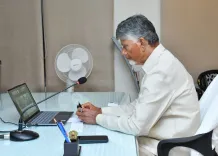
Dr. Jitendra Singh: Villages Key to Atmanirbhar Bharat
Synopsis
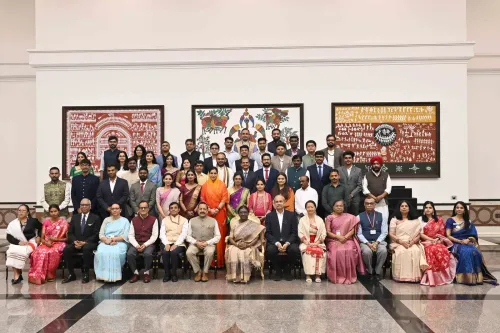
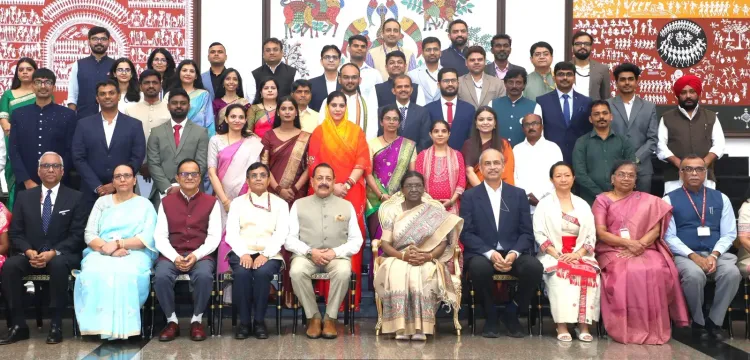
Union Science Minister Dr. Jitendra Singh told the Grassroots Innovator Felicitation Ceremony 2026 at Rashtrapati Bhavan that India's growth will flow from villages and community innovators, with the Atal Innovation Mission tasked to move local ideas from recognition to national-scale enterprises.
Key Takeaways
Jitendra Singh addressed the Grassroots Innovator Felicitation Ceremony 2026 at Rashtrapati Bhavan on 31 July 2026 .
He declared that India's next growth wave will come from villages, small towns and community innovators — not only large cities.
The Minister called for a seamless pathway connecting grassroots innovators with the formal innovation ecosystem to enable national-scale enterprises.
The Atal Innovation Mission , established in 2016 under NITI Aayog, was cited as the lead agency for scientific validation, technology translation, incubation and market adoption of grassroots ideas.
Grassroots innovation was framed as central to Atmanirbhar Bharat and the vision of India@2047 .
Success, the Minister said, will be measured by affordable technologies that solve real problems for farmers, women, artisans, entrepreneurs and ordinary citizens .
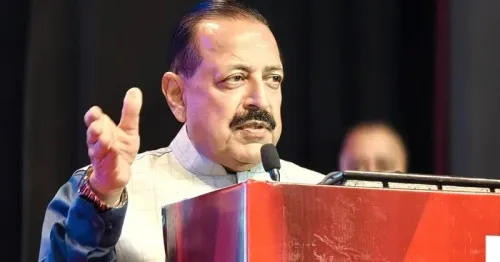
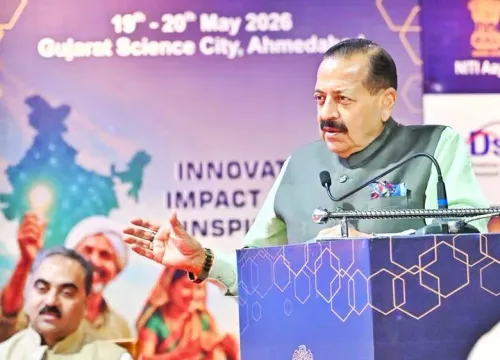
India's next growth engine, declared Union Science and Technology Minister Dr. Jitendra Singh, will not be found in glass-tower tech parks — it will rise from villages, small towns, and the hands of community innovators. Speaking at the 'Grassroots Innovator Felicitation Ceremony 2026' held at Rashtrapati Bhavan on Friday, 31 July 2026, the Minister laid out a clear-eyed vision: grassroots innovation is not a sideshow to India's development story. It is the main event.
From recognition to real-world scale
The Minister's address cut to the heart of a long-standing gap in India's innovation architecture — the distance between a brilliant local idea and a nationally scalable enterprise. 'It is important to connect grassroots innovators with the country's formal innovation ecosystem,' Dr. Singh said, calling for 'a seamless pathway to transform grassroots innovations into nationally scalable enterprises.'
He singled out the Atal Innovation Mission (AIM) — the NITI Aayog programme established in 2016 — for taking on the responsibility of moving grassroots ideas 'beyond recognition to scientific validation, technology translation, incubation and market adoption.' That four-step ladder — validate, translate, incubate, adopt — is the difference between a village innovator winning a certificate and building a company.
Atmanirbhar Bharat's missing link
Dr. Singh framed grassroots innovation explicitly within the Atmanirbhar Bharat self-reliance framework, launched in May 2020, and the longer horizon of India@2047 — the centenary of independence. The argument is structural: a self-reliant India cannot be built on imported solutions or metro-centric R&D alone. Local problems demand local ingenuity, and that ingenuity must be given institutional muscle to travel.
The beneficiaries he named are concrete: farmers, women, artisans, entrepreneurs, and ordinary citizens. The yardstick he offered is equally concrete — success will be measured by 'the number of real-life problems solved through affordable technologies that improve lives.' Not patents filed. Not papers published. Problems solved.
Why Rashtrapati Bhavan matters as the venue
Hosting the felicitation at Rashtrapati Bhavan, India's most symbolically charged official address, is itself a signal. It places grassroots innovators — typically invisible in national policy conversations dominated by IIT alumni and venture-backed startups — at the centre of the republic's formal recognition architecture. The setting amplifies the government's stated intent to make innovation policy geographically distributed, not concentrated in Bengaluru, Mumbai, or Delhi.
The next test is implementation: whether AIM's pipeline for scientific validation and enterprise scaling produces measurable outcomes in the months ahead — and whether upcoming Science, Technology and Innovation Policy updates or budget cycles back the ambition with allocation.
If the measure of India's innovation movement is affordable solutions that reach the last mile, the scoreboard is only just being set up.
Point of View
Inclusive growth — a politically resonant move ahead of India@2047. By anchoring the argument in the Atal Innovation Mission's institutional machinery, the government is betting on an existing pipeline rather than announcing a new scheme, which suggests a shift from policy announcement to implementation pressure. The Rashtrapati Bhavan venue elevates grassroots innovators into the republic's symbolic centre, lending political weight to a constituency that rarely commands prime-time attention. Whether AIM's validation-to-market pipeline can deliver measurable outcomes at scale will determine if this vision translates into a genuine policy shift or remains an aspirational frame.
NationPress
31 Jul 2026
Frequently Asked Questions
What is the Grassroots Innovator Felicitation Ceremony 2026?
It is a national ceremony held at Rashtrapati Bhavan to recognise and honour innovators working at the village and community level across India. Union Minister Dr. Jitendra Singh addressed the event on 31 July 2026.
What is the Atal Innovation Mission and what does it do?
The Atal Innovation Mission is a NITI Aayog programme launched in 2016 to build India's national innovation and entrepreneurship ecosystem, including through Atal Tinkering Labs in schools. It is now tasked with moving grassroots innovations from recognition to scientific validation, incubation and market adoption.
How does grassroots innovation connect to Atmanirbhar Bharat?
Atmanirbhar Bharat, launched in May 2020, aims to make India self-reliant by promoting indigenous solutions and reducing import dependence. Dr. Jitendra Singh argued that grassroots innovators — farmers, artisans, rural entrepreneurs — are central to achieving this self-reliance and the broader India@2047 vision.
What did Dr. Jitendra Singh say about measuring innovation success?
He said the real success of India's innovation movement will be measured by the number of real-life problems solved through affordable technologies that improve the lives of farmers, women, artisans, entrepreneurs and ordinary citizens — not by patents or publications alone.
Why was the ceremony held at Rashtrapati Bhavan?
Rashtrapati Bhavan is the official residence of the President of India and hosts national ceremonies of high symbolic importance. Holding the grassroots innovator felicitation there signals the government's intent to place community-level innovation at the centre of India's national recognition framework.