CM Shivakumar Orders Zero-Tolerance Recruitment Drive for 70,000 Karnataka Posts
Synopsis
Chief Minister D.K. Shivakumar chaired a high-level Vidhana Soudha meeting to oversee Karnataka's recruitment of over 70,000 government posts, directing video recording of all exam stages, mobile phone bans for staff, police surveillance of coaching centres, and constituting the S.V. Ranganath-led reform committee to overhaul competitive examination processes.
Key Takeaways
Shivakumar chaired a high-level recruitment review at Vidhana Soudha on 31 July 2026 .
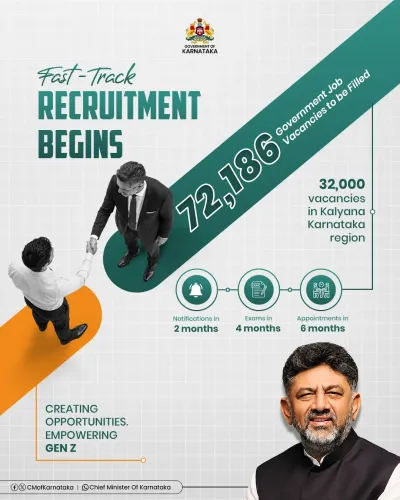
Over 70,000 government posts are to be filled through KPSC and KEA examinations, with nearly 35 lakh candidates expected.
All examination stages will be video recorded ; no official or staff involved may carry a mobile phone .
Coaching centres will be placed under continuous police surveillance .
Deputy Commissioners, Superintendents of Police, and Education Department officials will be personally accountable for any lapses.
A Competitive Examinations and Recruitment Reform Committee has been constituted under Shri S.V.
Ranganath , with T.M.
Vijayabhaskar , Vandita Sharma , and L.K.
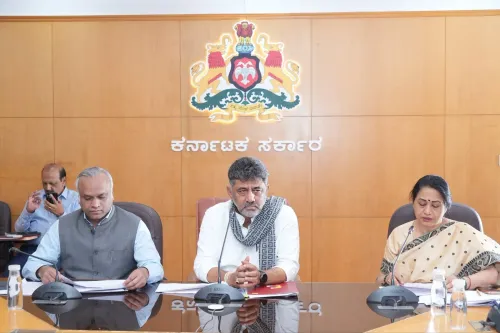
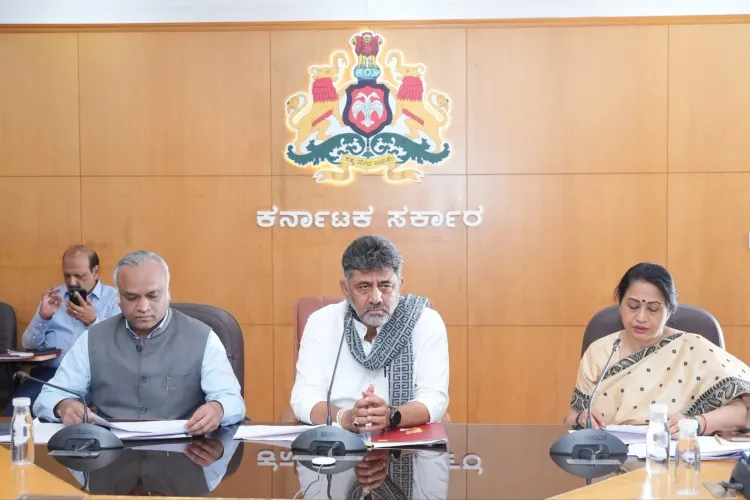
A recruitment exercise of rare scale is now under strict political watch in Karnataka. Chief Minister D.K. Shivakumar chaired a high-level review at Vidhana Soudha, Bengaluru, on 31 July 2026, laying down an uncompromising framework for filling over 70,000 government posts through the KPSC and KEA — with nearly 35 lakh candidates expected to appear.
What Shivakumar ordered in the room
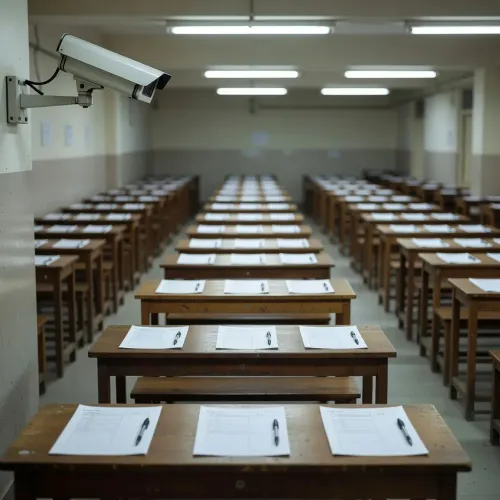
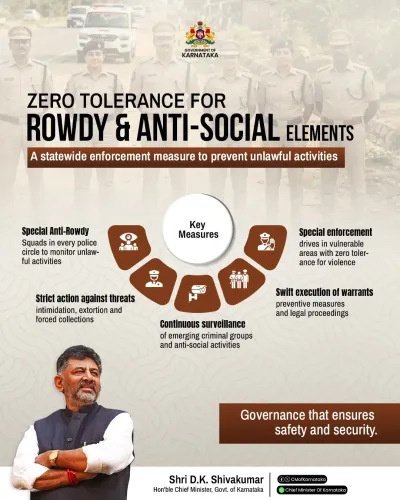
The Chief Minister's directives were precise and pointed. Every stage of the examination process must be video recorded. Coaching centres will remain under continuous police surveillance. No official or staff member involved in the process may carry a mobile phone — a direct countermeasure against the leak networks that have plagued public recruitment across India.
Deputy Commissioners, Superintendents of Police, and Education Department officials were told they will be held directly accountable for any lapses. That is not standard administrative language — it is a signal that consequences will be personal, not institutional.
The reform committee Karnataka is betting on
Beyond the immediate examination cycle, the government has constituted a Competitive Examinations and Recruitment Reform Committee to recommend systemic changes. It will be chaired by Shri S.V. Ranganath, a former senior bureaucrat, and include Shri T.M. Vijayabhaskar, Smt. Vandita Sharma, and Shri L.K. Atheeq as members. Their mandate is comprehensive: rethink how Karnataka conducts competitive recruitment from the ground up.
The committee's formation matters because it signals the government is not just managing the current round of exams — it is attempting to fix a structural problem. Karnataka has seen irregularities in recruitment processes in the past, and the political cost of another scandal, with 35 lakh aspirants watching, would be severe.
Karnataka's play for a national benchmark
Shivakumar explicitly framed the ambition: Karnataka aims to set a national benchmark for fair, transparent, and credible recruitment. That is a deliberate positioning — states like Uttar Pradesh and Rajasthan have faced high-profile paper leak controversies in recent years, and the reputational gap is one Karnataka is clearly trying to exploit.
For 35 lakh aspirants — many of whom have spent years preparing — the credibility of the process is not an abstract governance metric. It is the difference between a career and another year of waiting. The surveillance architecture Shivakumar has ordered is designed to make that faith feel earned, not just promised.
The real test arrives when the Ranganath committee submits its recommendations and the government decides which reforms to adopt before examinations begin. That moment will determine whether this high-level meeting was the start of a genuine overhaul — or just a well-photographed press event.
Point of View
Shivakumar is pre-emptively building an accountability architecture — video recording, mobile bans, personal liability for district officials — that makes blame harder to deflect if things go wrong. The Ranganath committee adds a technocratic layer of credibility, but its real value depends entirely on whether its recommendations are adopted before, not after, the examination cycle begins. For a Congress government seeking to consolidate its base among educated unemployed youth, delivering a scandal-free recruitment round of this scale would be a significant political dividend.
NationPress
31 Jul 2026
Frequently Asked Questions
How many government jobs is Karnataka filling in 2026?
The Karnataka government is recruiting for over 70,000 government posts through the KPSC and KEA examinations, with nearly 35 lakh candidates expected to appear.
What anti-malpractice measures has CM Shivakumar ordered for KPSC and KEA exams?
CM D.K. Shivakumar has directed that all examination stages be video recorded , no official or staff carry mobile phones , and coaching centres be placed under continuous police surveillance. District officials will be personally accountable for lapses.
Who is heading the Karnataka Competitive Examinations Reform Committee?
Former senior bureaucrat Shri S.V. Ranganath chairs the newly constituted Competitive Examinations and Recruitment Reform Committee , with T.M. Vijayabhaskar , Vandita Sharma , and L.K. Atheeq as members.
What is KPSC and what does it do in Karnataka?
The Karnataka Public Service Commission (KPSC) is the primary state body that conducts examinations and manages recruitment for Karnataka government posts.
Why is Karnataka banning mobile phones during government exams?
The mobile phone ban for all exam-related officials is a direct countermeasure against organised paper leak networks, a problem that has disrupted public recruitment examinations in several Indian states in recent years.