Is Nagaland Taking a Giant Leap with Drone-Based Healthcare Services?
Synopsis
In a groundbreaking development for Nagaland, a Memorandum of Agreement has been signed to blend drone technology with healthcare services. This initiative aims to overcome geographical challenges and enhance emergency medical supply delivery, ensuring timely health responses during crises. Explore how this innovative collaboration sets a new benchmark for healthcare in challenging terrains.
Key Takeaways
Drone technology will facilitate emergency medical supply deliveries.
The agreement aims to enhance response during health crises.
Collaboration between departments promotes inter-departmental synergy .
Geospatial mapping will aid in efficient planning.
This initiative sets a precedent for technology integration in health systems.
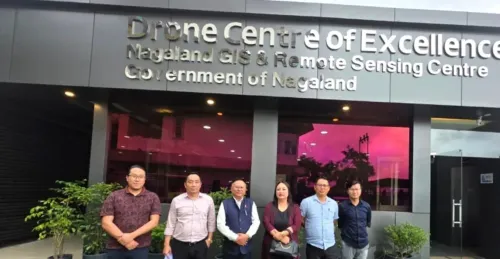
Kohima, Jan 23 (NationPress) In a pivotal advancement for healthcare in Nagaland, a Memorandum of Agreement (MoA) has been formalized to incorporate drone technology into the state's healthcare framework, as reported on Friday.
According to a senior official from the Health and Family Welfare Department, the Nagaland GIS and Remote Sensing Centre (NGISRSC), operating under the Planning and Transformation Department, signed the MoA in Kohima on Thursday. This move aims to utilize drone technology to enhance healthcare delivery across the state.
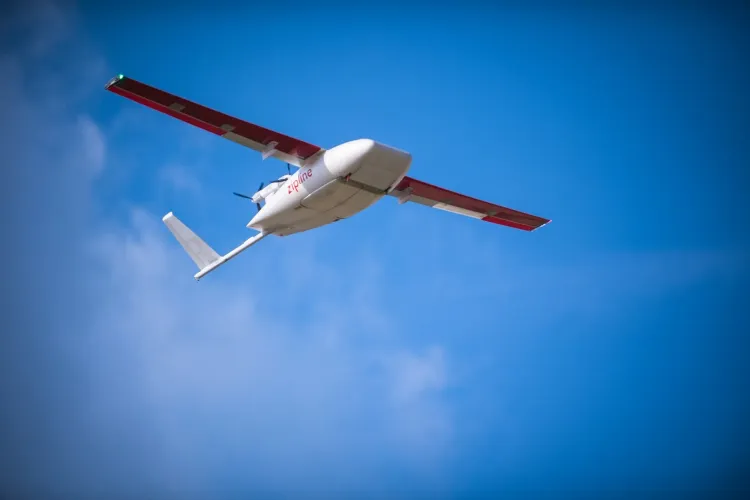
The official elaborated that this collaboration seeks to mitigate challenges presented by Nagaland's challenging terrain, isolation, and limited accessibility by utilizing drones for emergency medical supply delivery and response during disease outbreaks and natural disasters.
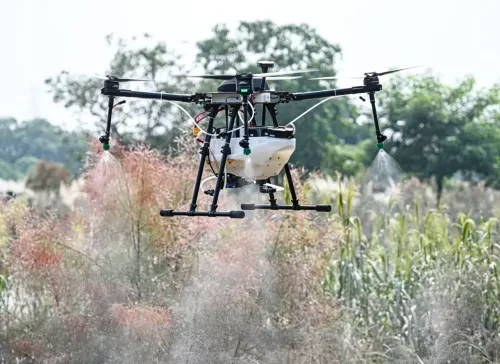
Moreover, drone technology will also assist in aerial support for vector control initiatives and facilitate geospatial mapping to enhance planning and decision-making, they added.
As per the agreement, the NGISRSC will oversee drone operations, capacity development, data analysis, and adherence to regulatory standards, while the Department of Health & Family Welfare will manage logistical support, coordination, and deployment strategies.
Senior Project Director of NGISRSC, Mhathung Kithan, underscored the significance of integrating cutting-edge technologies into public health, asserting that adopting drone technology could greatly improve healthcare service efficiency throughout the mountainous region.
Principal Director of Health & Family Welfare, Mereninla Senlem, pointed out that this partnership would bolster the state's readiness and response capabilities during emergencies and disasters, emphasizing its vital role in ensuring prompt delivery of essential medical supplies during urgent health operations and disaster scenarios.
This MoA represents a crucial milestone in Nagaland's pursuit of a resilient, technology-driven healthcare system and serves as a model for inter-departmental cooperation in utilizing emerging technologies for public benefit, the official concluded.
Point of View
This agreement in Nagaland exemplifies a progressive approach to healthcare challenges in remote areas. The integration of drone technology not only enhances service delivery but also sets a precedent for using innovative solutions in public health. This initiative reflects a broader trend of leveraging technology to improve access and efficiency in healthcare systems across the country.
NationPress
24 Sept 2026
Frequently Asked Questions
How will drone technology improve healthcare in Nagaland?
Drone technology will enhance healthcare delivery by providing rapid emergency medical supplies, aiding in disease outbreak responses, and supporting vector control operations.
What are the main goals of the Memorandum of Agreement?
The main goals include improving access to healthcare in remote areas, ensuring timely medical supply delivery during emergencies, and facilitating geospatial planning for health initiatives.
Who signed the Memorandum of Agreement?
The MoA was signed between the Nagaland GIS and Remote Sensing Centre and the Health and Family Welfare Department.
What role will the NGISRSC play in this initiative?
The NGISRSC will oversee drone operations, capacity building, data analysis, and regulatory compliance.
Why is this initiative important for Nagaland?
This initiative is crucial for addressing the unique healthcare challenges posed by Nagaland's difficult terrain and limited accessibility.