Emerging Drone Threats Targeting Infrastructure in Northeast India
Synopsis
The Northeastern states of India are facing a rising threat as militant groups attempt to execute drone strikes targeting critical infrastructure. With the support of external actors, these insurgents are aiming to disrupt development and stability in the region.
Key Takeaways
Critical infrastructure in Northeast India is under threat from militant drone strikes.
Insurgent groups are gaining technological capabilities with external support.
Indian security agencies are prioritizing the situation due to its implications for national security.
Recent arrests highlight the seriousness of the destabilization efforts.
Economic repercussions could be severe if infrastructure is targeted.
New Delhi, March 20 (NationPress) The Northeastern states of India have long been under the scrutiny of various external forces, which has contributed to the prolonged insurgency in the area. Currently, several militant factions are attempting to execute drone strikes aimed at critical infrastructure within this region.
Since 2014, the government of Prime Minister Narendra Modi has prioritized the development of the northeastern states, focusing on infrastructure enhancement and social inclusion.
Although many residents have welcomed these initiatives, an official from the Intelligence Bureau has pointed out that external actors are determined to rekindle insurgent activities.
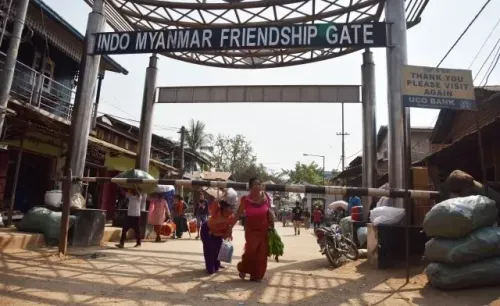
Myanmar continues to pose a significant challenge for India. Insurgent groups have historically utilized Myanmar as a training facility, and now Indian security forces are facing a pressing concern regarding the use of drones.
Many of these groups are actively working to launch drone attacks targeting vital assets such as oil refineries, military installations, dams, and other essential infrastructure in the northeastern states.
Infrastructure established post-2014 has emerged as a primary target for these groups, which are reportedly receiving support from external sources.
Officials have expressed concern regarding the proliferation of drones, with many ready for deployment from Myanmar into the northeastern states.
Recently, banned insurgent factions like ULFA, NSCN, and Kuki Zo-aligned groups have gained both expertise and technological capabilities.
With external assistance, these groups have developed the means to conduct precision strikes against targets in the northeastern region.
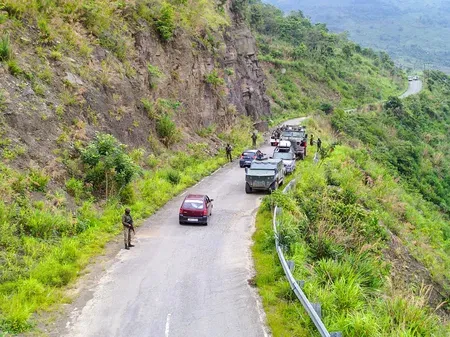
In addition to infrastructure, they are also focusing on Assam Rifles and Army bases located near the Manipur-Myanmar border.
Indian Air Force (IAF) bases at Tezpur and Chabua are also on their radar, with plans to strike these facilities using drones that have been amassed over recent months.
Further developments regarding these operations have come to light following the arrest of seven foreign nationals, including six Ukrainians and one American, who are suspected of being involved in a destabilization scheme. The case is currently under investigation by the National Investigation Agency (NIA).
The NIA has gathered evidence suggesting that these individuals were allegedly providing equipment and training to armed ethnic groups across the India-Myanmar border, all of which have connections to the insurgents in the northeastern states.
This situation is not a typical conflict; the insurgents are employing advanced equipment and planning to target high-value infrastructure.
The NIA is also investigating the violence that engulfed Manipur in 2024, with indications of foreign involvement aimed at destabilizing the region.
During that period, it was discovered that Kuki militants utilized sophisticated technology, including drones, to drop 40 bombs in Imphal West, leading to significant civilian casualties.
The PLA insurgent group similarly employed drones to attack a temporary base established by the Assam Rifles.
Another official indicated that the intention is not merely to disrupt peace; the goal is to target infrastructure that could severely hinder development.
Intelligence reports indicate that ONGC oilfields in Assam and Arunachal Pradesh are also on the insurgent groups' target list.
Any successful strike on these oilfields could result in substantial economic repercussions.
Moreover, these groups are eyeing hydroelectric projects in Manipur and Mizoram.
Attacks on such projects not only pose flood risks but also have the potential to cause power outages. Officials noted that the recent arrests occurred just in time. More information will emerge as investigations continue.
It is crucial for the NIA to uncover the entire scheme to facilitate the dismantling of this terrorist infrastructure, the official added.
Point of View
The situation in Northeast India demands urgent attention. The resurgence of insurgency, coupled with advanced drone technology, poses a significant challenge to national security. A comprehensive strategy is necessary to counter these threats while ensuring the safety and development of the region.
NationPress
24 Sept 2026
Frequently Asked Questions
What are the main targets of the drone strikes in Northeast India?
The drone strikes are primarily targeting critical infrastructure such as oil refineries, military installations, and hydroelectric projects.
Who is backing the insurgent groups in Northeast India?
Many of the insurgent groups are reportedly receiving support from external elements, contributing to their resurgence and capabilities.
What role does Myanmar play in this situation?
Myanmar serves as a training ground for insurgent groups and a staging area for launching drone attacks into Northeast India.
What actions are being taken by Indian authorities?
The National Investigation Agency (NIA) is investigating the situation, including recent arrests of foreign nationals linked to destabilization efforts.
How could these drone strikes impact the local economy?
Successful strikes on oilfields or infrastructure could lead to substantial economic disruption and affect public safety through potential power outages or floods.