Election Monitors Propose Drone Surveillance to Combat Vote Buying in Tamil Nadu
Synopsis
With elections on the horizon, Tamil Nadu's election monitors are pushing for drone technology to enhance surveillance efforts against vote-buying. This innovative approach aims to address challenges in urban monitoring and ensure fair electoral practices.
Key Takeaways
Drones proposed for election monitoring to combat cash-for-vote practices.
Challenges in urban areas highlighted during review meetings.
Technology seen as a means to enhance surveillance.
Election integrity remains a priority as polling approaches.
Significant amounts of cash have already been seized by authorities.
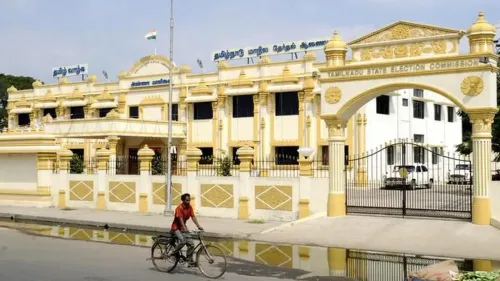
Chennai, March 24 (NationPress) As the election date draws near, monitors in Tamil Nadu are advocating for the use of drones to enhance surveillance against cash-for-vote schemes, especially in urban areas where oversight is particularly difficult. This proposal was made during a review meeting led by the Special Observer, which included general and expenditure monitors from major districts like Chennai, Tiruvallur, Chengalpattu, and Kancheepuram.
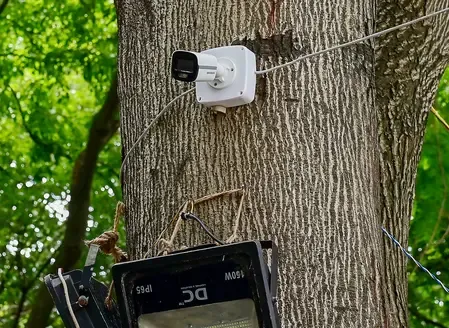
The discussions focused on addressing enforcement deficiencies ahead of the polling day. Officials highlighted that the distribution of inducements often migrates to difficult-to-access areas, such as narrow lanes and crowded neighborhoods, where traditional monitoring teams find it hard to maintain a consistent presence. These logistical issues, they noted, create openings for last-minute infractions.
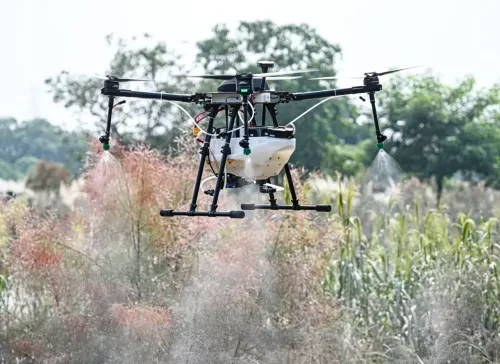
As a solution, observers suggested employing drone monitoring to provide aerial coverage and enhance real-time tracking of suspicious activities.
This technology is viewed as a means to bolster oversight in hard-to-reach regions and deter illegal distribution.
Thus far, the Election Commission of India and the state's Chief Electoral Officer have not commented on the proposal.
Sources suggest that the practicality of these surveillance measures will be evaluated before any final decisions are made.
Tamil Nadu has been designated as an expenditure-sensitive state, prompting the assignment of general and expenditure observers to every constituency.
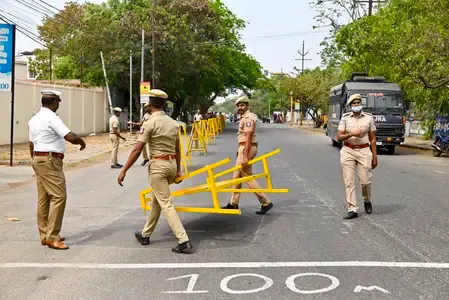
Since the Model Code of Conduct was enacted, enforcement bodies have ramped up checks across the state. Flying squads and static surveillance teams have already confiscated cash and valuables worth approximately Rs 151 crore.
As officials aim to tighten control in the lead-up to the elections, the proposed integration of drones signifies a growing dependence on technology to combat electoral malpractices and ensure adherence to polling regulations.
Point of View
The call for drone surveillance in Tamil Nadu's elections highlights the ongoing efforts to maintain electoral integrity. As challenges in monitoring arise, leveraging technology could represent a significant advancement in ensuring compliance with democratic processes.
NationPress
22 Sept 2026
Frequently Asked Questions
Why are drones being proposed for election monitoring?
Drones are proposed to enhance surveillance and address challenges in monitoring cash-for-vote practices, particularly in hard-to-reach urban areas.
What areas are most affected by vote-buying?
Vote-buying often occurs in crowded neighborhoods and narrow streets where traditional monitoring teams face difficulties.
Have authorities responded to the drone proposal?
As of now, the Election Commission of India and the Chief Electoral Officer of Tamil Nadu have not provided an official response to the drone proposal.
What measures are currently in place to curb electoral malpractices?
Enforcement agencies have intensified checks, with flying squads and static surveillance teams already seizing significant amounts of cash and valuables.
How much cash has been seized so far in Tamil Nadu?
Enforcement teams have confiscated cash and valuables totaling around Rs 151 crore since the Model Code of Conduct came into effect.