DUSU VP Deepanshu Shokeen blames Kanhaiya Kumar, internal politics for NSUI rout
Synopsis
An Independent candidate who beat NSUI to win DUSU's Vice-President seat is now publicly calling out the organisation's own in-charge, Kanhaiya Kumar, for failing to 'come to the ground' — exposing a grassroots disconnect that handed the ABVP a clean sweep of DUSU's top posts for the first time since 2015.
Key Takeaways
NSUI failed to win any of the four DUSU central panel posts in 2026 — its first complete defeat since 2015 .
ABVP won President, Secretary, and Joint Secretary; Deepanshu Shokeen won Vice-President as an Independent with 30,615 votes .
Shokeen, who was denied an NSUI ticket, directly blamed Kanhaiya Kumar — AICC in-charge of NSUI since July 2023 — for failing to assess ground realities.
Three Independent candidates with NSUI backgrounds contested simultaneously, indicating a breakdown in ticket management and internal discipline.
Shokeen praised Rahul Gandhi 's connect with students but said mid-level Congress functionaries act as a 'barrier' between leadership and grassroots workers.
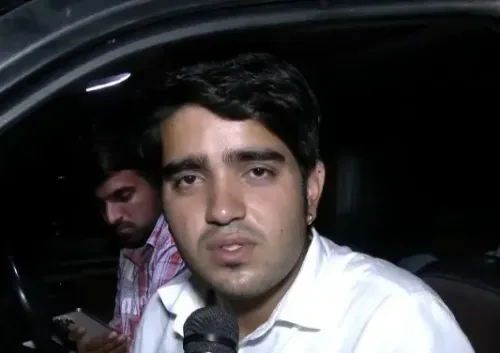
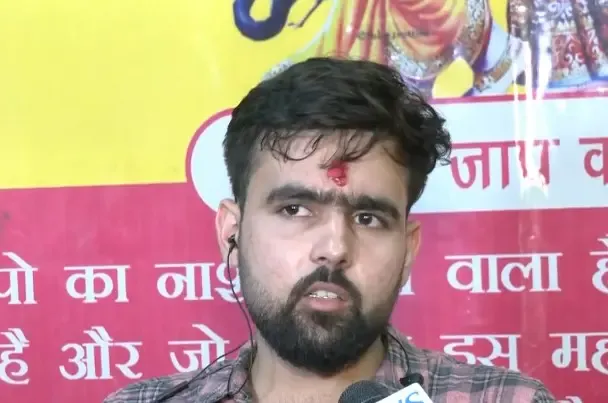
Newly elected Delhi University Students' Union (DUSU) Vice-President Deepanshu Shokeen on Monday, 21 September 2026, held Kanhaiya Kumar — the All India Congress Committee (AICC) in-charge of the National Students' Union of India (NSUI) — directly responsible for the Congress-backed outfit's worst-ever showing in the DUSU elections, while also pointing to deep-seated internal politics as a key factor in the collapse.
NSUI's Historic Defeat
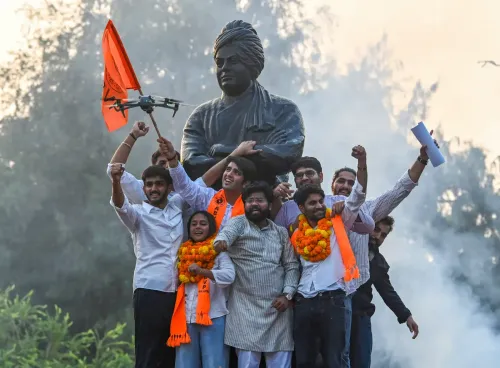
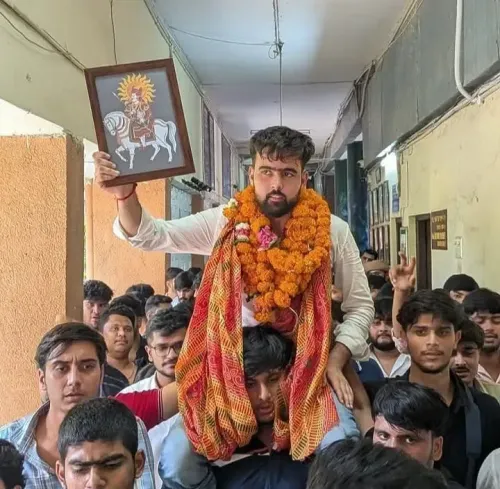
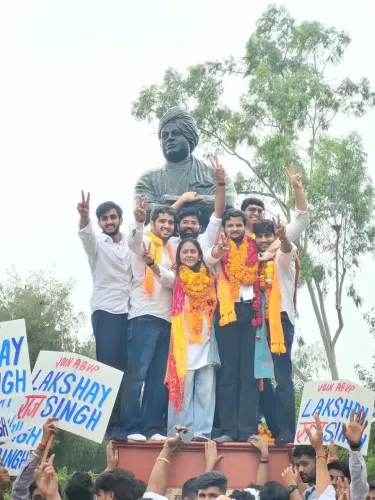
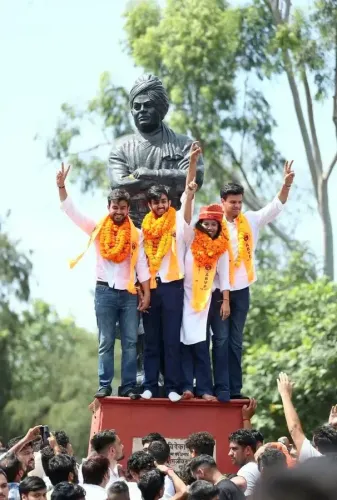
The NSUI failed to win any of the four posts on the DUSU central panel this year — its first complete electoral wipeout at the university's top student body since 2015. The Akhil Bharatiya Vidyarthi Parishad (ABVP) swept the posts of President, Secretary, and Joint Secretary. The Vice-President's seat went to Shokeen, who contested as an Independent after being denied an NSUI ticket, defeating ABVP's Ishu Maurya and NSUI's official candidate Vir Chatrath with 30,615 votes.
Shokeen's Charge Against Kanhaiya Kumar
Shokeen, who had originally sought an NSUI ticket, did not mince words in assessing the party leadership's failure. 'Somewhere, Kanhaiya Kumar should take responsibility. He is in-charge in the party, and I believe he must have played a role... He should have taken a clear stand, come to the ground, and checked who was strong and who had the preparation. If he had come to the ground and observed things, perhaps the results and decisions would have been different,' he said.
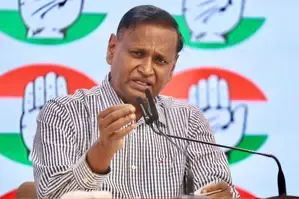
Kanhaiya Kumar, a former JNU Students' Union president and one of the Congress party's prominent young faces, was appointed AICC in-charge of the NSUI in July 2023. He had previously marched alongside Leader of the Opposition Rahul Gandhi during the high-profile Bharat Jodo Yatra. His appointment was seen as an attempt to energise the student wing's organisational machinery, making the DUSU outcome a significant setback for his tenure.
Internal Politics and Ticket Distribution Failures
Shokeen alleged that poor ticket management and internal power plays directly led to the unusual situation where three Independent candidates with NSUI backgrounds contested the same election. 'When three Independent candidates were contesting from NSUI, the direct question arises: How? It is a major question as to how politics was played — people were first given assurances that they were contesting, and till the end, there was no clarification for anyone,' he said.
He also contested claims that he had been slated to contest the President's post, clarifying that no final decision had been taken on the top position. 'My withdrawal was the last to happen. The candidature of the official NSUI candidate was already confirmed. So how can it be said that I was being made to contest for President?' he added. Shokeen argued that those managing the election process failed to assess ground realities before finalising candidates — a failure he attributed to the people entrusted with organisational responsibility.
On Rahul Gandhi and Grassroots Disconnect
Despite his sharp criticism of the NSUI apparatus, Shokeen expressed admiration for Rahul Gandhi, including his 'Chhatron Ki Goonj' initiative aimed at connecting with student communities. 'Students feel very connected with Rahul Gandhi. Somewhere, he has become the voice of the students, raises their issues, and talks about education. But his initiative should be taken to the ground level,' he said.
However, Shokeen pointed to a structural barrier between the top leadership and grassroots workers. 'I have met Rahul Gandhi about three times. I feel good and feel very connected with him, but somewhere the people below him act as a barrier. You cannot present your views, and you end up becoming a victim of internal politics,' he said — a candid assessment that cuts to the heart of the Congress's organisational challenges beyond just student politics.
What This Means for NSUI Going Forward
The DUSU result raises pointed questions about the NSUI's ability to translate national-level Congress momentum into campus electoral victories. Notably, this is not the first time the organisation has struggled in Delhi; but a clean sweep by the ABVP across three of four posts, compounded by rebel Independents splitting votes, signals a deeper structural crisis. Whether Kanhaiya Kumar recalibrates his approach or faces internal pressure over the outcome remains to be seen in the coming weeks.
Point of View
But for the broader Congress experiment of using high-profile youth icons to energise its student machinery. Kumar's appointment in 2023 was meant to signal a generational reset; the DUSU result suggests the problem runs deeper than branding — it is organisational. Three Independents from the same NSUI orbit contesting simultaneously is not a freak outcome; it is a symptom of a party unable to enforce internal discipline at the campus level. Rahul Gandhi's 'Chhatron Ki Goonj' initiative may resonate emotionally, but as Shokeen himself acknowledges, sentiment at the top does not automatically translate into structure at the bottom — and in student elections, structure wins.
NationPress
21 Sept 2026
Frequently Asked Questions
Why did NSUI lose the 2026 DUSU elections?
The NSUI failed to win any of the four DUSU central panel posts in 2026 — its worst result since 2015. Newly elected DUSU Vice-President Deepanshu Shokeen attributed the defeat to poor ground-level strategy by AICC in-charge Kanhaiya Kumar and to internal politics that led to three Independent candidates from NSUI backgrounds contesting simultaneously, splitting votes.
Who is Deepanshu Shokeen and why did he contest as an Independent?
Deepanshu Shokeen is the newly elected DUSU Vice-President who had originally sought an NSUI ticket but was denied one. He subsequently contested as an Independent and won the Vice-President's post with 30,615 votes, defeating both the ABVP and the official NSUI candidate.
What is Kanhaiya Kumar's role in the NSUI?
Kanhaiya Kumar, a former JNU Students' Union president and Congress leader, was appointed AICC in-charge of the NSUI in July 2023. He is responsible for the organisation's strategy and electoral direction and was named by Shokeen as someone who should take responsibility for the DUSU defeat.
Which posts did the ABVP win in the 2026 DUSU elections?
The ABVP won the posts of President, Secretary, and Joint Secretary on the DUSU central panel. The Vice-President's post went to Independent candidate Deepanshu Shokeen, leaving NSUI without a single seat on the panel.
What did Shokeen say about Rahul Gandhi's connect with students?
Shokeen said students feel very connected with Rahul Gandhi and appreciate his focus on education issues, but argued that the 'Chhatron Ki Goonj' initiative needed stronger grassroots implementation. He also alleged that mid-level Congress functionaries act as a 'barrier' between Gandhi's leadership and ground-level workers.