West Bengal Elections 2026: ECI's Strategy on Police Observer Deployment
Synopsis
As West Bengal prepares for its upcoming Assembly elections, the ECI's strategy on police observer deployment, guided by sensitivity-mapping, raises crucial questions of security and governance. Discover how this approach could reshape the electoral landscape.
Key Takeaways
Sensitivity-mapping will guide the ECI's police observer deployment strategy.
Districts are categorized based on violence history and border status.
A significant increase in police observers is expected for the 2026 elections.
Police observers will have enhanced authority over Central Armed Police Forces.
Composite teams will evaluate district-specific CAPF requirements.
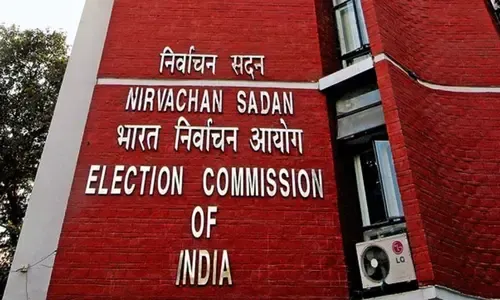
Kolkata, March 13 (NationPress) – The Election Commission of India (ECI) is set to implement sensitivity-mapping to guide its decision-making regarding the district-wise assignment of police observers for the upcoming Assembly elections in West Bengal, anticipated later this year.
An insider from the Chief Electoral Officer's (CEO) office in West Bengal revealed that the ECI is considering several key factors in the district-wise sensitivity-mapping process.
“The mapping will categorize districts into three groups. The first includes areas sharing an International Border with Bangladesh. The second consists of regions that have experienced significant poll-related violence in the last three elections. The third category encompasses districts that meet the criteria of both the first and second groups,” the insider explained.
Notable examples of districts in the third category include Murshidabad, Malda, and Cooch Behar, all of which share borders with Bangladesh and have histories of severe election-related violence.
Conversely, districts like Howrah, adjacent to Kolkata, serve as examples of the second category, as they have a record of substantial political violence despite lacking an International Border.
Given these considerations, the ECI is contemplating an increase in the number of central observers across all categories, particularly police observers, in these critical areas, according to the source.
During the 2021 West Bengal Assembly elections, the ECI designated 170 general observers, 84 expenditure observers, and 37 police observers.
“The ECI's headquarters in New Delhi has already informed the CEO's office that there will be a significant rise in the number of observers in all three categories this time, especially police observers. The anticipated number of police observers for West Bengal will be at least 100 or more, nearly three times the count from 2021,” the insider noted.
Additionally, the insider elaborated on the reasons behind the ECI's focus on tripling the number of police observers.
“This time, police observers will possess greater authority, particularly concerning the movement of Central Armed Police Forces (CAPF) personnel. In previous elections, the authority to determine CAPF movement was held by District Magistrates, who also served as District Electoral Officers during the enforcement of the Model Code of Conduct (MCC).
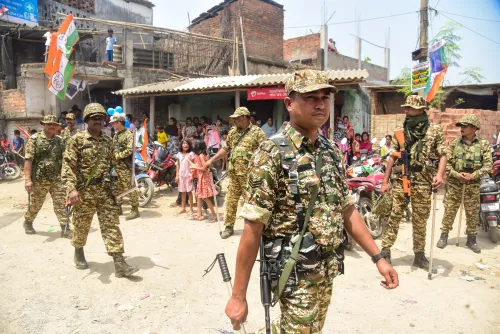
“However, this year, the ECI has decided that police observers will take charge of determining CAPF movements within their respective districts. Furthermore, district-specific composite teams will be established to evaluate pocket-wise needs for CAPF deployment, with the police observers' decisions being final in this regard. Therefore, the Commission has resolved to significantly increase the number of police observers this election cycle,” he stated.
Sources from the CEO's office also indicated that district-specific composite teams would be created to assess the requirements for CAPF deployment on a pocket-wise basis, with police observers having the final say in these matters.
Point of View
The ECI's implementation of sensitivity-mapping for police observer deployment reflects a proactive approach to ensure secure elections. With a focus on areas prone to violence and border tensions, this strategy aims to enhance electoral integrity and voter confidence across West Bengal.
NationPress
26 Sept 2026
Frequently Asked Questions
What is sensitivity-mapping?
Sensitivity-mapping is a strategy used by the ECI to categorize districts based on their vulnerability to electoral violence and other factors, aiding in the deployment of police observers.
How many police observers were appointed in previous elections?
In the 2021 West Bengal Assembly elections, the ECI appointed 37 police observers.
What changes are expected in police observer numbers for 2026?
The ECI plans to increase the number of police observers to at least 100, nearly three times the previous count.
Why is the ECI focusing on police observer authority?
The ECI aims to give police observers greater authority over the movement of Central Armed Police Forces to enhance election management.
Which districts are considered high-risk for violence?
Districts like Murshidabad, Malda, and Cooch Behar are categorized as high-risk due to their history of electoral violence and proximity to the Bangladesh border.